
Before the MOU: Building the Partnership
Building Before the Signature
International partnerships are often judged by the moment an agreement is signed.
The photographs are published. The announcement is shared. Organizations celebrate the milestone.
What is rarely discussed is the work that makes those moments possible.
Several months before TechIndiana and the EIS Council formalized their partnership in Israel through a memorandum of understanding supporting the Resilience Tech Indiana Israel Initiative, a quieter process was unfolding in Indiana. It did not begin with a delegation or a ceremony. It began with a series of working conversations centered around a shared question.
What does resilience look like in a world increasingly shaped by artificial intelligence, digital infrastructure, and interconnected economies?
That question became the foundation for an initiative that continues to develop today.
A Shared Challenge
The initiative did not originate from a single organization or individual.
Instead, it emerged through conversations among leaders who approached resilience from different perspectives.
TechIndiana brought a deep understanding of Indiana’s technology ecosystem and its role in preparing the state’s economy for the future.
The EIS Council contributed decades of experience connecting innovation, cybersecurity, resilience, and economic development across government and industry.
Heartland to Holyland focused on the corridor challenge beneath the initiative: creating continuity between Indiana and Israel so relationships could mature beyond individual meetings, delegations, or changes in leadership.
As discussions progressed, one reality became increasingly apparent.
Indiana and Israel were confronting many of the same questions.
How should artificial intelligence be integrated responsibly?
How can critical infrastructure become more resilient?
How can government, universities, industry, and entrepreneurs collaborate more effectively?
The conversation quickly expanded beyond technology.
It became a conversation about institutions.
Building Before Announcing
One lesson emerged early.
Relationships often move faster than organizations.
Individuals frequently recognize opportunity immediately.
Institutions require structure.
Rather than announcing a partnership first and defining it later, the participants chose a different approach.
Working sessions came first.
Ideas were challenged.
Roles became clearer.
Areas of collaboration were identified before any public commitments were made.
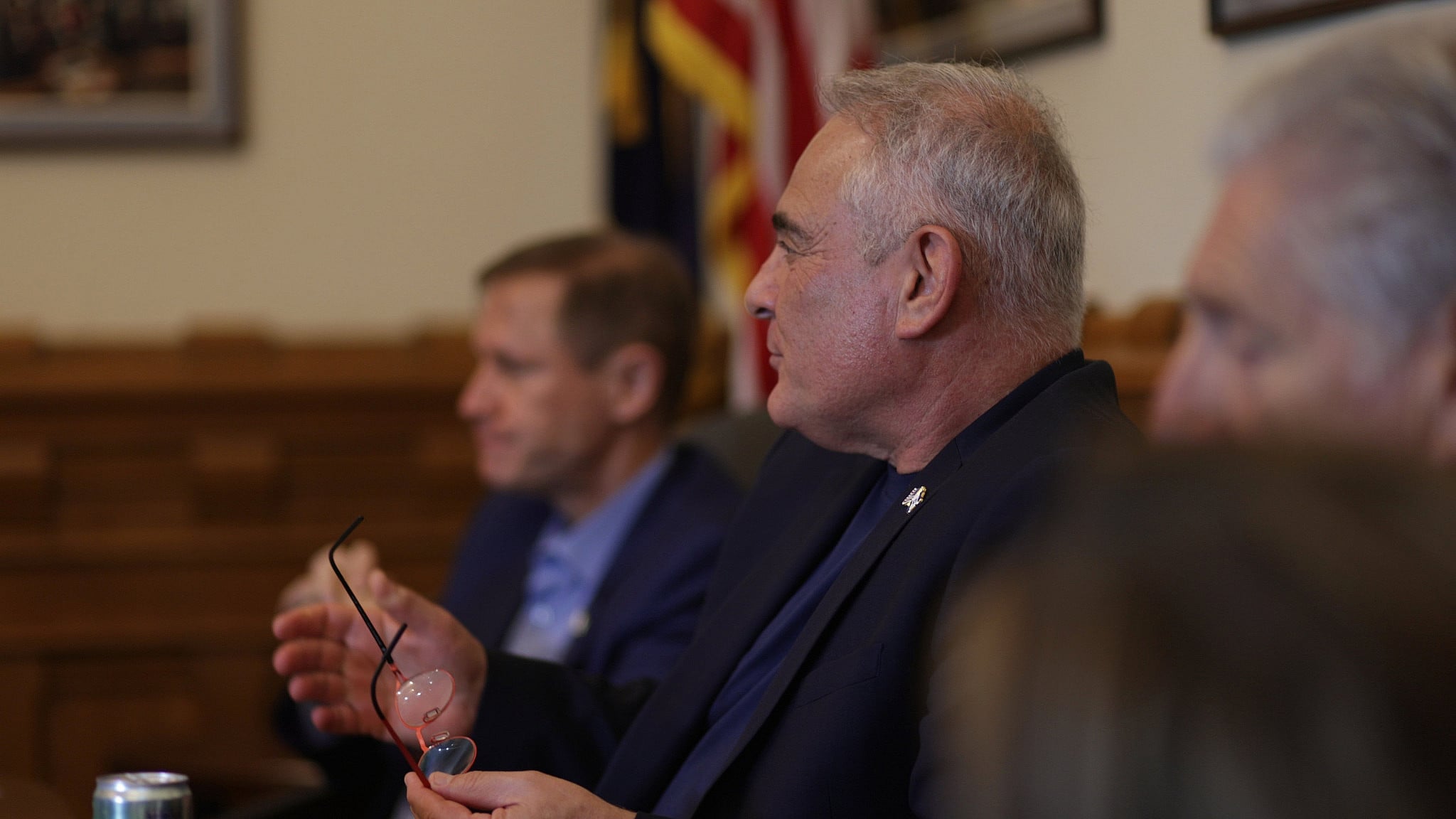
That process culminated in a working session on June 5 at the Indiana Statehouse.
June 5 Was a Working Session, Not a Ceremony
Looking back, June 5 was less a conference than a practical test.
Government officials.
Technology executives.
Cybersecurity leaders.
Infrastructure specialists.
University representatives.
Private industry.
Indiana and Israeli stakeholders.
They were intentionally brought together in one environment.
The objective was not simply to hear a presentation.
It was to determine whether meaningful collaboration could emerge when people with complementary expertise were given the opportunity to collaborate directly.
Throughout the day, the conversation repeatedly returned to common themes.
Artificial intelligence.
Cybersecurity.
Critical infrastructure.
Energy and water resilience.
Public-private coordination.
Workforce readiness.
Institutional resilience.
The day also included a live infrastructure resilience simulation, requiring participants to work through evolving scenarios, coordinate across organizational boundaries, and make decisions under pressure. Rather than discussing resilience as a concept, participants experienced it as an operational challenge.
Yet the most important outcome wasn’t the presentation or the simulation.
It was the willingness of participants to continue building relationships after the formal agenda concluded.
That may be the strongest indicator that an initiative has genuine long-term potential.
An Important Observation
One lesson from June 5 continues to stand out.
From my perspective, the greatest value wasn’t found at the podium.
It was found in the conversations between sessions.
The discussions during breaks.
The introductions that connected people who otherwise might never have met.
Those unscripted moments uncovered shared priorities, complementary capabilities, and opportunities that no agenda could have predicted.
Sometimes the most consequential outcomes of a working session are the ones that cannot be scheduled.
Preparing for Israel
By the time the TechIndiana delegation departed for Israel later that month, the foundation had already been laid.
The delegation was not beginning a conversation.
It was continuing one.
Indiana arrived with clearer priorities, stronger relationships, and a practical framework for collaboration.
The conversations in Israel deepened those relationships and ultimately led to the signing of the memorandum of understanding.
The agreement did not create the collaboration.
It recognized work that had already begun.
That story continues in Part II.
Author’s Note
This is the first article in a three-part series examining the development of the Resilience Tech Indiana Israel Initiative. Rather than focusing solely on the memorandum of understanding, the series explores how international partnerships develop, how they are strengthened through direct engagement, and what is required to transform shared intent into lasting collaboration.