Before There Was a Synagogue, There Was a Dining Room
How two ordinary people built a Jewish community long before we had a building.
Every Jewish community has people like Norm and Esther Wean.
They aren’t rabbis or major philanthropists. Their names aren’t engraved on buildings. They simply open their homes, teach children, drive carpools, organize events, and quietly create the communities the rest of us inherit.
Growing up in Holbrook, Massachusetts, in the 1960s, my Jewish education didn’t begin in a synagogue. It began around the Weans’ dining room table.
Before Holbrook had a Jewish Community Center or a synagogue, it had Mr. and Mrs. Wean.
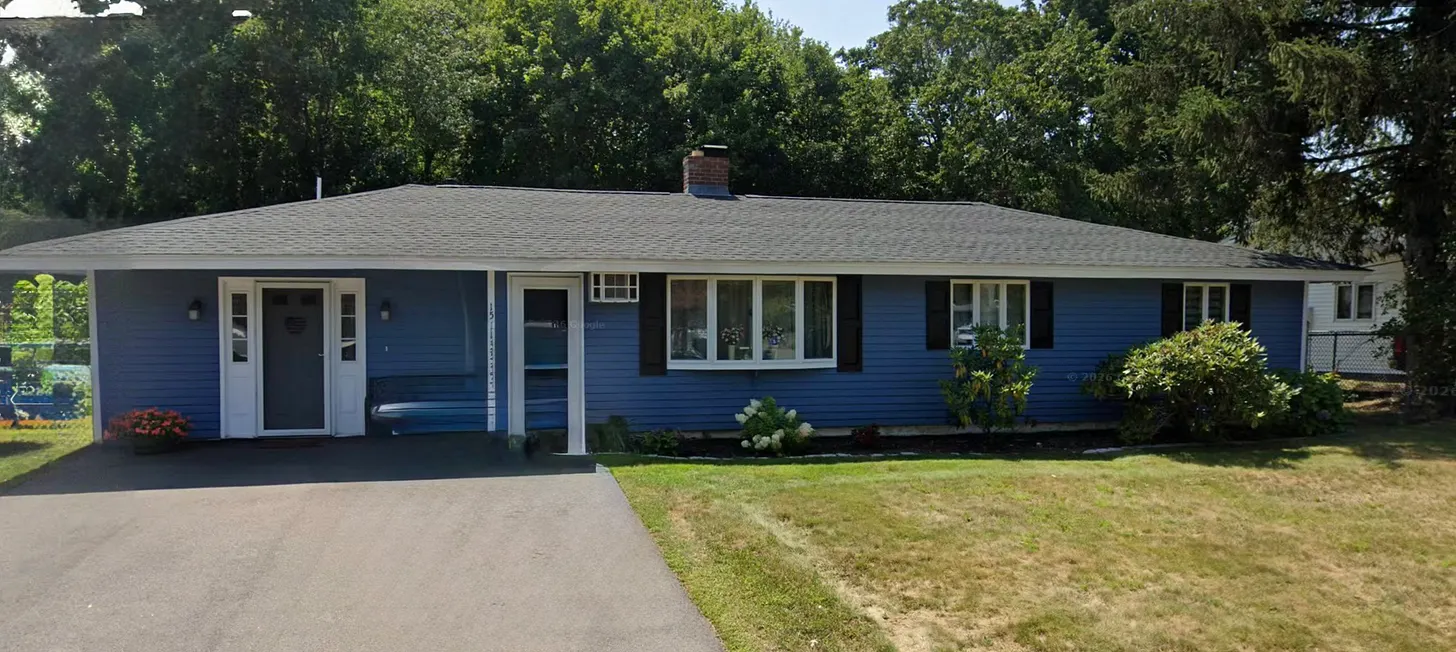
A couple of evenings each week, a handful of Jewish kids gathered around the dining room table in their ranch house on Loud Road to learn Hebrew. I was one of them.
Holbrook was a working-class suburb south of Boston with fewer than a hundred Jewish families. There was no synagogue. No Hebrew school. No rabbi. Those would all come later.
For us, Jewish education began in the Weans’ home.
Mr. Wean spent his days teaching fourth grade in the Boston Public Schools. A few evenings each week, he came home and taught another classroom full of children. Mrs. Wean welcomed us into their home, kept the whole operation running, and somehow managed to get many of us there and back each week.
Mr. Wean was a stout man with a surprisingly high-pitched raspy voice. His house always smelled faintly of sweet pipe tobacco. Every now and then I’ll catch that same aroma somewhere, and for an instant I’m ten years old again, sitting around his dining room table.
Most of the Hebrew I learned there has long since faded from memory.
One thing, however, remains crystal clear.
The Monstah Machine.
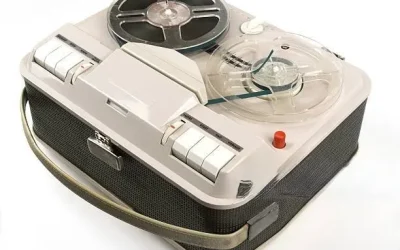
To adults, it was a tape recorder.
To us, it was “The Monstah.”
At the end of each class, Mr. Wean would patiently thread the tape through the reels, press the large white button, and the machine would slowly come to life. He somehow turned Hebrew vocabulary review into a game, seeing how many words each of us could answer before finally missing one. The Monstah always seemed to know who hadn’t studied.
Nearly sixty years later, I can still hear those vocabulary words echoing in my head.
Ish. Man.
Ishah. Woman.
Yeled. Boy.
Yaldah. Girl.
Apparently, mild childhood anxiety is surprisingly effective at preserving vocabulary.
But when I think back on those evenings, it isn’t the Hebrew words I remember most.
It’s the people.
There was Judy Azanow, my first crush. Whether she improved my Hebrew is debatable. She certainly improved my attendance.
There was Mark Minsky, who became one of my closest childhood friends and who still joins me for an occasional round of golf all these years later.
And then there was my neighbor, Gary Rubin.
Every school has its legendary story. Ours involves Gary and Mrs. Wean’s Buick.
One afternoon, on the ride home from Hebrew school, Gary’s passenger door suddenly flew open. Before anyone could react, Gary rolled out of Mrs. Wean’s Buick and onto the road. Thankfully, whether by physics or providence, his momentum carried him harmlessly onto the shoulder of Abington Avenue. He climbed to his feet, more startled than injured.
The rest of us were too young to appreciate how frightening it must have been for Mrs. Wean. We just watched Gary pop to his feet, brush himself off, and burst into laughter ourselves—until Mrs. Wean reminded us that she didn’t find it nearly as amusing.
“The Day Gary Rubin Fell Out of Mrs. Wean’s Buick” became part of the folklore of our little Hebrew school. My own children, who never met the Weans—or Gary Rubin, for that matter—know the story by heart.
For years, those memories remained just that: funny stories, childhood snapshots, a terrifying tape recorder, a raspy-voiced teacher, and a Buick full of laughing kids.
Only much later did I begin to appreciate what was really happening in that house.
There wasn’t a synagogue because there wasn’t one yet.
So Mr. and Mrs. Wean opened their home.
There wasn’t a Hebrew school.
So they created one.
There wasn’t yet much of a Jewish community in Holbrook.
So, quietly and without fanfare, they began to build one.
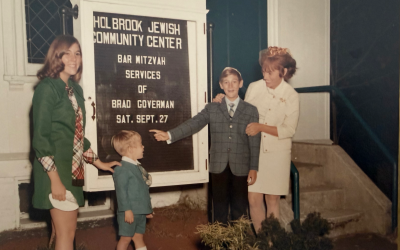
Years later, our little Jewish community converted an old church into a Jewish Community Center that would eventually become Temple Beth Shalom. It was there that I stood on the bimah and became a bar mitzvah.
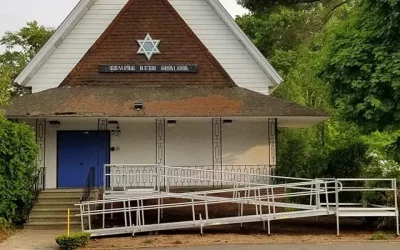
For years, I thought that was where my Jewish journey began.
Looking back, I realize it began years earlier around a dining room table on Loud Road.
It took me nearly sixty years to understand that while we thought we were learning Hebrew, Norm and Esther Wean were doing something much larger. They were building a Jewish community, one child, one family, one Tuesday and Thursday afternoon at a time.
They rarely appear in history books, and few buildings bear their names. Yet they are the people who quietly stitch neighborhoods into communities and traditions into lives. Most never realize the impact they’re having because they’re too busy doing the work.
Norm and Esther weren’t simply teaching Hebrew vocabulary. They were helping shape Jewish identities. They opened their home, gave generously of their time, and created a place where a handful of children began to understand what it meant to belong to something larger than themselves.
I have no idea whether Norm and Esther ever imagined that sixty years later one of those children would still be talking about the Monstah. I only know that one of those children has never forgotten what they gave him.
What they were really building wasn’t a Hebrew class.
It was a community.
The Monstah eventually fell silent.
So did Norm and Esther Wean.
The community they helped build never did.