Before We Say Kaddish for Nemenčinė

On September 9, descendants of the Jews of Nemenčinė will gather by videoconference to remember a community murdered eighty-five years ago. I will address the commemoration and name what the memorial does not.
On Wednesday, September 9, 2026, descendants, relatives, and friends of the Jews of Nemenčinė will gather by videoconference for the eighty-fifth anniversary commemoration of the destruction of the town’s Jewish community.
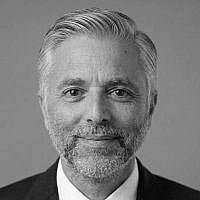
Participants have been asked to bring a candle and to join in the recitation of Kaddish. I will speak about the history of the community, its destruction, and the people who carried it out. The account rests on survivor testimony I published in 2022.
The date is significant. The Jews of Nemenčinė were murdered on Saturday, September 20, 1941, corresponding to 28 Elul 5701. It was the final Shabbat of the Jewish year, two days before Rosh Hashanah. The 2026 commemoration falls on 27 Elul, one day before the Hebrew anniversary and eleven days before the civil anniversary.
Before the war, approximately 110 Jewish families lived in Nemenčinė. They maintained a Hebrew elementary school, a Yiddish-Hebrew library, a community bank, a free-loan society, and two study houses. The town also sheltered the Mezritsh yeshiva, led by Rabbi Panitz. Rabbi Gedalye Snapir served as the town’s rabbi.
German forces entered Nemenčinė on June 24, 1941. A Lithuanian civilian administration and police force followed. Jews were marked, robbed, humiliated, beaten, and forced to work without wages. Unpaid labor compelled by armed men is slavery.
On September 19, the Jewish committee asked Mayor Bronius Tserkauskas what would happen to the Jews. He assured them that they faced no danger. The community began preparing for Rosh Hashanah.
That same night, police and partisans required peasants and townspeople to bring shovels. They were taken along the Vilnius highway and ordered to dig a long grave.
I do not need to tell you what the mayor knew. I need only set his answer next to the shovels.
The next morning, police from Nemenčinė and reinforcements from other towns ordered every Jew to report to the study house. The victims were told that they were being transferred to the Vilnius ghetto. A German, accompanied by Lithuanian policemen, promised that their valuables would finance a communal kitchen in Vilnius.
It was a lie.
At 11:00 a.m., Lithuanian police, partisans, and several Germans drove the prisoners from the study house. Families were searched, robbed, and beaten. The column was marched approximately three kilometers along the Vilnius highway and then turned toward the forest at Kobilka.
People began throwing away their packages and running into the trees. Lithuanian police and partisans fired after them. Approximately fifty people escaped the column, although the hunt for them began immediately.
Those who remained were driven into a valley and ordered to lie face down. Germans and Lithuanians removed them in groups of ten. The prisoners heard automatic-rifle fire and the screams of the people taken before them.
The shooting began at approximately 1:15 in the afternoon and continued until about 3:00. Peasants who had been forced to dig the grave were then made to cover the bodies.
Survivor testimony estimated approximately 600 victims. The Jäger Report records 403 Jews murdered at Nemenčinė: 128 men, 176 women, and 99 children. The two totals should not be forced into artificial agreement. Jäger’s perpetrator record states that Einsatzkommando 3 conducted its executions in cooperation with Lithuanian partisans and that Joachim Hamann ensured cooperation with Lithuanian partisans and the responsible civilian authorities.
The survivor record supplies what the perpetrators’ tally does not. It preserves the names of mothers, newborn babies, rabbis, children, families, policemen, partisans, alleged killers, rescuers, betrayers, and people who profited from the victims’ property.
The memorial at Kobilka does not name the local participants. The municipality-backed portal’s Lithuanian transcription reads “hitlerininkai ir jų pagalbininkai,” meaning “Hitlerites and their helpers.” Its English presentation renders this as “Nazis and their accomplices.” In both versions, the German perpetrators receive an identity and the second party does not.
The complete documented account is published on Substack. A permanent PDF edition is also available here.
At the commemoration, I will speak about the people behind these facts. I will speak about an elderly Jewish woman who was too weak to walk but refused a wagon because it was Shabbat. I will speak about Rokhel Kheyn, forced toward the grave with the baby she had delivered only two weeks earlier. I will speak about Miriam Kremer, who fainted when she saw the pit and was revived by her parents so that they could carry her toward it.
Then the memorial prayer will be recited. Descendants will say Kaddish. Candles will be lit.
Remembrance is not complete when the victims are named but those who opened the doors, carried the rifles, drove the column, and stood beside the grave remain hidden inside the word “accomplices.”
Lithuania had the highest Jewish murder rate in all of Europe. More than 200,000 Lithuanian Jews were murdered, the highest percentage of any country in Europe.
Eighty-five years is time enough to investigate the seven names Avrom Daytz supplied. If Lithuania has punished anyone for participating in the murder of the Jews of Nemenčinė, it should name that person. If it has not, it should say why. Lithuania’s own criminal law provides no limitation period for genocide, crimes against humanity, and specified war crimes.
Eighty-five years later, the record still speaks. Lithuania must answer what it contains.