
Where history exposes power and moral failure
Ignorance Is Not Strength: The Dangerous State of History Education
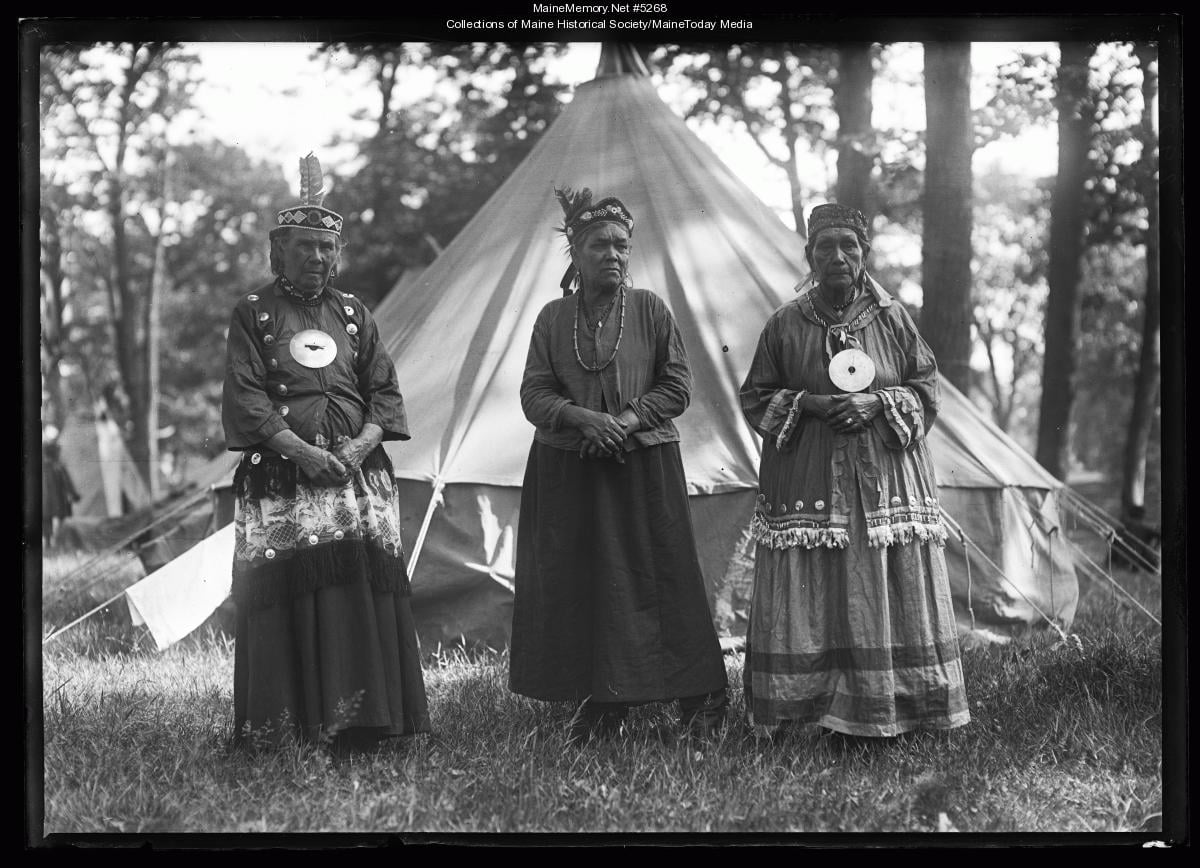
Passamaquoddy and Penobscot people displaying their cultural traditions at Deering Oaks Park in Portland, Maine, July 3, 1920. Photograph: Portland Evening Express, via Wikimedia Commons (open-use historical image).
I’m a historian trained at Saint Mary’s College, The University of Notre Dame, and the University of Edinburgh. My areas of expertise are modern Europe, including colonialism and Irish history as well as the Holocaust. My research often explores violence, mass trauma, power dynamics, and who controls narratives. As a teacher, I was trained and certified at Edgewood College (now Edgewood University) in Madison, Wisconsin, in secondary social studies education and TESOL (Teaching English to Speakers of Other Languages), although as an educator I now have only one student: my own teenage son, who is both academically gifted and has distinct challenges as an autistic learner. I create his curriculum and am qualified to do so.
I’m very aware of what it means to give students a robust, meaningful history education, and what it means when one is dangerously lacking.
In July 2023, the Florida State Board of Education approved new African American history standards requiring middle school students to learn that enslaved people “developed skills which, in some instances, could be applied for their personal benefit.” Teachers, historians, civil rights organizations, and lawmakers objected to the standards, arguing that they whitewashed the brutality of chattel slavery. The state’s education officials defended the curriculum, which followed Florida’s Stop W.O.K.E. Act and controversies involving Advanced Placement African American Studies.
The implications for historical education are enormous. Slavery was not a vocational training program. The people subjected to it were human beings who were bought, sold, exploited, sexually assaulted, separated from their children, and legally deprived of their freedom. Describing skills acquired during enslavement as potentially beneficial to the enslaved is an extraordinary way to teach children about an institution whose very existence depended upon denying human beings ownership of their own labor.
Meanwhile, at federal historic sites, the Trump administration has been removing or revising exhibits addressing slavery, Indigenous history, and other subjects it considers disparaging to American history.
At Philadelphia’s President’s House, exhibits documenting George Washington’s ownership of enslaved people, including memorials to nine individuals enslaved there, were removed in early 2026. The city challenged the removals in federal court. These were not obscure historical accusations or speculative interpretations. Washington’s ownership of enslaved human beings is extensively documented.
On October 22, the Associated Press reported that approximately 30 interpretive markers had been removed from Acadia National Park in Maine, including a marker explaining the sacred significance of Cadillac Mountain to the Wabanaki people. The Wabanaki have inhabited the northern seaboard for more than 10,000 years, and the interpretive material had been developed through years of collaboration with Indigenous communities.
The National Park Service is supposed to preserve and interpret the history of the places under its care. Removing information about the Indigenous people who inhabited those places for thousands of years is an astonishing exercise in deciding which Americans deserve to have their history publicly acknowledged.
And then there’s Christopher Columbus. On October 12, Donald Trump’s White House released a social media post with an AI-generated image of Christopher Columbus declaring that he was “a hero.” Trump’s White House said “Columbus Day is back.”
Historians (and, indeed, anyone with a scrap of common sense and decency) can see straight through this propaganda. Christopher Columbus was no hero.
In 1500, Christopher Columbus was arrested, shackled, and shipped back to Spain after a governorship marked by the enslavement, forced labor, and brutal punishment of Indigenous people. He reportedly refused to have his chains removed during the voyage, apparently hoping to impress upon the Spanish monarchs the terrible indignity of his own captivity.
For Italian-American Heritage Day, there is an extraordinary roster of Italian and Italian-American figures whose achievements in science, medicine, literature, civil rights, labor, public service, and the arts offer considerably more to celebrate than Christopher Columbus.
Fiorello La Guardia, Saint Frances Xavier Cabrini (Mother Cabrini), Enrico Fermi, Arturo Toscanini, Geraldine Ferraro, Leonard Covello, Angela Bambace, John Basilone, Rita Levi-Montalcini, Frank Capra… Columbus never set foot in what is now the continental United States. Mother Cabrini spent decades serving people who lived here.
The situation with Holocaust education is also deeply troubling, particularly because of the uniquely horrific situation the Holocaust occupies in modern human history and the non-negotiable importance from learning from it in granular detail to prevent a similar deliberate genocidal atrocity.
According to a July 2026 report by the U.S. Government Accountability Office, Holocaust education is required through academic standards or state laws in 42 out of 50 states, as well as Washington, D.C. In eight states, it is not required, although some provide other educational resources and guidance.
But recent polls have been extremely alarming about what people in the United States know and don’t know about the Holocaust.
In April 2026, CBS New York reported on a survey of 400 registered voters on Long Island. Thirty percent either did not believe Holocaust education should be compulsory or declined to answer. Fifteen percent either believed Holocaust deaths had been exaggerated or declined to answer, while 27 percent either agreed that Jews were too focused on the Holocaust and should move on, or refused to answer.
An earlier nationwide Claims Conference survey of millennials and Generation Z found that 63 percent of respondents did not know that six million Jews were murdered in the Holocaust. Nearly half could not name a single concentration camp or ghetto, and 11 percent believed Jews had caused the Holocaust.
These figures are appalling. The Holocaust is among the most extensively documented crimes in human history. We have photographs, film, testimony, administrative records, railway schedules, deportation lists, Nazi correspondence, perpetrators’ accounts, and the surviving physical evidence of extermination camps. There is no shortage of historical material.
Some good efforts are being made to bring education to places where it may be needed most. Louisiana Tech University is one of 50 American libraries selected to host Americans and the Holocaust, a traveling exhibition developed by the United States Holocaust Memorial Museum and the American Library Association. The exhibition will be displayed at Prescott Memorial Library from October 26 through December 3.
It examines how Americans responded to Nazism, challenging the common assumption that Americans knew little and did nothing. It also examines how isolationism, xenophobia, racism, antisemitism, and the Great Depression influenced American responses to the persecution and murder of European Jews.
This is precisely the kind of historically meaningful educational programming we need. It asks people to consider what Americans actually knew, what they did, and what choices were available to them.
The United States is not the only place where a lack of modern-day awareness about the severity of the Holocaust is being seen alongside a sharp uptick in antisemitism. According to the BBC, the UK is reviewing and revamping its Holocaust education program after a “shocking” review of antisemitism in British schools and society. The government has accepted all 27 recommendations made by Sir David Bell, the former chief inspector of Ofsted, including dedicated teacher training and stronger procedures for addressing antisemitism.
Education Secretary Lucy Powell has promised to “update and strengthen” Holocaust education, while schools and colleges in England will be required to recognize antisemitism as a specific safeguarding concern.
These initiatives are welcome, although it is extraordinary that, more than eighty years after the liberation of Auschwitz, we are still struggling to ensure that students receive an adequate education about what happened there.
The expression about canaries in coal mines can be very telling, and we have them everywhere in history education when it comes to alarmingly deficient teaching methods and curricula. The poll results, the removal of historical markers, the rehabilitation of Columbus, and the teaching of slavery through supposed benefits to enslaved people all provide ample warning.
In perhaps one of his most well-known and chilling quotes, George Orwell made one of the three core Party slogans of Ingsoc in 1984, “War is peace. Freedom is slavery. Ignorance is strength.”
But when it comes to stripping out the truth from history and leaving students unaware of what really happened, we’re left weak and set up for failure.
Related Topics
Related Posts