Exploring Memory, War, and Survival
Before We Understood What a Grenade Was
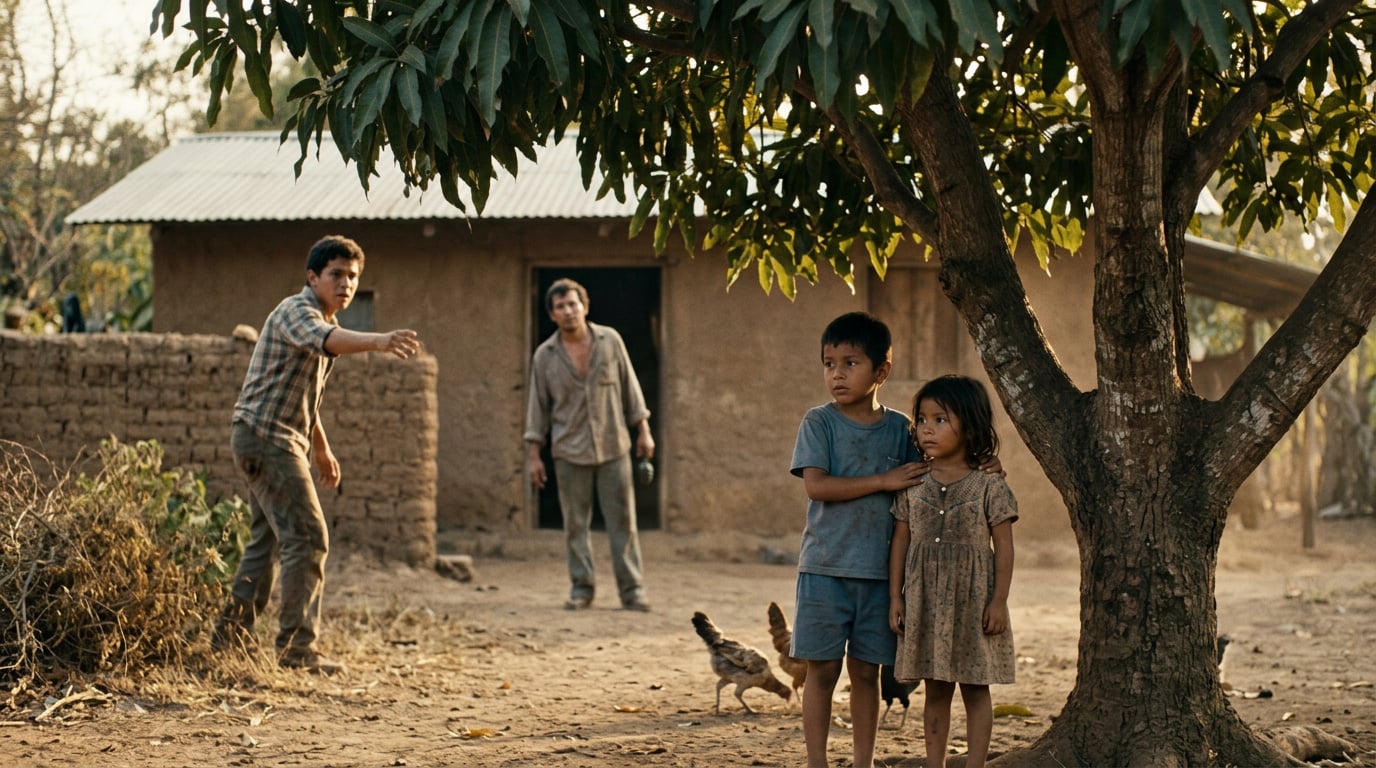
A childhood memory from San Jorge, El Salvador, during the Salvadoran Civil War.
There are memories that remain suspended between childhood and catastrophe. At the time they happen, they do not feel historical. They do not announce themselves as trauma. They arrive disguised as confusion, as heat, as adults behaving strangely while children continue playing because they do not yet understand danger.
For me, one of those memories begins with a grenade.
I was a child during the Salvadoran Civil War, playing outside with my sister Flor in the front yard of our house in San Jorge. We spent most afternoons together beneath the shade of a tigüilote tree (Cordia dentata) while chickens wandered between stones and dust drifted through the heat rising from the road. We were only two years apart and inseparable in the way children sometimes are before the world teaches them fear.
At that age, life was measured in games, not consequences.
I remember the metallic warmth of the late afternoon, the smell of dry earth, and the sound of sandals scraping the street when my brother Rubén arrived with his friend Sergio. Both belonged to the local civil defense.
Rubén looked tense the moment I saw him.
Sergio looked drunk.
At first, I did not understand what he was holding. I only noticed that the adults around him were behaving differently. Their movements had become cautious, abrupt, unnatural. Later I would understand why.
Sergio was carrying a grenade with the pin removed.
Even now, writing those words decades later, part of me struggles to comprehend the reality of it. A drunk man wandering through the center of town holding an armed grenade while children played nearby and vendors continued selling food only a few yards away.
War distorts normality so completely that people sometimes continue ordinary routines beside the impossible.
I remember Sergio shouting that something needed to explode. I no longer remember his exact words. Memory preserves terror more clearly than dialogue. But I remember the agitation in his voice and the growing panic in Rubén’s face.
That is what has stayed with me most.
My brother trying to save us without frightening us.
He motioned repeatedly for Flor and me to go inside the house. His gestures grew sharper each time, more desperate. But we did not move. We thought he was overreacting. We were children. We did not yet know how to recognize death in another person’s eyes.
I remember continuing to stand there beside Flor, half-playing, half-watching, curious about the adults and their strange tension.
Later in life I would think often about that moment: how close children can stand to catastrophe without understanding any of it.
Eventually Rubén and another relative managed to convince Sergio to leave. He staggered away down the street carrying the grenade in his hand while everyone watched in silence. Rubén remained standing outside for a moment afterward, exhausted from the effort of trying to control a man too drunk to understand what he carried.
Then the explosion came.
The sound tore through the town with terrifying force. The ground shook beneath us. Roofs trembled. Birds burst from nearby trees.
I remember Rubén freezing at the doorway before running toward the street.
Even before anyone confirmed it, he already knew Sergio was dead.
As children, Flor and I still did not fully understand what had happened. We understood noise. We understood fear. But we did not yet understand how quickly a human body could disappear from the world.
That knowledge arrived later.
So did the rest of the war.
Within weeks, San Jorge descended deeper into violence. Armed groups entered town. Members of the civil defense were hunted and executed. Bodies remained in the streets because people were too terrified to retrieve them. The smell of death settled over everything for days beneath the heat.
My brother had already left for the United States by then. He did not want to become part of the war. Looking back now, I understand how narrow survival sometimes was. A few different choices, a few delayed decisions, and entire families disappeared.
But strangely, when I think about those years, it is not the corpses in the streets that return to me first.
It is the yard.
Flor beside me.
Rubén signaling desperately for us to go inside while we remained rooted there, unable to understand that we were standing only seconds away from death.
For years, I thought the memory was about the grenade itself.
Now I understand it was about innocence.
About the terrifying vulnerability of children who trust the world simply because they have not yet learned what it can do.
We did not know what a grenade was.
We only knew how to play.
And perhaps that is one of the cruelest things war destroys first: the invisible distance between childhood and death.
Related Topics