
Ben-Gurion to Netanyahu: Israel’s Enduring Strategy of Peace Through Strength
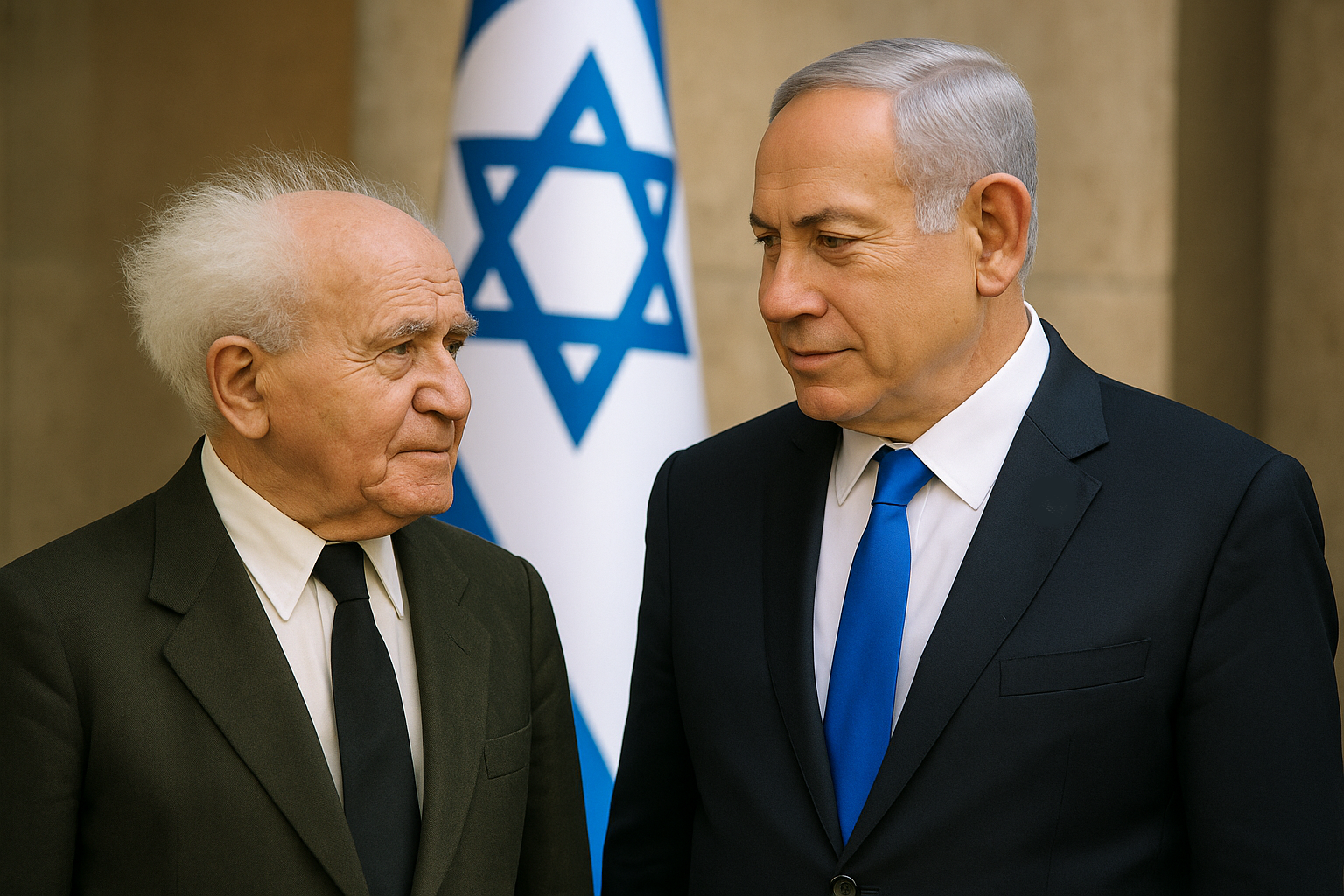
From David Ben-Gurion to Benjamin Netanyahu, Israel’s most consequential leaders have shared a common doctrine: peace is not granted through goodwill or concessions—it is earned through strength, strategy, and shared interests. As Netanyahu pursues normalization with former Arab adversaries, he is not charting new territory; he is continuing the legacy of Israel’s founding generation.
The Ben-Gurion Doctrine: Regional Alliances Built on Interests
In the late 1950s, Ben-Gurion crafted a regional alliance with the non-Arab, secular regimes of Iran and Turkey to counter the revolutionary, anti-Israel axis led by Egypt and Syria. Those Arab states had already launched full-scale wars against the young Jewish state in 1948 and 1956, and would continue to do so in 1967 and 1973. By contrast, Iran and Turkey were, at the time, modernizing nations aligned with the West—secular, pragmatic, and open to cooperation with Israel.
A Strategic Reversal: Enemies Become Partners
Fast forward to today, and the map of the Middle East has shifted in a profound—and ironic—way. The nations once seen as partners have become adversaries, and those once sworn to Israel’s destruction are now stepping into the role of strategic allies.
Iran and Turkey, now ruled by religious nationalists, have emerged as aggressive, anti-Israel powers, exporting extremism and fueling instability across the region. Meanwhile, countries like Egypt and Jordan—joined by the United Arab Emirates, Bahrain, Morocco, and potentially even Saudi Arabia and Syria—are forging new paths of dialogue and cooperation with Jerusalem. The driving force? A shared fear of Iranian expansionism and the radical Shiite crescent stretching from Tehran through Baghdad, Damascus, and Beirut.
Netanyahu’s Realpolitik: Strength Over Sentiment
This realignment is not the fruit of idealism or goodwill. It is rooted in a Ben-Gurion-style pragmatism that sees peace not as an act of altruism, but as an agreement between actors with aligned interests.
Paradoxically, it is Netanyahu—so often portrayed as a hawk—who has emerged as the true heir to Ben-Gurion’s strategic worldview. While the Israeli left once embraced the hope that peace could be achieved through territorial compromise, that model has failed. The Oslo Accords, launched with great fanfare by Shimon Peres and Yitzhak Rabin, envisioned a “New Middle East” in which land-for-peace would transform enemies into partners. Instead, that vision was shattered by broken promises, terrorism, and disillusionment.
The Collapse of Oslo and the Rise of Strategic Clarity
Even some of the ideological heirs of Menachem Begin—originally architects of the settlement movement—eventually accepted the left’s premise that peace required the creation of a Palestinian state along the 1967 lines. But the events of the past three decades, and especially the horrors of October 2023, have brought clarity to much of the Israeli public.
That dark day, when Hamas terrorists slaughtered, burned, and kidnapped Israeli civilians in an unprovoked assault—the most brutal attack on Jews since the Holocaust—destroyed any lingering illusions. The trauma of October 7th was not just a national wound. It was a wake-up call. It reminded Israelis that appeasement and retreat invite only more violence.
A Doctrine for the Present—and the Future
Today, Netanyahu continues to pursue what Ben-Gurion practiced: leveraging Israel’s military, technological, and diplomatic strength to build coalitions with regional powers that share its interest in stability and progress. He does so not by offering more land or making symbolic gestures, but by presenting Israel as an indispensable ally in a dangerous neighborhood.
The Public Has Spoken: No More Illusions
The Israeli public has spoken. The majority no longer supports the belief that withdrawals or gestures of goodwill will tame an implacable foe. They no longer trust that peace can be achieved through compromise with leaders who glorify terror and reject the Jewish right to self-determination.
Peace Through Strength, Not Surrender
In this new reality, the Ben-Gurion–Netanyahu doctrine has taken firm hold: peace not as surrender, but as strategy. Peace not as fantasy, but as policy. Peace not from sacrifice, but from strength. A peace befitting a resilient people who refuse to be broken.