Benjamin Stora Interview | Alexandre Gilbert #335
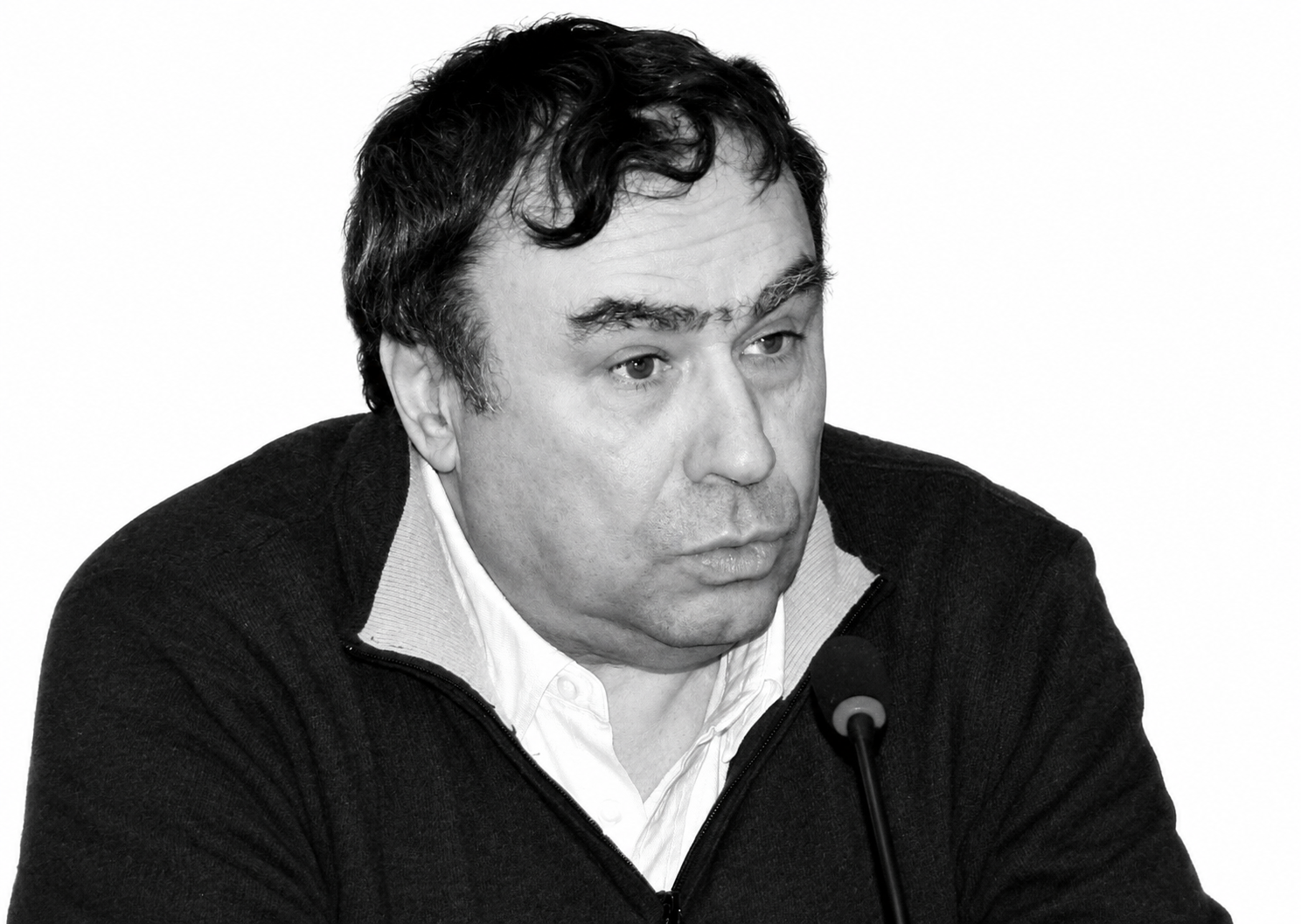
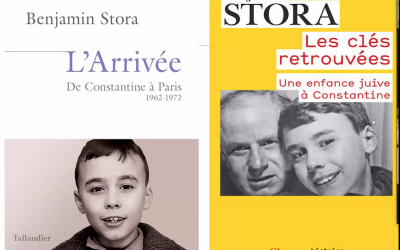
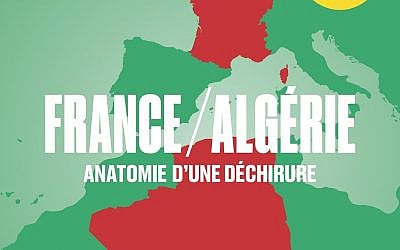
Benjamin Stora, French historian commissioned by President Emmanuel Macron to write an official report on the memory of colonization and the Algerian War published Histoire de la guerre d’Algérie (1992), La Gangrène et l’Oubli: la mémoire de la guerre d’Algérie (1991), with Abdelwahab Meddeb, History of Jewish-Muslim Relations: From the Origins to the Present Day (Princeton University Press, 2013), The Arrival, from Constantine, to Paris, The Keys Regained and with Thomas Snégaroff France/Algeria: anatomy of a tear (2026).
The Arrival: “
On the plane, at the moment of takeoff, I watch the passengers. Some are crying. Faces are sad, exhausted. Very quickly, a great silence sets in. The anxiety, the violence of the situation crush any desire for conversation. No one dares speak anymore. Then, behind the windows, night appears. So suddenly that we couldn’t watch the Algerian land recede into the distance. This land, already absent. And so I have not kept in my memory the ‘last image’ of a vanished country. It is still night when we arrive at Orly. My uncle Robert is waiting for us there. By way of welcome, a Red Cross hostess offers each of us a piece of candy. We were in France, and lacking the City of Light, seated in the back seat, through the car window, I watched the darkness of the ring road until we reached our destination: Montreuil, in the Paris suburbs…”
In the space of about 10 years, young Benjamin Stora passes from childhood to adulthood, from a Constantine at war to the Paris of May ’68. He tells his own story — one of exile, and of a man’s coming of age as he embraces a new life.
The Keys Regained: When Benjamin Stora’s mother died a few years ago, he discovered, at the back of her nightstand drawer, the keys to their apartment in Constantine, left behind in 1962. These rediscovered keys opened the doors to his memory. War memories: when, in August 1955, soldiers set up a machine gun in young Stora’s bedroom to fire on fleeing Algerians, he is four and a half years old and doesn’t understand. Happy memories: the gentle warmth of the hammam among the women, summer trips to the beach, the neighborhood cinema showing American westerns, the flavor of the food and the joy of celebrations… Between the mother’s Arabic and the father’s French, the blonde schoolteacher and the rabbis of the Talmudic school, the clamor of the Jewish streets and the modernity of the European quarter, one can read the relationships between the different communities — close, yet separate. Benjamin Stora has written his most intimate book here. Through the eyes of a child who became a historian, he renders, with emotion, a lost world: that of the Jews of Algeria, devoted to the Republic and enamored of the Orient.
France/Algeria: anatomy of a tear: Two centuries of domination, struggles, exile…and memories still unreconciled For more than 60 years, relations between France and Algeria have swung between diplomatic tensions, raw memories, and competing narratives. Shaped by 132 years of colonization and a bloody war of independence, this shared history remains a sensitive subject on both sides of the Mediterranean. Through 45 questions and answers, Thomas Snégaroff and Benjamin Stora explore the key stages of colonization, the roots of Algerian nationalism, the divisions in collective memory, and the deep consequences for contemporary societies. Why did it take so long to name this war? What role do memories play in public debate? Is reconciliation possible? A clear and accessible book, featuring maps, infographics, and reference texts.
………………………………………………………………………………………………………………..
Interview
You are publishing, together with Thomas Snégaroff, a timely book on relations between France and Algeria. Has General de Gaulle, who is much discussed at the moment, in fact saved France a second time from a fascist threat during the generals’ putsch?
B.S: On April 22, 1961, Generals Maurice Challe, Raoul Salan, Edmond Jouhaud, and André Zeller attempted a putsch to seize power in Algeria in order to prevent the move toward Algerian self-determination. In a televised address, De Gaulle, in uniform, on April 23, 1961, called on the conscripts to disobey the putschist officers. This strongly contributed to isolating the movement. The majority of the army remained loyal to the government, and the putsch collapsed within a few days. But there are important differences between De Gaulle’s action in 1940–1941 and the years 1961–1962. France in 1940 had suffered a serious military defeat against Germany, and the deputies, by an overwhelming majority, had voted full powers to Marshal Pétain. Let us recall that at that moment only one prefect, Jean Moulin, refused to obey the policy of the Vichy government. In 1961, faced with a revolt by conservative soldiers hostile to the abandonment of French Algeria, De Gaulle relied on a large majority of public opinion that no longer wanted the Algerian war. Even before coming to power, General De Gaulle had anticipated this shift in public opinion, especially at the time of the vote on the “special powers” sending the conscripts (voted in March 1956 by a majority of Communist and Socialist deputies in the National Assembly (1). The French army, which felt it had not suffered a military defeat in Algeria, was in favor of political solutions, and would not follow the officers who challenged the authority of the civilian government and contemplated using force against republican institutions. The idea that De Gaulle thus “saved France a second time” — once in 1940 by continuing the fight against Nazi Germany, and a second time in 1961 by causing a military coup attempt to fail — does not really correspond to reality. De Gaulle certainly played a major role in the failure of the Algiers putsch and in the defense of republican legality. But whereas he was very isolated in 1940 within the state apparatus and within a large part of a society that had become “Pétainist,” De Gaulle in 1961 was, this time, strongly supported by French society, as shown by the various referendums on self-determination for Algeria in 1961 and 1962. The putschist officers did not understand the weariness of the French, who above all wanted the return of the conscripts (400,000 men on the ground in Algeria).
How do you explain that Hélie de Saint Marc was decorated by Valéry Giscard d’Estaing, François Mitterrand, Jacques Chirac, and then Nicolas Sarkozy — four presidents of very different political leanings?
B.S: Hélie Denoix de Saint Marc was decorated mainly on account of a career marked by his engagement in the Resistance during the Second World War, his deportation to the Buchenwald camp, and then his military career in Indochina and Algeria. Despite his participation in the generals’ putsch of April 1961, which earned him a conviction and a prison sentence, he was subsequently amnestied and progressively rehabilitated. In 2011, he was raised to the dignity of Grand Cross of the Legion of Honor, a high French distinction. His decoration nevertheless sparked debate, with some believing that his participation in the 1961 putsch should not be forgotten, while others emphasized his exceptional destiny and the services he had rendered to France. Let us recall that it was under the presidency of François Mitterrand, and thus under a left-wing government, in 1982, that the main senior officers of the 1961 putsch were reinstated in their ranks, positions, and decorations. Some at the time, such as Michel Rocard, had spoken out against this decision.
Does the failure to seize the Blida air base by the 1st REP constitute the crux of this event?
B.S: The Blida air base, near Algiers, occupied an essential military position. The putschist generals were counting on the support of the air force to consolidate their control over Algeria and possibly extend their action to mainland France. However, at Blida as at other air installations, many officers and personnel remained loyal to Charles de Gaulle’s government. This loyalty notably allowed the maintenance of the “air bridge” between mainland France and Algeria, as well as the rapid transport of units that had remained loyal to the legal authority. Moreover, the insurgents quickly realized that the army as a whole would not follow them. In particular, the conscripts, glued to their transistor radios, listened to De Gaulle’s speech of April 23, 1961, calling on them to disobey. Within a few days, the putsch collapsed. Thus, the failure to effectively and lastingly seize the Blida air base symbolizes a fundamental weakness of the generals, who managed neither to rally the army as a whole nor to secure control of the strategic means indispensable to a seizure of power. It was while singing Edith Piaf’s song, “Non, je ne regrette rien,” that the paratroopers left the dissident air bases. This song would come to mark the putschists’ determination and their affirmation of French Algeria despite the putsch’s defeat.
The Flamant was the symbol of the resurrection of French aviation after the Second World War, the liaison aircraft of the South Vietnamese army, the first aircraft equipped with SS-11 missiles, and finally the aircraft behind the first in-flight hijacking in history, which led to the arrest of the FLN’s historic leaders. The Flamants of the Blida squadron bore the Snow White and the Seven Dwarfs mascot painted on their fuselage. Is this hijacking episode still anchored in Algerians’ memory?
B.S: The main Algerian leaders had boarded a flight from Rabat to Tunis, to take part in a meeting decided upon by the main nationalist movements in North Africa. The episode of the hijacking of the French aircraft, on October 22, 1956, carrying on board the five main “historic” leaders of the FLN — Hocine Aït Ahmed, Mohamed Boudiaf, Ahmed Ben Bella, Mohamed Khider, and Mostefa Lacheraf — deeply marked the minds of Algerian nationalists. This act was strongly condemned by the new King of Morocco, Mohammed V, and by the Tunisian president, Habib Bourguiba. France found itself isolated on the international stage, and the “Algerian question” was placed on the agenda of the UN.
This date also corresponds to the Sèvres Protocol, the secret Franco-Israeli-British agreement preparing the Suez expedition. Is this the tipping point toward the total reconfiguration of the region?
B.S: The secret Sèvres Protocol is a clandestine agreement concluded on October 22, 23, and 24 between France, the United Kingdom, and Israel in the town of Sèvres, near Paris. This agreement aimed to reverse the situation created by the nationalization of the Suez Canal by Gamal Abdel Nasser on July 26, 1956. The operation began on October 29 with the Israeli offensive in the Sinai. But this operation, while achieving military successes, would prove a major diplomatic failure. London and Paris accepted the ceasefire and withdrew their troops. In October–November 1956, the two main powers, the United States and the Soviet Union, asserted themselves on the international stage, at the expense of the two declining old colonial powers, Great Britain and France. The failure of the Suez expedition in November 1956, decided by the French and the British, marked the end of an era and the reconfiguration of the geopolitical map of the Middle East.
Notes:
(1) Sur l’attitude du général de Gaulle avant et après sa prise du pouvoir en 1958, voir mon ouvrage, Le mystère De Gaulle, Paris, Ed Robert Laffont, 2008, réédition dans la collection « Bouquins », Paris, 2020.
The books are available for purchase: The Arrival, from Constantine, to Paris,The Keys Regained, by Benjamin Stora and France/Algeria: anatomy of a tear, with Thomas Snégaroff.