
Published author, Jewish educator and scholar
Bereishit: Good, Evil, and the Moral Crisis of Our Time
ChatGPT
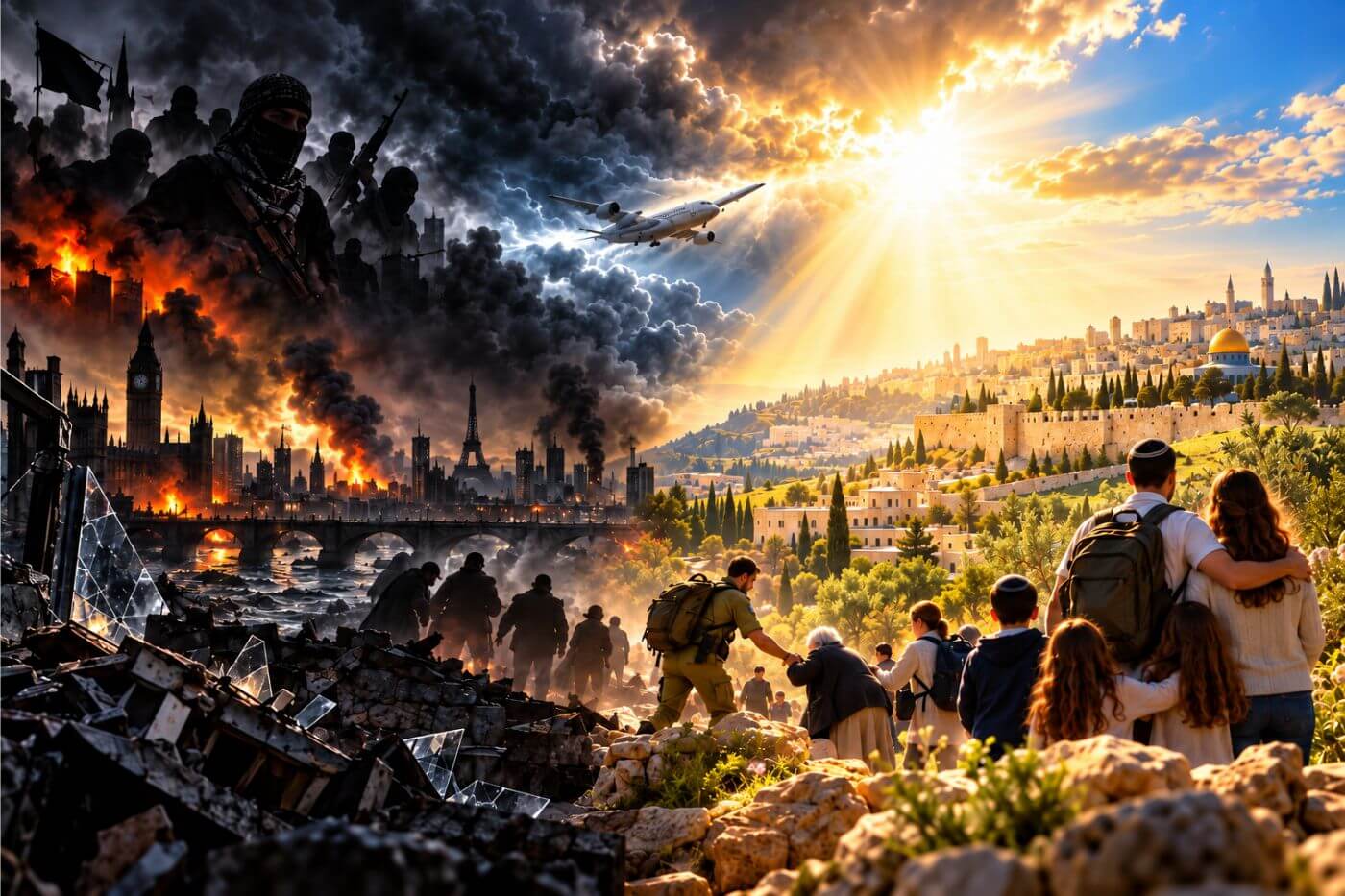
Three years ago, on October 7, Hamas perpetrated evil on a scale that the Jewish people had not experienced since the darkest days of the Holocaust. Terrorists invaded Israeli communities, murdered families, committed sexual violence, abducted men, women, children, and the elderly, and proudly filmed and broadcast many of their atrocities.
Yet perhaps one of the most disturbing developments since that terrible day has been not merely the existence of evil, but the growing reluctance in parts of the Western world to call it by its name.
Almost immediately after October 7, demonstrations and statements appeared that excused, rationalized, and sometimes even celebrated Hamas’s atrocities as acts of “resistance.” Slogans such as “From the river to the sea” and “Globalize the intifada” became fixtures at demonstrations and on university campuses, while hostility toward Israel increasingly spilled over into hostility toward Jews.
We see evil in the continuing rise of antisemitism, some of it fueled by radical Islamist ideology. We see it in Islamist violence in Europe. And we saw it again in the recent Flydubai incident, when a co-pilot reportedly radicalized by Islamist extremism attempted to hijack and crash a flight to Tel Aviv, bringing more than 170 people frighteningly close to disaster.
Of course, this is not an indictment of Islam or of Muslims as a whole. Millions of Muslims reject terrorism and live peacefully within democratic societies. But we should also be able to say clearly that Islamist extremism is real, that it threatens Jews and Western societies alike, and that moral clarity requires us to distinguish between right and wrong, and between good and evil.
It is precisely in the midst of this moral confusion that Parashat Bereishit offers a much-needed reminder.
The first account of creation depicts God as a master architect with a carefully designed and orchestrated plan. Day after day, God observes what He has created and declares that it is tov—good. At the conclusion of the six days, after the creation of humanity, He surveys the entire world and declares it tov me’od—very good.
This repetition is hardly incidental. Genesis 1 makes an extraordinary assertion: the world is not morally neutral. There is such a thing as good, and therefore, by implication, there is such a thing as its opposite: evil.
Yet Genesis 2, which I discuss at length in my book In the Beginnings: Discovering the Two Worldviews Hidden within Genesis 1–11, includes a second account of creation and offers a strikingly different perspective on goodness.
Unlike Genesis 1, God does not declare creation to be good. Indeed, for the first time in the Torah, God encounters something He explicitly declares “not good”: “It is not good for the human being to be alone” (Genesis 2:18).
God’s response is telling. He does not merely lament what is “not good.” He acts to change it. He creates an ezer k’negdo—a partner, counterpart, and source of strength—so that the human condition can become better than it was before.
The two creation stories therefore offer two complementary approaches to goodness.
Genesis 1 teaches that goodness exists objectively. We do not invent good and evil according to the political cause with which we identify or the identity of the perpetrator and victim. Some things are good, and some things are evil. The murder of innocent civilians is evil. Rape is evil. Taking hostages is evil. Terrorizing Jews because they are Jews is evil. Attempting to destroy an airplane full of civilians is evil. No political grievance transforms these things into good.
Genesis 2 then teaches us that recognizing evil is not enough. When we encounter something that is “not good,” we are called upon to become an ezer—to help repair it. We must defend the vulnerable, support those who are threatened, and strengthen societies committed to human dignity and freedom.
Perhaps that is why the Torah begins as it does. Before Abraham, before Sinai, before Israel, and before the commandments, God teaches humanity the vocabulary without which civilization itself becomes impossible:
Good. Not good. Evil. Very good.
In a world increasingly confused about the difference, our first responsibility is to recover the courage to say those words again—and then, when the world is “not good,” to summon the courage to make it better.
Shabbat Shalom.
Click for an abridged video version of these parasha thoughts https://youtube.com/shorts/L5a-ofJqiZI?feature=share
For more insights on the parasha and current events, visit
https://davidharbater.com/holidays-others/
Related Topics
Related Posts