Between a Dream and Its Shadow
This isn’t the version of the story I usually tell.
I say I moved to Israel, served in the army, followed my dream. That’s true. But it’s not the whole truth. Every dream has its price. Not the one they talk about: the long hours, the difficulties, the uncertainty. I’m talking about the silence that comes after the dream comes true.
I had a dream once—dreams, actually.
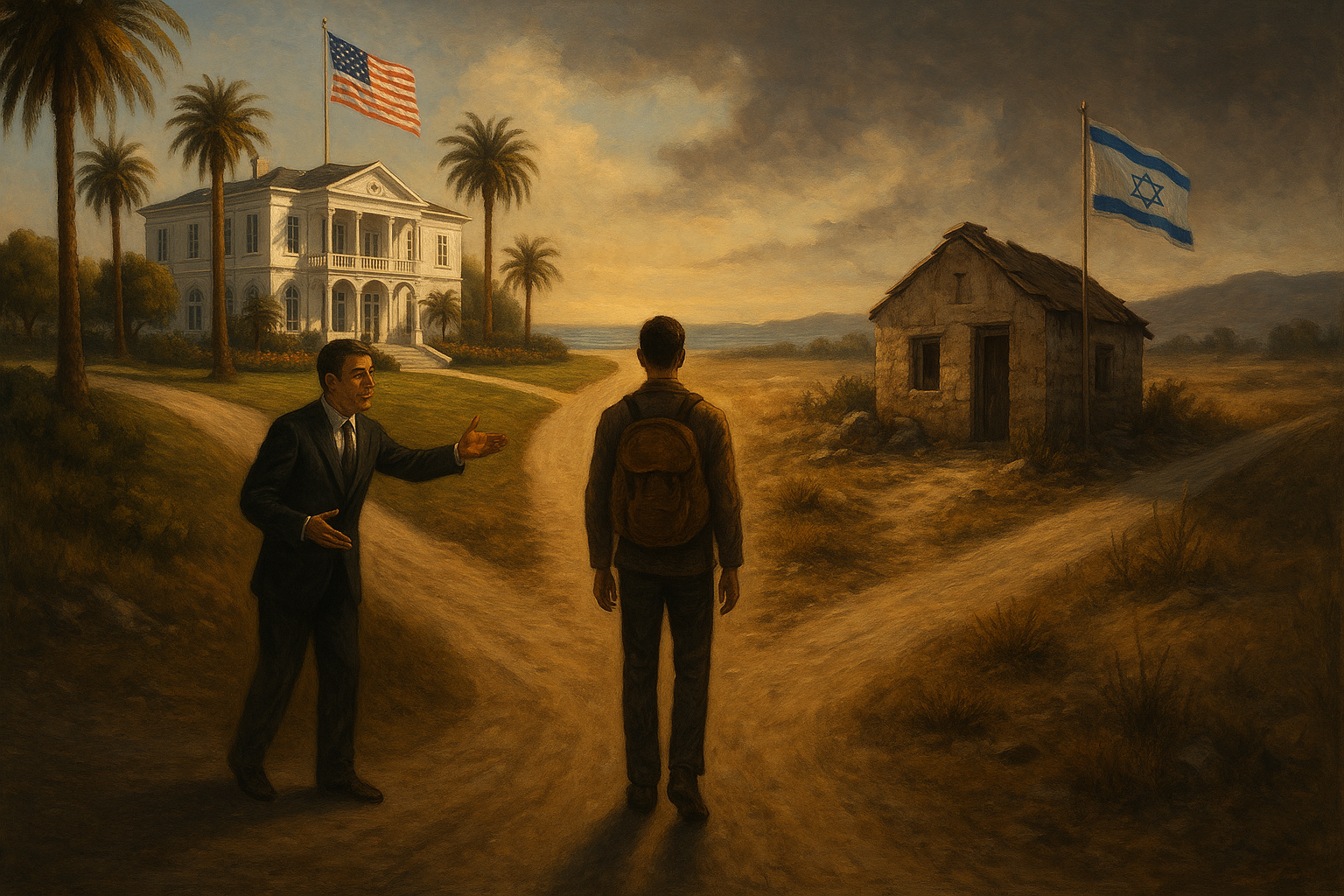
In one dream, I found myself standing in front of a great white beachside villa, waves crashing along the dock beside the great white mansion. The place looked new and untouched: clean white walls, wide windows that stretched across the front, balconies with perfect railings. The garden was trimmed down to the last blade of grass, the driveway paved smooth. Inside, I could almost imagine polished floors, high ceilings, and rooms filled with light. Everything about it screamed stability, wealth, and order. It was beautiful—the most spectacular building I had ever seen in my life.
I had another dream once. A quieter one. It didn’t come with waves or mansions. Just the whisper of a land, calling me like it already knew my name. The dream of Israel, the land of promise, of sacrifice, of meaning. I knew of course that there would be difficulties: questions of lost time, army service, and perhaps even wars. Though what I wasn’t prepared for was the bitterness of dreams fulfilled in the most unfulfilling of ways.
As I stood in my dream before that great house by the sea, I realized I was in America. That this house was not in Israel but rather in the land I left all those years ago. As I stood admiring the house, a man in a suit and tie walked up from behind and stood beside me, gazing at the house.
See, what they don’t tell you about following your dreams is not that it’s difficult or that it will require sacrifices. That much, they make sure you know. What no one tells you is that no dream, once fulfilled, looks quite like the dream you imagined. Reality never shines like the ideal. When the dream finally arrives and becomes real, what often follows is not joy but a quiet void. A loneliness. A disappointment.
“See this house?” the man in the suit asked suddenly. I didn’t reply. “I’ll make you a deal,” he continued. “If you agree to come back here to America and work for me, I’ll give this house to you as a gift.” I kept staring at the house. I didn’t turn my head. After a few moments, still without taking my eyes off the villa, I said almost casually, “No thanks. I think I’d rather be homeless in Israel than live in a house like this in America.”
The moment those words left my mouth, I woke up.
People think the hardest part of pursuing my dream was the things I had to sacrifice over the years. The physical wandering. The years of uncertainty. The time in wars and foreign lands. But no. The hardest days were before all that—the years before anyone cared. It’s one thing to be alone in a foxhole. It’s another to be alone in your own life, consumed and haunted by dreams and ideals that no one else seems able to see or feel.
I looked around the room where I had woken up. I had recently moved to a temporary place. I was alone in this broken-down house, with missing floor tiles and moldy walls. The yard was wild with weeds, the driveway uneven and crumbling. The only toilet in the house didn’t work; there was a problem with the pipes, and the plumber still hadn’t come. I couldn’t help but wonder: if I had answered “yes” to that Devil in my dream, would I have woken up in that mansion by the beach? And if I had, would I have felt the same quiet ache I felt now?
Here’s the strange thing about these two dreams: they both came true.
I came to Israel, lived in the holiest of lands, served in its army, and became one with its people. I awoke in a home that was physically standing, but in some ways, I remained metaphysically homeless. Yet still, despite all of the pain and tears of the journey, I realized that perhaps this is what it means to choose meaning over comfort, to trade the false promise of happiness for the harder gift of authenticity. Even broken and tired, I knew in my heart which house I would rather call home. For I would rather be homeless in truth, than sheltered in illusions.