Between Egypt and Exodus: Parashat Shemot and the World We Live In
Epigraph
The destinies of today’s pharaohs are already written in the destinies of the pharaohs of the past.
Parashat Shemot is often read as an ancient story about slavery and liberation, about bricks and whips, about a people trapped in a distant land. Yet Shemot is not primarily about geography. Egypt in the Torah is not a place on a map. It is a system. A way power understands itself. A language authority speaks when it no longer answers to anything above itself.
Pharaoh in Shemot is not merely a tyrant. He represents a worldview in which fear becomes a governing tool, force becomes the final argument, and responsibility before Heaven quietly disappears. Pharaoh speaks of order and stability, but this order is built on intimidation, and this stability rests on suppression. That is why the Torah offers a clear moral diagnosis from the outset: a system sustained by fear cannot endure, because it has severed itself from accountability before Heaven.
This pattern appears even earlier, in the story of Cain. After the first act of violence, God does not destroy Cain. On the contrary, Cain is given time, life, and continuity. His descendants flourish. They build cities, create culture, develop skills and technologies. For a while, it appears that violence has not only survived but succeeded. Yet this entire civilization is ultimately swept away by the Flood. Not because God is cruel, but because unchecked violence corrodes the very possibility of life. Divine patience is vast, but it does not cancel responsibility.
This is why Moses later articulates the most fundamental law of history: “I have set before you life and death, blessing and curse. Choose life.” This is not coercion. It is direction. The Torah never reveals the precise script of history, but it always reveals its trajectory. The details remain hidden; the moral vector does not.
The Psalms deepen this vision. In Psalm 73, Asaph confronts a crisis that feels painfully modern. He watches the arrogant prosper, sees their calm and confidence, and wonders where justice has gone. The answer does not come through analysis or prediction, but through insight: “Until I entered the sanctuary of God and understood their end.” The Psalms do not tell us when systems collapse or how. They tell us where such paths lead. Psalm 146 draws a final boundary: do not place ultimate trust in princes, in human power that cannot save.
Seen through this lens, the contemporary world looks less chaotic and more familiar. Egypt has not vanished; it has changed its garments. In some places, it appears as a crude regime of intimidation and corruption. In others, it manifests as a more sophisticated system of control, sustained by fear and justified by power. The Torah does not promise that Egypt disappears overnight. Exodus is a process, not a moment.
This is why the Torah also introduces another figure—often overlooked—who appears precisely between Egypt and redemption: Jethro. Jethro is not an Israelite by birth. He is a man of the outside world, a former advisor to Pharaoh, described in Midrash as a master of the spiritual and political languages of his age. His significance lies in the fact that he understands Egypt from within and reaches a conclusion: this system has reached its limit. Jethro does not lead the Exodus. He is not Moses. But he recognizes truth before it becomes obvious, aligns himself with Israel, and enters the covenantal story. He is a figure of transition.
In this sense, the role played today by Donald Trump can be understood through a similar lens. He is neither Pharaoh nor Moses. He is not a redeemer and should never become an object of faith. Yet his historical function is not that of continuity, but of disruption. He emerges from within the system of power and publicly declares that the old order can no longer pretend to be self-evident. His importance lies not in promises of salvation, but in marking a boundary: this language of intimidation and perpetual threat has lost legitimacy.
Such moments do not begin with miracles or revolutions. In Shemot, redemption begins with a cry. A sentence spoken aloud. A truth that can no longer be buried under procedure or habit. Pharaoh says, “I am order.” The transitional figure replies, “This order is false.” That response does not free anyone yet—but without it, freedom never begins.
Even the quiet signals of our time can be read this way. Not as threats, not as spectacles of force, but as moments of transparency—when systems built on fear suddenly realize that they are seen clearly. In the Torah, Pharaoh fears not power itself, but the loss of illusion. What terrifies Egypt is not strength, but exposure.
None of this represents a rejection of institutions or democratic values. On the contrary, when life itself is threatened, the Torah invokes pikuach nefesh—the preservation of life—as the highest principle. This is not a suspension of morality; it is its deepest expression. Life precedes all procedures, because without life, no values remain.
The most difficult lesson of Shemot is recognizing that Egypt exists not only in distant regimes, but also within language, assumptions, and norms long treated as “normal.” Exodus begins when that language stops being the only one we speak.
Redemption is not yet complete. Pharaohs still exist. History remains unfinished. The script is unwritten, because it is authored by a Director greater than any strategist or analyst. Yet the direction is known. From Cain to Moses, from the Psalms to our own moment, the pattern remains consistent.
Shemot is not a story about ancient oppression. It is a map of history. And history, again and again, confirms the same truth: systems built on fear may endure for a time, but they do not have a future. The movement from Egypt has already begun.
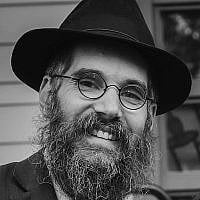
Rav Moshe Ben Yisrael Salita