Exploring Jewish heritage through global travel and culture
Beyond 1943: Chief Rabbi Jair Melchior on the Future of Jewish Life in Denmark
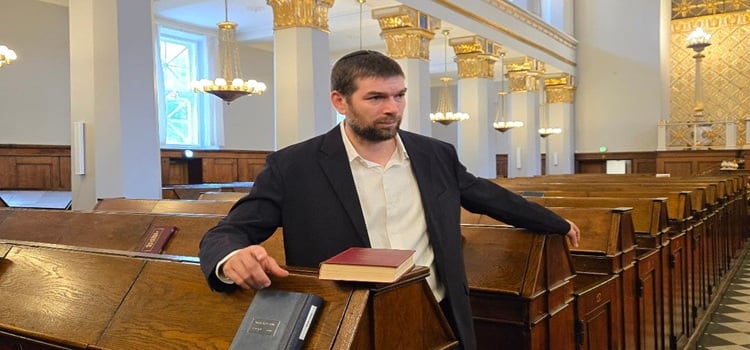
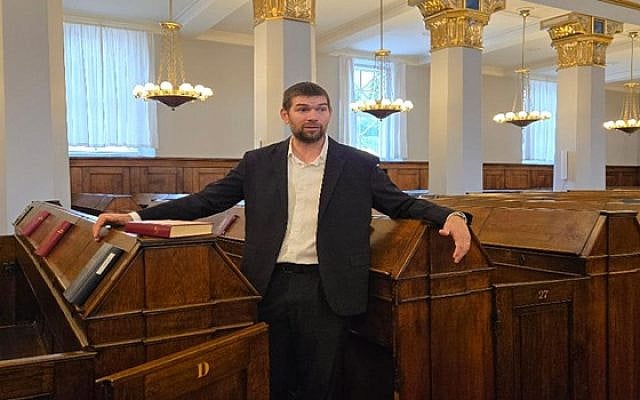
Rabbi Jair Melchior, Chief Rabbi of Denmark, in Copenhagen — New York Jewish Travel Guide
In an interview with the New York Jewish Travel Guide, Denmark’s Chief Rabbi discusses Jewish identity, the next generation, antisemitism, security, and the continuing evolution of one of Europe’s most distinctive Jewish communities.
For much of the world, the story of Danish Jewry is inseparable from October 1943, when thousands of Danish Jews were helped to escape the Nazi occupation, many finding refuge in Sweden. The rescue remains one of the most remarkable stories of courage and solidarity in Holocaust history.
But what does Jewish life in Denmark look like today?
Rabbi Jair Melchior, Chief Rabbi of Denmark, describes a community that continues to carry the memory of 1943 while building a Jewish future of its own. In an interview with the New York Jewish Travel Guide, he spoke about Jewish identity, youth engagement, education, religious life, antisemitism, security, interfaith relations, and the importance of ensuring that Danish Jews do not simply remember Jewish life—but actively live it.
For Rabbi Melchior, the challenge is to remain connected to history without becoming defined entirely by it.
A Community Defined by Continuity—and Change
Rabbi Melchior describes Danish Jewry as one of Europe’s distinctive Jewish communities. Its experience during the Nazi occupation and the rescue of Danish Jews created a powerful historical legacy, but the survival of the community created something equally important: continuity.
Today, Jews from different places and backgrounds have become part of the Danish Jewish story, combining longstanding traditions with new influences.
“We continue the old traditions,” Rabbi Melchior says, while acknowledging that the community today looks different from the community of the past.
He estimates Denmark’s Jewish population at approximately 6,000 to 7,000 people, with the majority living in Copenhagen. But for him, numbers tell only part of the story.
What matters more is engagement.
Jewish Life Beyond the Famous Rescue
The extraordinary rescue of 1943 has given Denmark a unique place in Jewish and Holocaust history. Yet Rabbi Melchior believes there is a danger when that story becomes so dominant that it overshadows the community that exists today.
“It’s filled so much of our identity,” he says of the rescue, explaining that at some point the community must also become a “normal Jewish community,” rather than one defined only by its wartime history.
That does not mean forgetting. It means allowing history to become a foundation for the future.
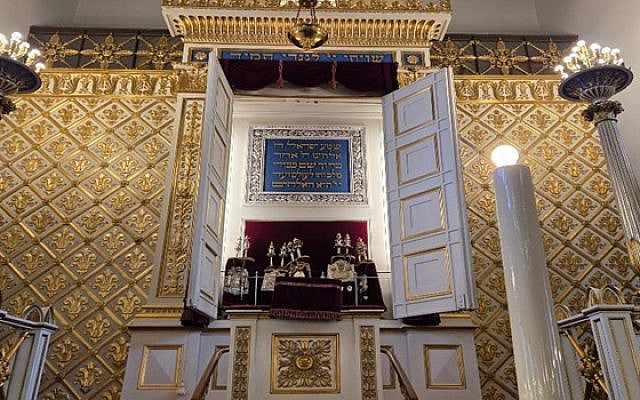
The community maintains Jewish traditions and religious practices, including Shabbat and kosher food at the community center, and operates according to Halakha. Yet many community members are not highly observant.
“Judaism doesn’t belong only to the rabbis,” he says.
Rabbi Melchior’s own family history illustrates this broad understanding of Jewish identity. One grandfather was a chief rabbi; the other was an atheist who had grown up in the Bund tradition and was deeply connected to Yiddish and Jewish culture. They represented very different approaches to Judaism, but Rabbi Melchior says both were among the most complete Jews he knew.
Both influenced his own Jewish journey.
Building the Next Generation
Perhaps nowhere is Rabbi Melchior’s vision for the future more visible than in the community’s youth programs.
When he arrived in Denmark 13 years ago, one of his priorities was rebuilding the non-formal side of Jewish education, particularly the youth movement and summer camps.
For him, these are not simply recreational activities. They are places where young Jews develop a relationship with their Jewish identity, learn responsibility, and begin to see themselves as owners of the community’s future.
“We managed to rebuild the youth movement in the summer camps,” he says, pointing to young people who participate, become leaders, and take responsibility.
He considers this one of the most encouraging developments in Danish Jewish life.
The number of community members may rise and fall, but Rabbi Melchior believes the more important question is: How engaged are the Jews who are here?
Jewish Education and Ownership
Rabbi Melchior believes Jewish identity cannot simply be handed over to an institution.
Jewish schools can play an important role, but schools and communal organizations cannot replace the home.
“I’m a strong believer that the holidays and such should come from home,” he says.
What Jewish institutions can do is create engagement and ownership.
He warns against Jewish parents “outsourcing” Jewish education to schools and expecting institutions to take responsibility for their children’s Jewish identity.
“That is actually extremely dangerous,” he says.
For Rabbi Melchior, Jewish identity becomes strongest when young people actively choose and own it. That philosophy also explains his emphasis on youth leadership.
Being Jewish in Public
The question of Jewish visibility has also changed.
Rabbi Melchior remembers that when he and his father were growing up in Denmark, Jews generally did not walk publicly wearing a kippah. Visibly identifying as Jewish could invite unwanted comments.
He hopes that attitude will change.
Rabbi Melchior wears a kippah everywhere and has taught his children to do the same.
“I walk with kippot everywhere,” he says. “I feel safe when I walk with kippot, and so do my children.”
Since October 7, however, he acknowledges that the environment has changed. Antisemitism has risen across Europe, including Denmark, making security increasingly important.
“To Secure Jewish Life, You Have to Have Jewish Life”
Denmark provides extensive security for its Jewish community, and Rabbi Melchior expresses appreciation for the Danish government’s commitment to protecting Jewish institutions.
But he makes an important distinction.
Security is necessary. It is not the purpose of Jewish life.
“To secure Jewish life, we have to have Jewish life,” he says.
Guards and security measures have their role, but they cannot become the defining characteristic of a Jewish community. A community cannot simply protect its buildings. It has to fill those buildings with Jewish life.
For Rabbi Melchior, maintaining an active and visible Jewish community is itself an essential part of protecting Jewish life.
Building Bridges
That philosophy also shapes Rabbi Melchior’s approach to interfaith relations.
He describes strong relationships with Christian and Muslim organizations and participates in Religion and Society, where religious leaders from different communities meet.
The period following October 7 brought challenges, but he believes maintaining relationships—particularly with Denmark’s Muslim community—is more important than ever.
The goal should not be to demonize one another or demand that another community accept a single narrative.
Instead, people need to listen.
“We have to give place and listen,” he says.
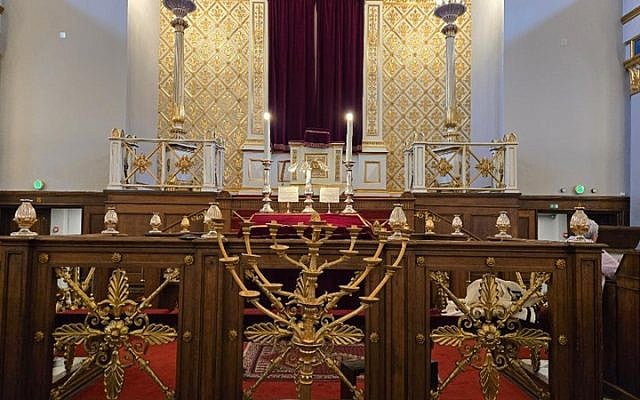
For Rabbi Melchior, dialogue does not require eliminating disagreement. It means maintaining enough trust and human connection to address difficult issues together.
A Jewish Future Rooted in the Present
Holocaust remembrance remains an important part of Danish Jewish life, with commemorations including Kristallnacht, International Holocaust Memorial Day, Auschwitz-related events, and Yom HaShoah.
But Rabbi Melchior distinguishes between remembering the Holocaust and allowing Jewish life to become defined entirely by it.
The past must be remembered.
But Jewish life cannot exist only as a memorial to the past.
His vision of Danish Jewish life is ultimately about continuity—not simply historical continuity, but living continuity.
The rescue of 1943 remains an extraordinary chapter in the story of Danish Jewry. It deserves to be remembered and retold. But the community today is writing another chapter—in the synagogue, at Shabbat tables, in youth movements and summer camps, in classrooms and community programs.
It is being written by young people taking responsibility for their Jewish identity, by families choosing to remain connected to Jewish traditions, and through conversations with Christian and Muslim neighbors.
For Rabbi Melchior, the future of Danish Jewry will not be secured simply by preserving its buildings, remembering its history, or counting its members.
It will be secured by engagement, ownership, education—and above all, by continuing to live Jewishly.
The extraordinary lesson of Denmark’s Jewish story is not only that a community survived. It is that survival created the possibility of something more enduring: a Jewish community that can remember where it came from while confidently asking where it wants to go next.
As Rabbi Melchior puts it, history must remain a connection—not a place in which the community lives forever.
The Danish Jewish story continues.
By Meyer Harroch | New York Jewish Travel Guide
For more information or to book the Scandinavia Jewish Heritage Tour, please contact Jewish Copenhagen: Jewish Copenhagen · Tours with local Jewish guides
- Email: info@jewish-copenhagen.dk
Related Topics
Related Posts