POST-HARMONY Special Project
Beyond boundaries: Frank Gehry
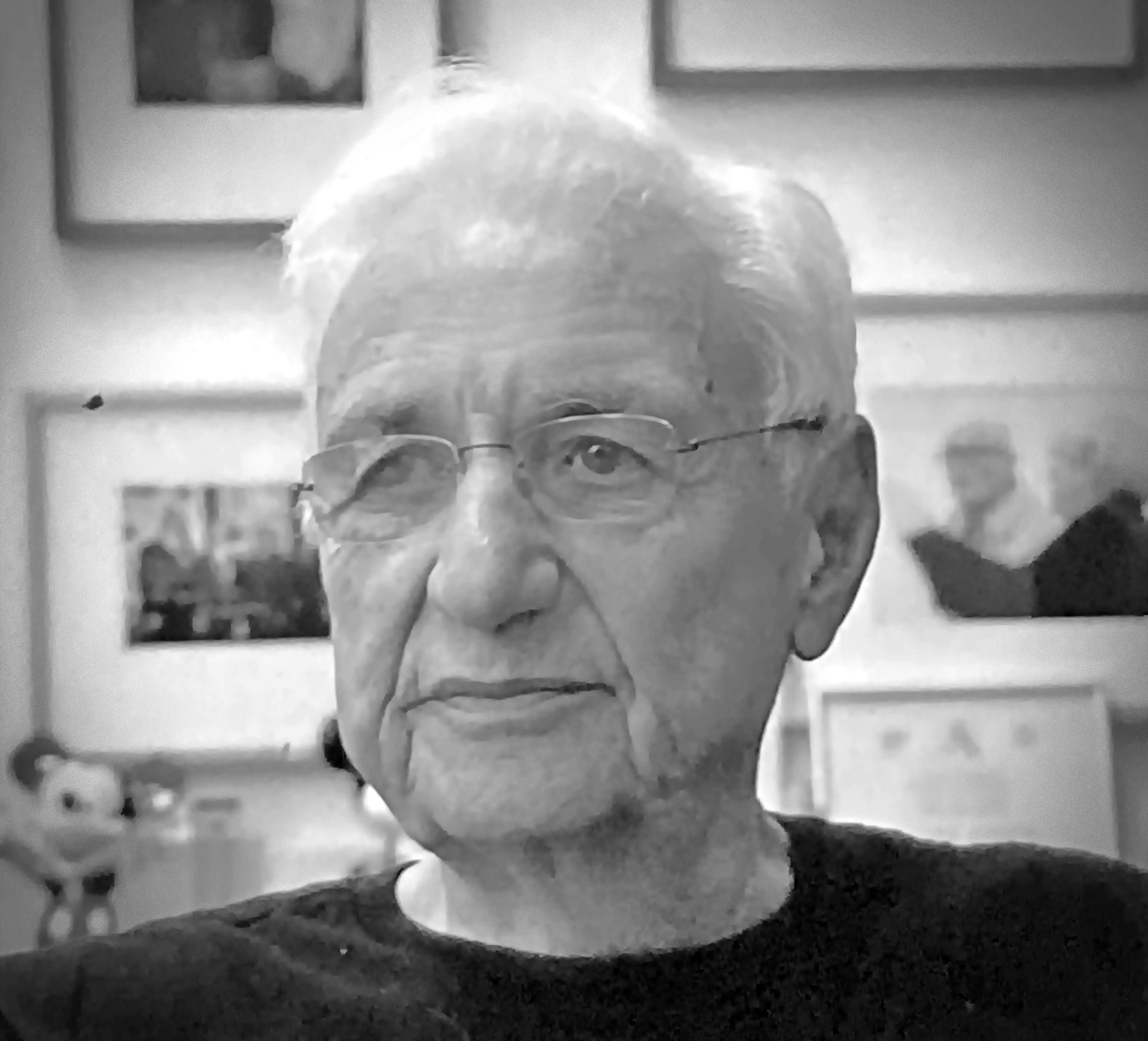
Frank Gehry. (C) Alexandra Cabri.
The Magnet of the Space: Bilbao
The Guggenheim Museum building in Bilbao is a powerful magnet. There are a number of superbly unusual buildings in the world — not as many as one would wish, actually, but still. And yet, arguably, none of them has had such an impact on so many different aspects of life: on the individual level of perception of millions, on the completely new organization of a space, on transforming the landscape, on changing the face of a large historical city, on adding new and incredibly important attractiveness to a country.
Apart from the similar unique multi-aspect effect of the fantastic building of the Sydney Opera House, 25 years before the appearance of the Guggenheim Bilbao, and a decisive influence on its creator, there is hardly a building in the history of modern architecture during the last half of century, if not more, that has had such an incredible and long-lasting effect.
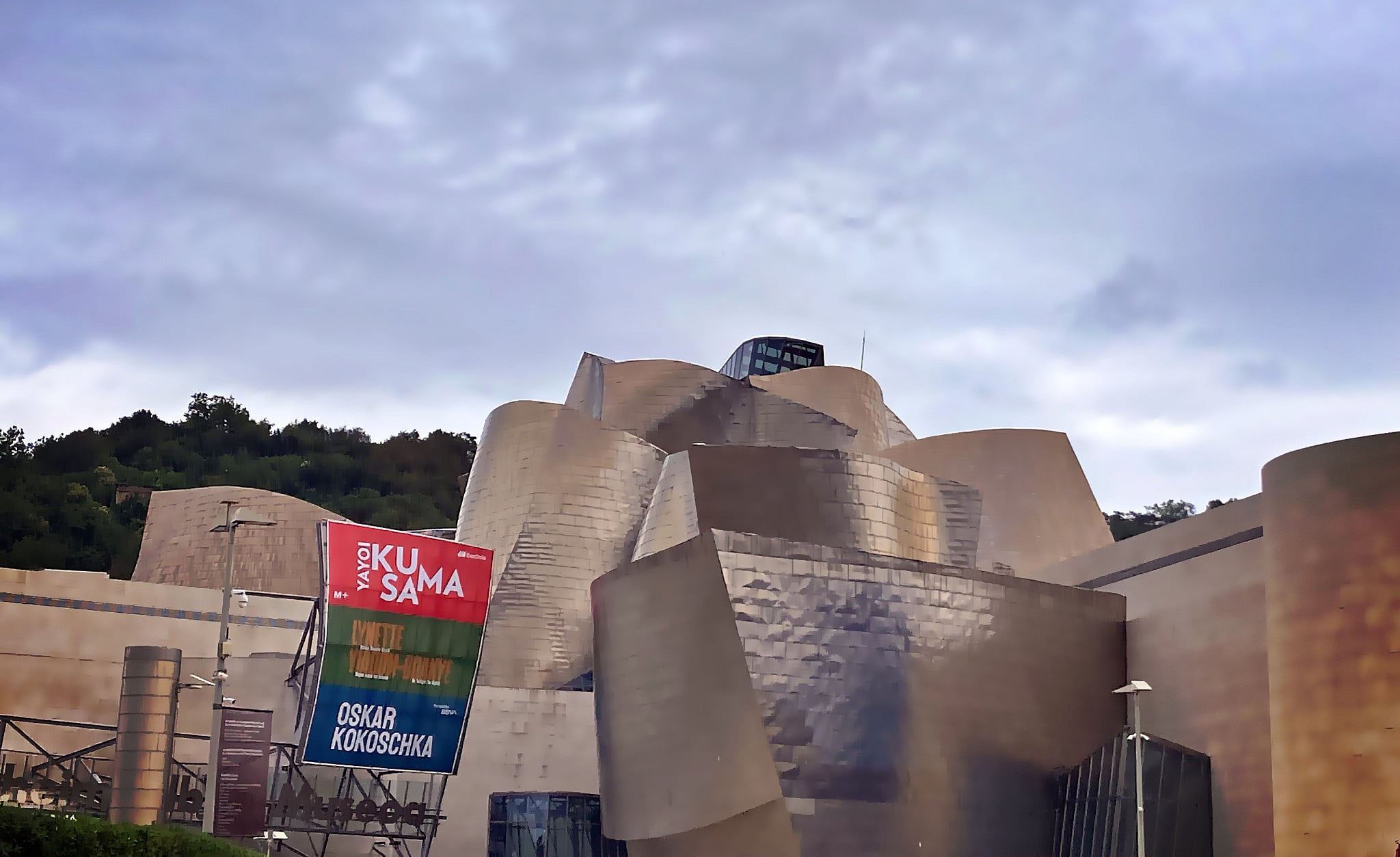
The architect of the Guggenheim Bilbao, tireless Frank Gehry, passed away on December 5, 2025, at the good old age of 96, in Santa Monica, where he lived with his family during the previous almost 50 years. The world-famous architect had an insatiable desire for work. He was working all the time, belonging to that special generation that experienced the horrors of the Second World War in his youth, and who lived and worked, metaphorically speaking, also for those whose lives were brutally interrupted by the Holocaust and the war, and whose many talents were never developed. That generation had the mission to fulfill — not only the aspirations of their own, but also for those who were prevented from living. As simple — and as overwhelming — as that.
“I used to be Goldberg”
Frank Goldberg was 25 when he changed his Jewish family name into Gehry.
It was seven years after he moved with his family to California from Toronto. During those years immediately after the end of the Second World War, the remaining Jewish world was devastated. Every day, for years, people were learning about the destinies of their families, about the destinies of entire Jewish communities in Europe, about unimaginable crimes and horror. All that was piling up.
The family of Frank’s mom, Kaplansky from Lodz, Poland, lost 33 members. “I never knew them,” the architect said many decades later, actually, just six years ago, at the age of 90. When a 90-year-old man, who is not usually open about this aspect of his life, speaks about it in a somber way, 70 years after it had happened, it suggests that the pain and memory about it was living inside him all his life.
Immediately after the end of the Second World War, Jewry in the New World were mortified not only by the ongoing devastating news about their families in Europe. In Canada, from 1946 onward, that government infamously accepted and accommodated at least 2,000 Nazi criminals, most of whom were sent off by Britain. It was truly unbearable to many Canadian Jews, especially those with family left in Eastern and Central Europe who fell victim to the Shoah.
In California, the Goldbergs-Kaplanskys were witness to the McCarthyism craze that was at its peak at the time. No wonder “Efraim Frank Goldberg” changed his obviously Jewish name — as so many frightened Jews did in the post-war US, in the hope “not to be on the radar,” in this respect. It is also not surprising that Frank became a leftist, with views he upheld until the end of his life.
His father’s Goldberg family were poor Jews from Russia who lived in New York prior to their move to Toronto, and his mother’s family, Kaplansky, was from Polish Lodz, where his mom was born. Gehry’s admiration for his family stayed with him all his life. He had a real bond with his maternal grandfather, who owned a small hardware store and who was also the chairman of their shul in Toronto, the one who instilled that all-encompassing curiosity into the small Efraim. All his long life, Gehry preserved his grandfather’s teaching: the “Talmud starts from the word and question ‘Why?’ and it is the essence of the human’s attitude to life to understand ‘why?'”
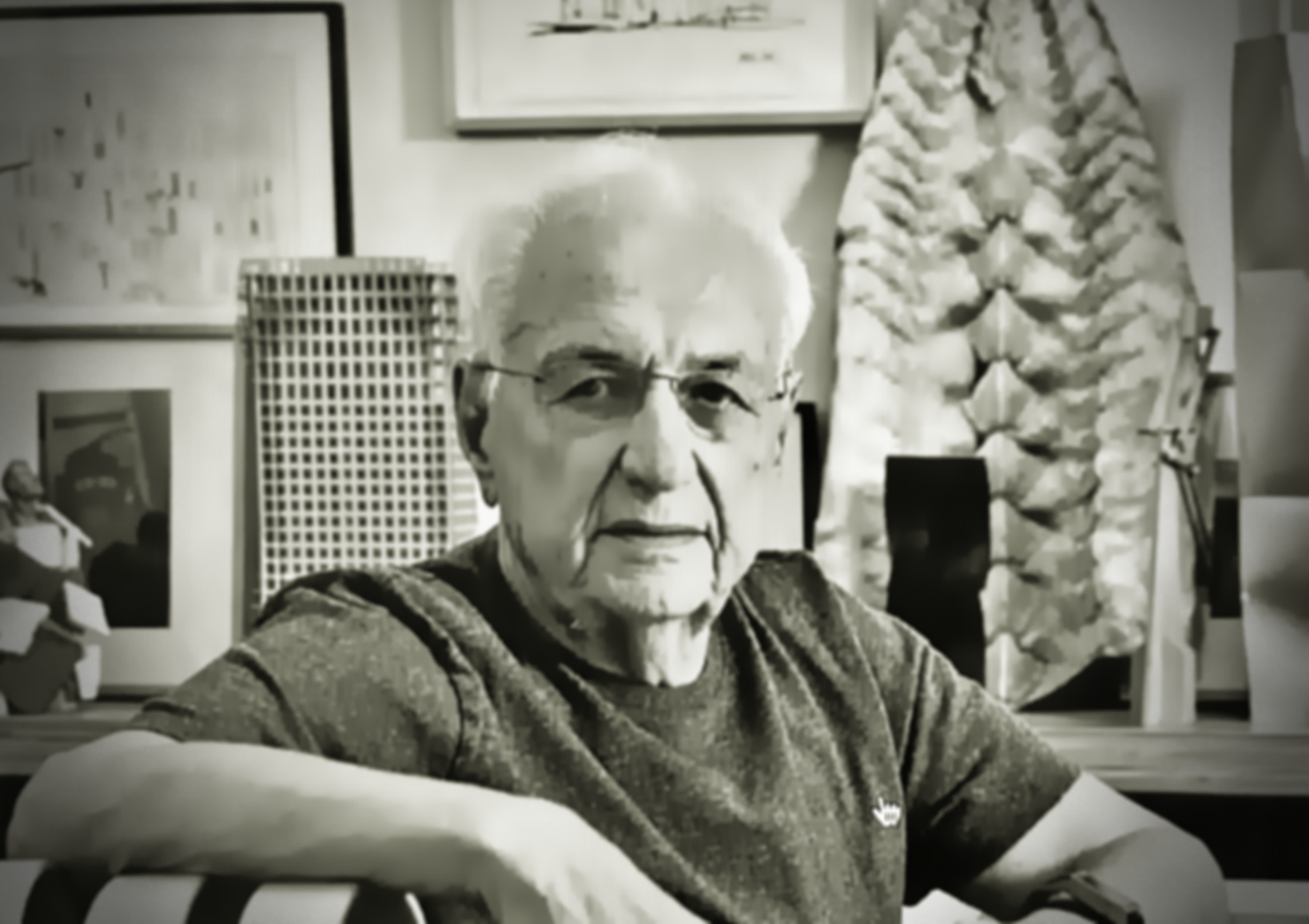
Gehry’s maternal grandmother Leah Kaplansky-Freedman contributed to large extent to her grandson’s development by spending hours with him and introducing him to a fascinating hobby of building all kinds of houses, and even a small ‘cities’ from every bit of wood and scrap that they could find at the Kaplansky’s hardware store. Gehry’s Jewish grandma developed his fantasy in her loving and caring way. Also, his fantastic Ex Peix built for the Olympics in Barcelona in 1992, as well as his other giant fish sculptures created yet before, in the mid-1980s, originated from his childhood’s memories of his grandma’s weekly carps for Shabbos meals, as Gehry mentioned himself a few times.
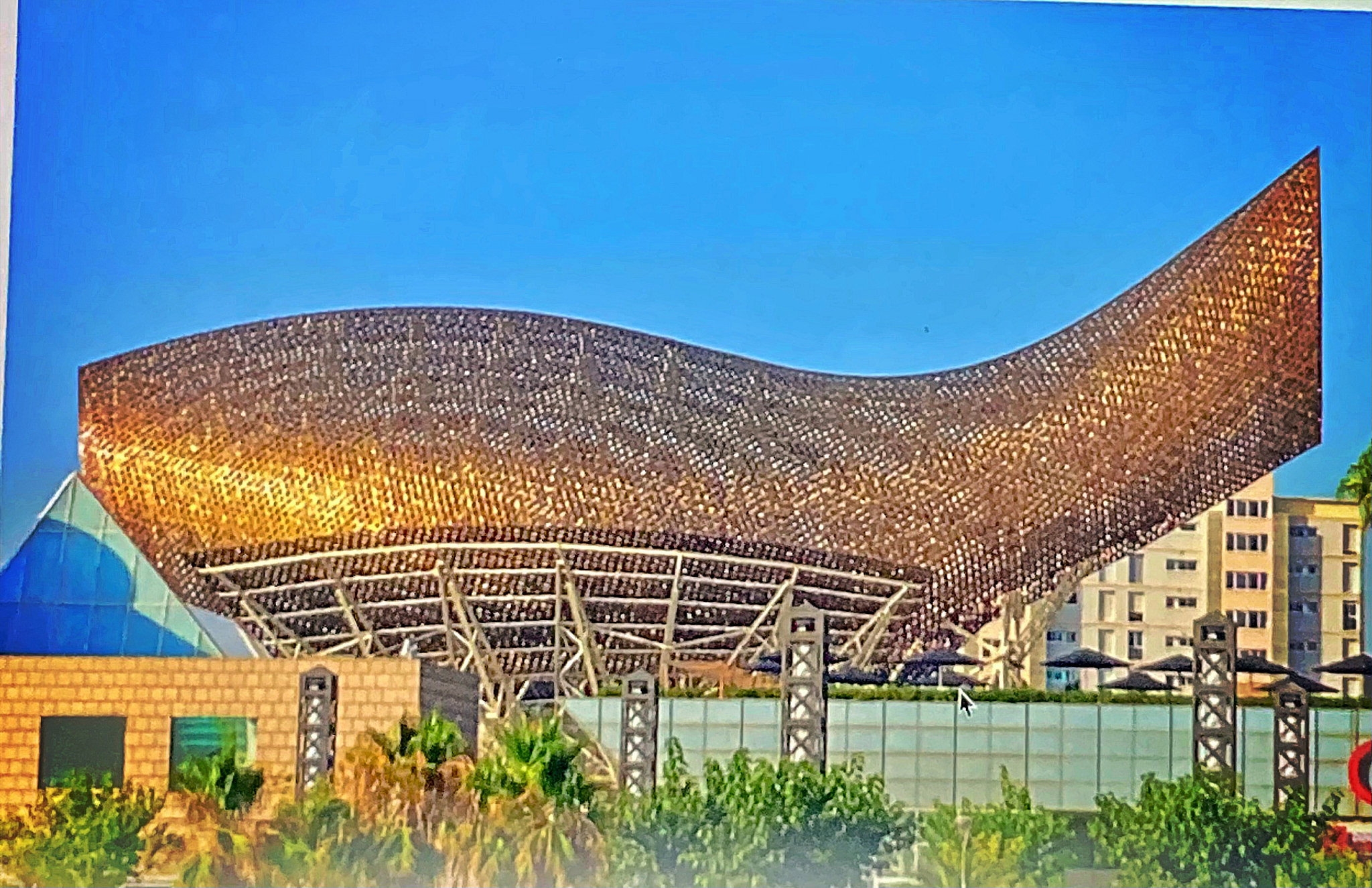
Being a loving family boy, the famous sculptor always praised and thanked his mother, Sadie Thelma, for developing his love for arts and music. “ We were sort of poor ( family), but my mom always took me to the concerts and to the art museums in Toronto” , he recalled gratefully many decades later.
“ I used to be Goldberg…” – a world-famous architect mentioned a few times over the years without much elaboration, but it is understood that he might regret his decision made when he was 25.
Late in his life, Gehry told about his personal connection to Kol Nidre. “I love to listen to Kol Nidre – when it is performed well”, – he said a couple of times at different occasions in his 90s. It actually means and tells a lot. When a Jewish soul strives for Kol Nidre, there is a firm connection and unmistaken sign of belonging.
Beyond Boundaries: Visions of Artful Architecture
The career of Frank Gehry continued over 60 years and it was hugely productive. Rare architects can amass a portfolio of over 180 built projects, many of which are gems of modern architecture. Gehry’s strange constructions are attracting people not only in the US where the large proportion of his oeuvre is, but also in France, Spain, Germany, Hong Kong and Australia. His still under-construction project, the largest of all Guggenheim Museums, is due to be completed in Abu Dhabi in 2026.
He has contributed to humankind not only by so many buildings, but by influencing for many the way of perception. Additionally to championing Guggenheim in Bilbao, it is an incredible Louis Vuitton Foundation Museum in Paris ( 2014) , the unique Concert Halls in Los Angeles ( 2003) and Berlin ( 2017), the strange Dancing House in Prague ( 1996), the fantastic LUMA Art Foundation building in Arle ( 2021) and many other. Not always there were successful outcomes, such as the highly disputed Eisenhower Memorial, but architecture is such an area of creativity that it is almost impossible always to be completely successful. Sadly, due to various reasons, Gehry’s projects were not realised in Israel, nor were they in Lodz in Poland, although he did create his visions for the museums and cultural centre in the both countries, which both were important for him.
Apart from that magnetic Guggenheim in Bilbao, personally for me, there are two special creations by Frank Gehry which become ‘a love from the first sight’, they are both Maggie’s Cancer Care Centres built a decade apart, the first one in Scottish Dundee in 2003, and the following one in Hong Kong a decade later.

Those are small, inspired by Japanese art ( the inspiration I share deeply), loving and lovely buildings as if coming directly from a tale. Those centres emanate such a comfort and care that is hardly can be found often in the modern architecture. And it shows the architect as a person very well, too.
“ The Star Has Gone”
After hearing the sad news about Frank Gehry’s passing , I spoke about him with an outstanding Finnish architect, the author of the world-renowned POLIN Museum of the History of Polish Jews in Warsaw professor Rainer Mahlamäki whose recently completed Lost Shtetl Museum in Lithuania has been compared in the professional architectural media to the Guggenheim Bilbao.
Professor Mahlamäki’s reflections were the following: “Frank Gehry’s architecture has departed from the mainstream of postmodernism, thus showing how an architect’s personal and different vision can broaden the interest of a wide audience towards architecture, and how, with the help of architecture, belief in life and strength of life can be re-created for society in general. The city of Bilbao ( and what is known as ‘Bilbao effect’ when the entire city has been revived due and by the construction of a the Guggenheim Museum) is the example of this special phenomenon”.
Remembering his encounters with Gehry, the leading Finnish architect mentioned: “ As chairman of the board of the Museum of Architectural Art, I had the pleasure of meeting Frank Gehry when he visited Helsinki, sometime in the early 2000s. I remember how during our small lunch together, he was praising Anvar Aalto’s architecture. His way of behaviour was simple and nice, he did not project the unnecessary gestures of an over-behaving maestro. The sad thing now is that the great star of the architectural horizon of our times has gone”. It is so true.
The Music of Architecture and the Touches of Light
The unconventionality of Frank Gehry’s vision has enriched our all’ life greatly. His main creative credo on which he was insisting all his career, was necessity for an architecture to be artful.
Architecture is definitely an art, and it is a very complicated art, which depends not only from a vision of a single architect but from so many factors, both objective and subjective. A good architect has to be an impeccable mathematician, a savvy geometer, an able draughtsman. He has to be a very good expert on a vast variety of materials, he must be an accomplished geographer, being able ‘to read’ any landscape. He has to be a deep historian to understand what he is planning and creating and why. This all is additionally to the expertise of buildings and space, their ratio and balance. How to make a stone, a wood, a glass to speak?
Some of his iconic works can be a subject-matters for the top architectural education. The understanding of a site in the context of a landscape – like it was in Bilbao, where Gehry did see and appreciated fantastic opportunities which the beautiful, challenging and quite complicated land and slopes relief of the Basque country provides, or like his soothing small huts works at their best in the open relief of Dundee in Scotland.
The architects can be divided into two groups: those who are driven by the light, and the others. Gehry belonged and was a maestro from the first group. Most of his buildings were planned with a light factor as the leading one, sometimes, it was ever overdone and needed to be fixed technologically. But the work of light in and around the Louis Vuitton Foundation fantastic building in Paris, for example, is close to the miracle. And when miracles are of an ongoing character, it does change life to the better in general. Also, to me, the relation to the light always speaks about a person as well. It is a natural and hardly failing test.
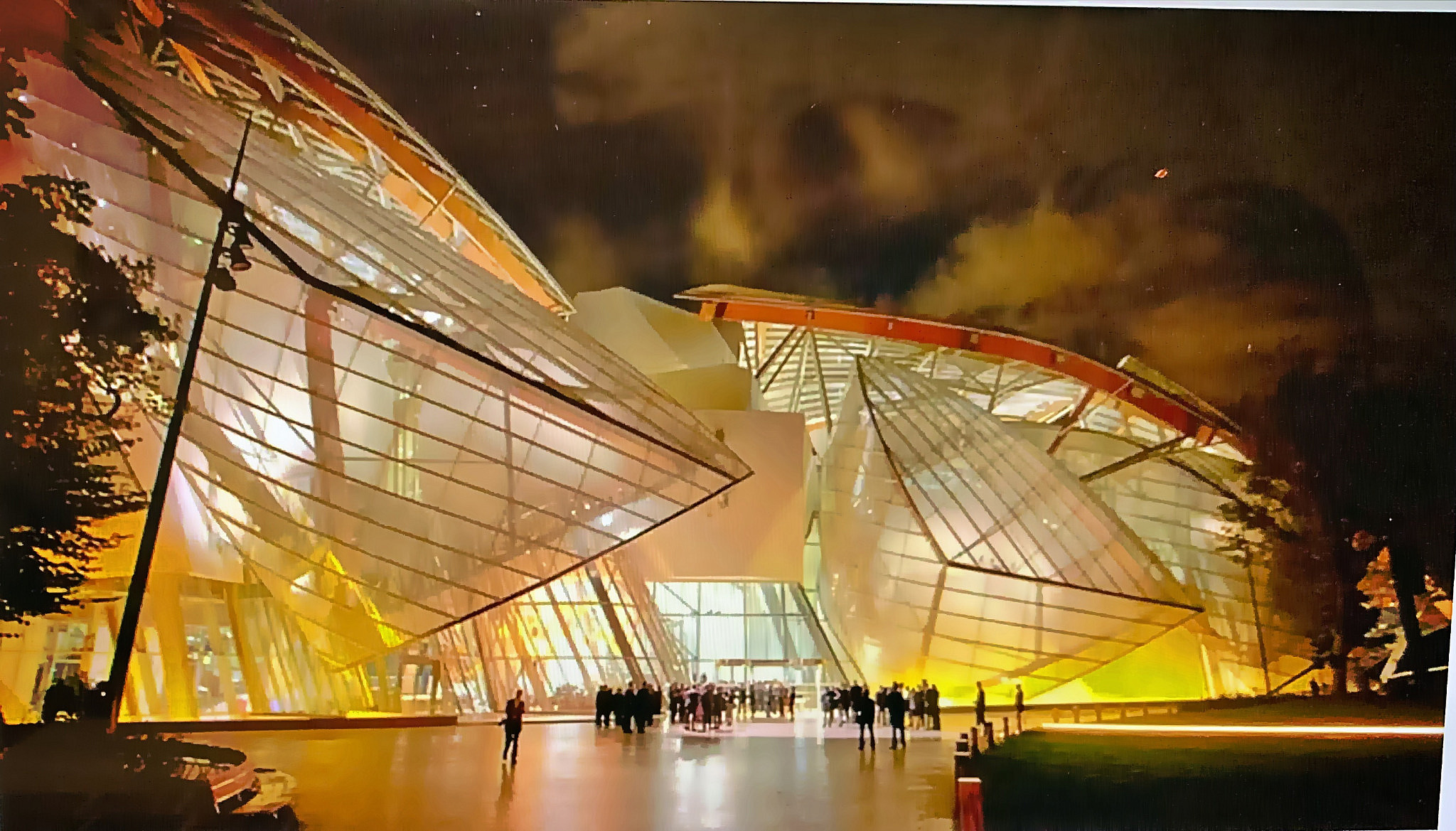
In his mighty strive for art Gehry was deeply influenced not only by the avant-garde artists in the US, and not only by Picasso, as it is commonplace to think. I always thought that a major artistic influence on his vision of the line, the a-lineality of it, so to say, and also the way of holding the composition of these lines and their general dynamic and inter-dynamic, was Dali. Surely enough, looking at many of his sketches, one can see its sometimes literal closeness to Dali’s way of drawing, and the very character and vision of Dali.
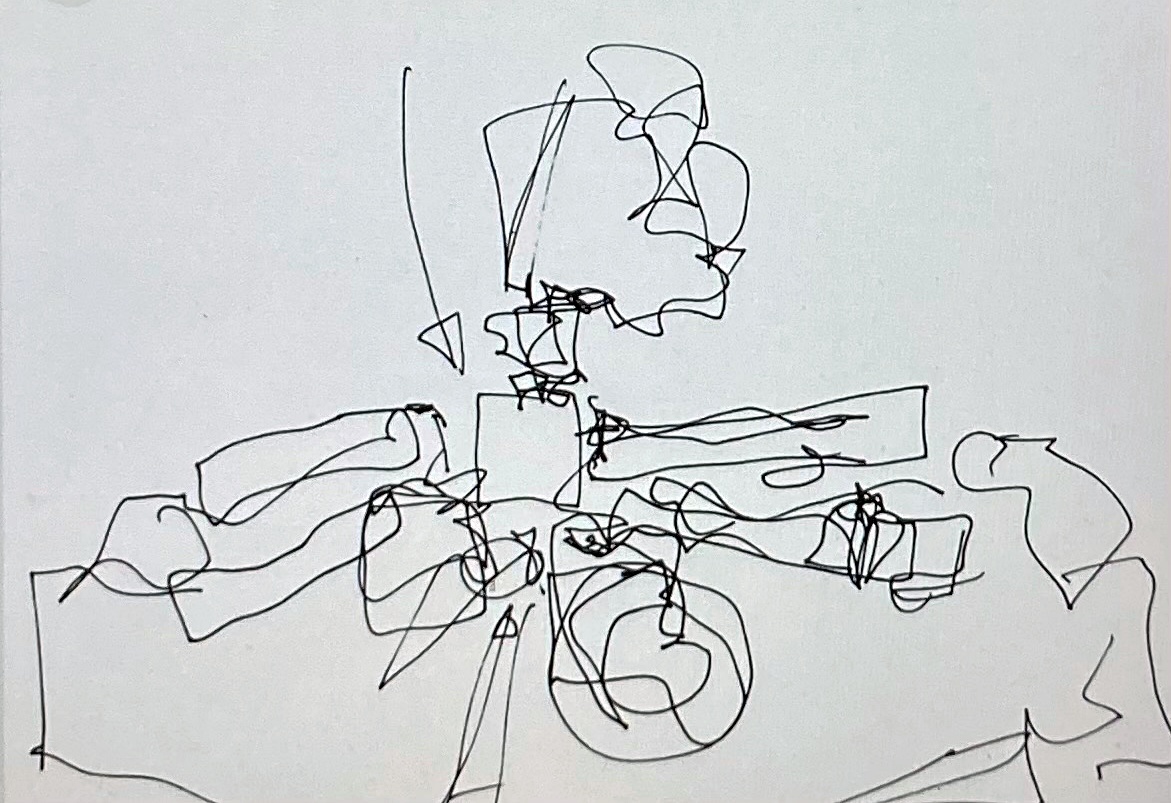
Which is not surprising, as the might of Dali’s genius has influenced so many artists worldwide, especially at the time of Gehry’s developing his career.
Another serious influence on Gehry’s sense of art in architecture was El Greco whom he admired. And this deep connection has proven to be very fruitful even if it was not on the surface.
Frank Gehry’s love and understanding of music is another deeply important component of his unusual buildings. The mystery of his creations is that they are like music themselves, and this probably is the most unique quality of his best projects. This music is not Handel. It is music of Shostakovich and Penderecki which expresses and epitomises the time in which Frank Gehry lived and created, from the 1950s onward.
Frank Gehry has gifted us with his amazing buildings which have transformed not only an immediate space around them, but our very life, due to their presence there. Our space of living has become much more interesting because of Gehry’s fantasy and his extraordinarity. Not only did he had that winning American drive in what he was doing, but most importantly, that Eastern and Central European intellectual boldness, that eye and drive for things unusual, unorthodox, different from boredom.
The essence of his legacy for me is that crazy beautiful BP Pedestrian Bridge in Chicago, just next to the Milenium Park, with the interesting Pritzker Pavilion there, also created by him, both in 2004. But the bridge. The bridge. Yes, we have all those out-of-this-world bridges all over China today, but they are completely different, cold attractions, built sci-fi animations. To the contrary, Gehry’s Bridge in Chicago is a human creation for humans. It is very true that we can live without such bridges. But it is so great to have them in our life.
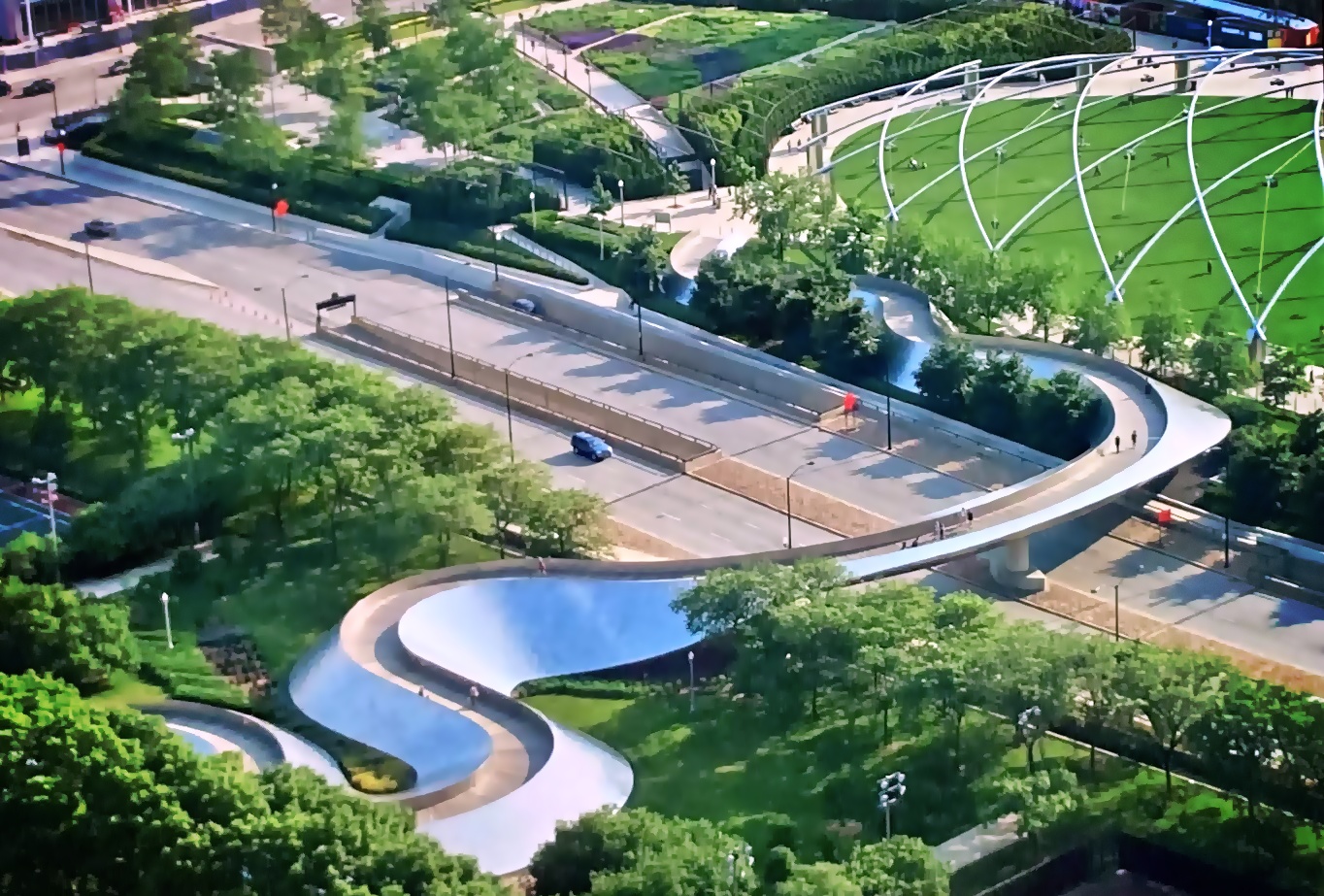
And for that, for that created from zero dynamic curiosity and richness of things different that have been brought to our lives by the supremely vivid vision and so strong strive by Frank Gehry who was known to his family and community as Efraim Goldberg, I am truly deeply grateful.
December 7, 2025
Related Topics
Related Posts