
CEO of Time to Stand Up for Israel
Beyond Sides Toward Shared Peace
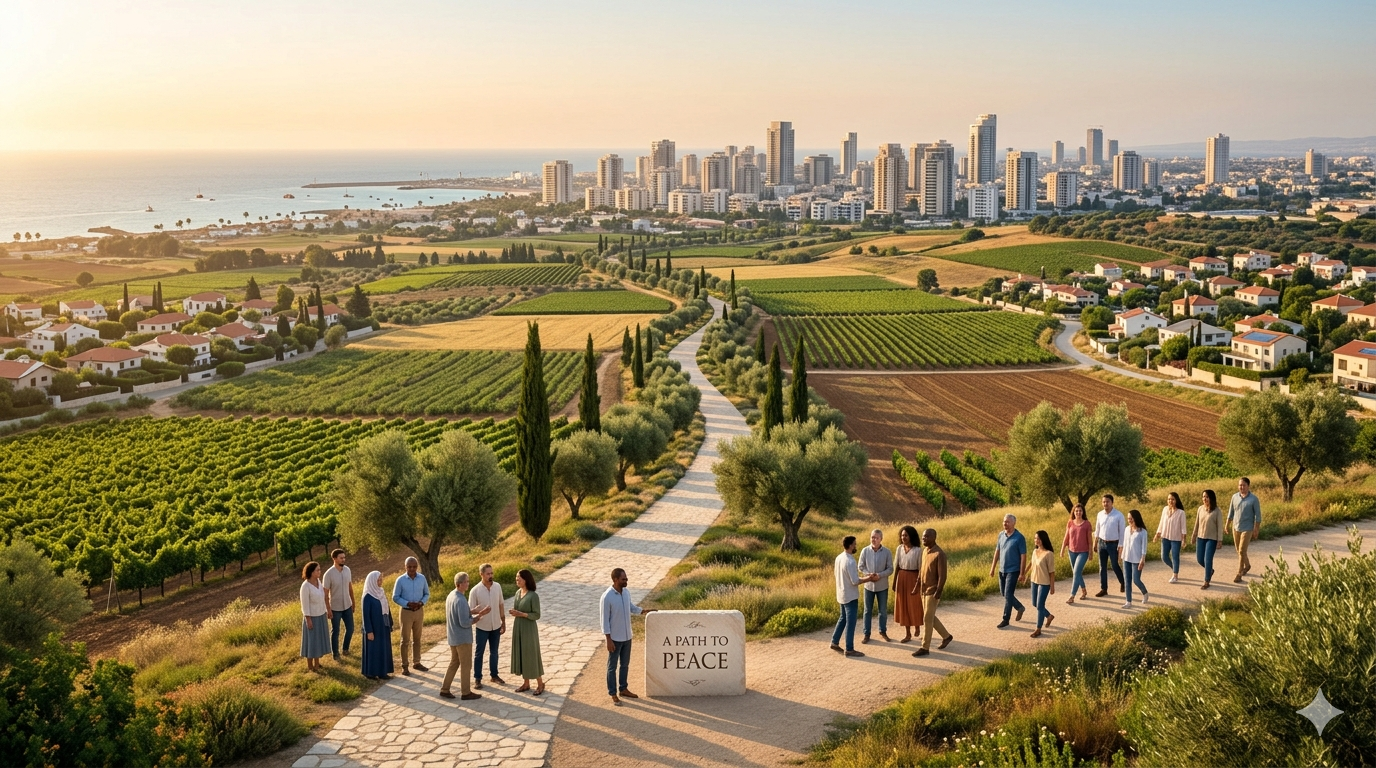
Photo Credits: Sabine Sterk ( AI)
Public discussion about the Middle East is often reduced to a false choice. People are told they must either support Israel or support civilians in Gaza and Arabs who identify as Palestinians. This framing oversimplifies a deeply complicated reality and pushes people into opposing camps where empathy for one side is viewed as hostility toward the other.
It does not have to be that way.
Supporting Israel’s right to exist and defend itself can exist alongside a genuine desire for a better future for civilians in Gaza. These ideas are not contradictory. In many ways, they are connected and dependent on one another.
Israel is a sovereign nation where millions of people seek ordinary lives centered around family, work, education, and personal safety. For decades, Israelis have lived under the threat of wars, suicide bombings, kidnappings, and rocket attacks. No country would willingly accept constant violence against its citizens, and no nation should be expected to ignore threats to its security.
Recognizing Israel’s right to protect its people is not an endorsement of endless conflict. It is a recognition of a basic principle that every nation has the right and responsibility to defend its citizens and exist in peace within its homeland.
At the same time, concern for civilians in Gaza is equally important. Innocent people deserve dignity, opportunity, safety, and hope regardless of politics or geography. Wanting better living conditions, economic opportunity, and long term stability for Gazans does not require opposition to Israel. In reality, these goals are far more likely to succeed in an environment where violence decreases and cooperation becomes possible.
One of the biggest obstacles to peace is the belief that progress for one side must automatically mean suffering for the other. This zero sum mindset has trapped generations in cycles of anger, mistrust, and fear. It encourages people to see every political or military development as a victory or defeat rather than asking whether it creates conditions for a more stable future.
History often shows the opposite. Security and prosperity tend to reinforce each other. A safer Israel is more capable of pursuing long term peace and regional cooperation. Likewise, a stable and economically functioning Gaza is less vulnerable to extremist movements that thrive in desperation and instability.
True support for civilians in Gaza should focus on creating conditions where people can build meaningful lives. This includes stronger educational opportunities, economic growth, transparent governance, and leadership that prioritizes the well being of ordinary citizens instead of endless conflict. It also means encouraging investments in infrastructure, healthcare, innovation, and employment so younger generations can imagine futures beyond violence and political division.
Achieving lasting peace requires more than temporary ceasefires or agreements signed by political leaders. It requires cultural and social changes that encourage coexistence and reject the normalization of violence.
One essential step is a clear rejection of terrorism and attacks against civilians. No political cause can justify deliberately targeting innocent people. Societies that hope to build peace must teach future generations that violence against civilians is morally unacceptable and ultimately destructive to everyone involved.
Education also plays a central role in shaping the future. Young people should be encouraged to develop critical thinking, creativity, scientific knowledge, and practical skills that prepare them to contribute positively to society. Education should promote understanding and coexistence rather than deepening hatred or denying reality.
Leadership matters as well. Corruption and political systems that prioritize power over public welfare have prevented meaningful progress for years. Accountable governance, transparency, and responsible leadership are necessary for any society seeking long term development and stability.
Another necessary reality is the recognition that Israel is not temporary. Sustainable peace cannot emerge while the existence of Israel is treated as illegitimate or negotiable. Israel has deep historical, cultural, and national roots in the region. Accepting this reality does not erase the identity or aspirations of Palestinian Arabs, but it does create a foundation where practical discussions about peace and coexistence become possible.
Choosing peace requires societies to value life more than conflict and construction more than destruction. The people celebrated by future generations should be those who build schools, heal communities, develop businesses, advance knowledge, and create opportunities rather than those who perpetuate violence.
Israel, like every nation, also faces difficult decisions and responsibilities. Acknowledging Israel’s right to security does not mean ignoring the suffering of civilians during conflict or refusing to examine policies critically. Complex situations demand honest conversations and accountability from all sides.
Still, the broader principle remains important. People should not be forced into choosing between caring about Israeli security and caring about civilians in Gaza. These are not opposing values. They are connected parts of a larger vision where both populations can live with safety, dignity, and hope.
The future of the region will not improve through slogans, division, or simplistic narratives that pit one group against another. Real progress begins when people reject the idea that compassion is limited and recognize that peace requires humanity, realism, and mutual recognition.
Supporting Israel’s right to exist securely while also advocating for a better future for civilians in Gaza is not contradictory. It is a balanced and necessary approach rooted in the belief that every human life has value and that lasting peace can only emerge when both security and dignity are treated as essential for everyone involved.
Related Topics