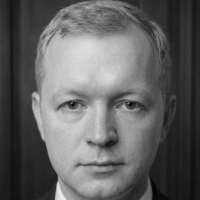
Freshman at UC Berkeley's Haas School of Business
Beyond Six: A High School Student’s Call to Combat Holocaust Ignorance
As I made my way to PE class, something happened that shook me to my core. Picture this: a 13-year-old classmate standing ahead of me, yelling, “Raise your hand if you want to bring back Hitler to kill all the Jews,” all while laughing as if it were a joke. Yet what was even more chilling was that six of his friends eagerly raised their hands as if they were answering a trivia question, their innocence replaced by a disturbing indifference.
Six. Seemingly innocuous, it has many meanings. It can signify the mere addition of five plus one; half a dozen; indicate the time, “It’s six o’clock,” or to them, simply as a statement: six million people died, six raised their hands, six students were okay with the six million whose lives were taken away. I felt an immense sense of powerlessness and since I had never experienced this level, I simply looked away. I was scared and I knew this was only the beginning.
Unfortunately, findings of a 50-state US survey conducted by the Conference on Jewish Material Claims Against Germany (Claims Conference) of Millennials and Gen Z reveal that there is a clear lack of awareness of key historical facts. Sixty-three percent do not know that six million Jews were murdered and 36 percent thought that “two million or fewer Jews” were killed during the Holocaust. Additionally, 48 percent of national survey respondents cannot name a single concentration camp.
So let me enlighten these people.
Adolf Hitler was democratically elected Chancellor with the goal to “ethnically cleanse” Germany, which he declared would restore it to its glory. This meant targeting the Jews, Roma people, the mentally and physically disabled, and other minority groups. The Nazis claimed that Jews were responsible for all their economic and societal problems. The Nazi Party ruled from 1933 until their defeat in World War II in 1945. They and their collaborators systematically persecuted and murdered 6 million Jews, in addition to millions of other minorities. This genocide is “The Holocaust.”
So how do 6 out of 10 Americans simply not know these basic facts? How is a culture of mocking such a horrific event even possible? Why do I and many others feel unsafe in our own school? How do we prevent another six students from raising their hands and ridiculing the death of millions?
The answer lies partly in our collective failure to remember and teach accurately. “Never Forget, Never Again.” These words echo through history, as a promise to honor the memory of the six million Jews and to never let it happen again. But how can we keep this promise if we don’t know the facts?
The Claims Conference analysis revealed perhaps the most shocking and disturbing finding: 11 percent of young Americans believe that Jews caused the Holocaust. Yes, you heard that right. Jews caused the Holocaust. The victims were to blame for their own murder. This is not only a gross distortion of history but also a grave insult to the millions who suffered and perished at the hands of the Nazis.
A top priority for the Nazis and their collaborators was to hide any evidence of their deeds, such as destroying mass graves. It is why General Dwight D. Eisenhower told his troops to document everything. He foresaw that in the decades following, Holocaust denial would gain traction.
Holocaust denial is not based on evidence or logic but on prejudice and conspiracy. Yet millions of people fall into the trap of believing these theories, which feed into racist and antisemitic groups and ideologies such as the KKK and Neo-Nazis. We are living in a time when antisemitism is no longer a thing of the past but a present danger that is on the rise globally and locally, affecting the lives and safety of Jewish people throughout the world.
This ignorance has real consequences beyond statistics. It affected me too. Not long after 8th grade began, chants of “Hitler! Hitler!” would become normal at school. Just as often as the school bell rang, another debilitating comment would be yelled. Horrifying things like Nazi salutes, swastikas on various objects, and slurs have become a part of school life. While watching a documentary where a Holocaust survivor describes how he witnessed Nazis murder his parents, four students did the Nazi salute. My teacher looked away and did not confront this. Did that make it acceptable? Of course not.
So, I decided to act. I shared my experience with friends and was alarmed to hear that I was not alone – they, too, were encountering antisemitic incidents. Together, we shared our experiences with the school administration. We were successful and invited to work with them on a new curriculum to tackle racism.
This experience taught me that taking action can influence others and produce change. We need to speak up and call out antisemitic and racist remarks or behaviors, explain why they are wrong and hurtful, and offer alternative perspectives or facts.
Yet, it is still not easy to speak up for what we believe in. We need constructive, not confrontational conversations. One way is to listen to the person, assume they are rational but likely misguided, and recognize that your role is to help them see the other side. In other words, focus on the problem, not the person. Engage in conversations with curiosity – ask questions – not with certainty. Approach with inquiry mode versus being confrontational. The goal is to discover where the truth lies or to discover common ground.
Beyond speaking up in conversations, we must take action through reporting incidents and supporting systemic change. Schools nationwide have “If you see something, say something” programs for anonymous reporting, and organizations like StandWithUs and the Anti-Defamation League provide additional support and legal guidance when needed.
When I stood frozen in that hallway, watching my classmates laugh about bringing back Hitler, I felt powerless. But you don’t have to be. Don’t let another student stand alone in that hallway.
The path forward requires courage and conviction. Through speaking up, reporting incidents, working with administrators on curriculum reform, and supporting protective legislation, we can ensure history’s lessons are not forgotten.
Six.
Six million people died. But next time, six will not raise their hands. Next time, six more students will know that six had a meaning beyond just six.
Related Topics
Related Posts