
Defense & National Security Policy Analyst
Beyond the Quick Fix: Why Energy Inflation Will Haunt the Economy Until 2030
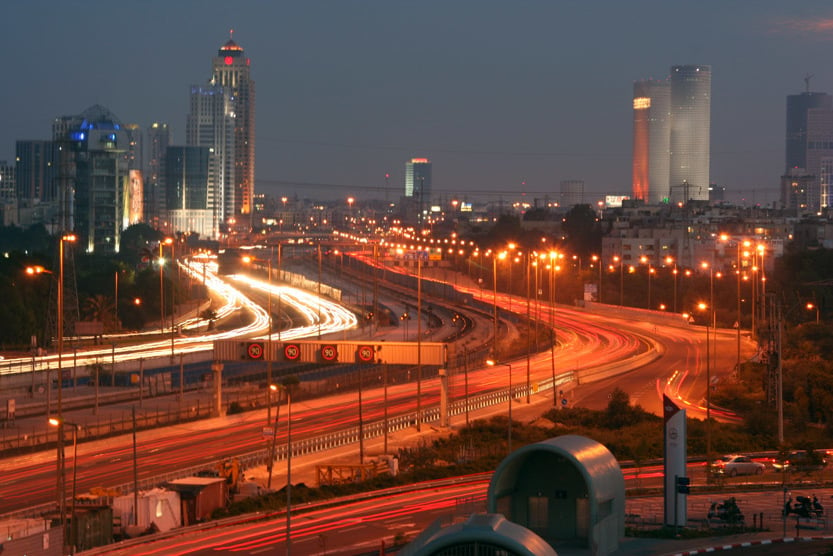
By Beivushtang, CC BY-SA 3.0 Ayalon Highway, Tel Aviv
As global markets adjust to the compounding disruptions of regional hostilities involving Iran and persistent security risks across the Arabian Peninsula, financial commentary remains fixated on near-term crude benchmarks and tactical oil supply shocks. Yet, for Israeli households, business owners, and fiscal planners, viewing the current economic turmoil as a brief 24-month storm is a dangerous miscalculation. The true challenge facing Israel’s economy is not a temporary price spike at the pump but the onset of structural, multi-year economic uncertainty and sticky inflation that will cast a long shadow through the end of the decade.
At first glance, Israel appears structurally insulated from global energy shocks. The expansion of offshore natural gas fields—most notably Leviathan and Tamar—has granted the country substantial domestic power independence, shielding home electricity generation from overseas coal and oil imports. Furthermore, periodic dips in headline inflation offer comforting narrative bursts for domestic policymakers.
However, natural gas independence does not make a small, open market like Israel immune to globalized cost-push dynamics. Energy is the foundational input for nearly all physical economic activity. When global maritime corridors face persistent risk premiums, shipping routes lengthen, and insurance rates settle at higher baseline floors, the cost of moving goods around the globe rises permanently. Because Israel relies heavily on imported refined fuels, raw commodities, industrial machinery, and consumer staples, these elevated logistics costs quietly compound across supply chains, locking higher price floors into place for years to come.
This extended inflationary horizon is anchored by three long-term structural pressures:
First, the multi-year decay and realignment of physical logistics. Midstream energy infrastructure, specialized shipping capacity, and maritime trade routes take years to rebuild or permanently reroute. The shift from hyper-efficient, “just-in-time” global supply networks to risk-mitigated, “just-in-case” regional logistics means higher transportation overhead will be permanently built into the landed cost of imports arriving at Haifa and Ashdod.
Second, the domestic risk-premium feedback loop. Ongoing regional instability ensures that geopolitical risk premiums will exert long-term pressure on the Shekel. Currency weakness acts as a persistent inflationary multiplier by making foreign capital equipment, consumer technology, and agricultural inputs continuously more expensive. To defend currency stability and prevent secondary inflation from hardening into wage expectations, the Bank of Israel will be constrained from returning to the ultra-low interest rate environment of the previous decade. High borrowing costs will remain a long-term feature of the economy, weighing on housing affordability, small business investment, and national growth well toward 2030.
Third, the secondary transmission into the real economy. Persistent energy inflation does not stay confined to fuel tanks; it seeps into core consumer expenditure. Higher fuel and transportation surcharges directly raise fertilizer, agricultural, and processing costs, driving up food prices over multi-year crop cycles. Concurrently, elevated defense expenditures force fiscal budgets to prioritize security infrastructure over productivity-enhancing civilian investments, raising the national debt burden and squeezing public spending capacity over the long haul.
Accepting that inflation and economic volatility are long-term structural realities—rather than temporary, two-year phenomena—demands a fundamental policy shift. Short-term fiscal handouts or temporary fuel tax reductions are mere band-aids on a changing global economic architecture.
To navigate the remainder of the decade, government decision-makers must execute a long-term economic plan focused on structural resilience: expanding domestic refining and storage reserves, modernizing supply-chain infrastructure, reducing regulatory burdens on importers, and diversifying trade corridors. Without a strategy built for a decade of global friction, Israeli households will continue to pay the price of regional volatility in their grocery bills, mortgage payments, and family budgets for years to come.
Related Topics
Related Posts