
CEO of Time to Stand Up for Israel
Israel Does Not Need Celebrity Approval
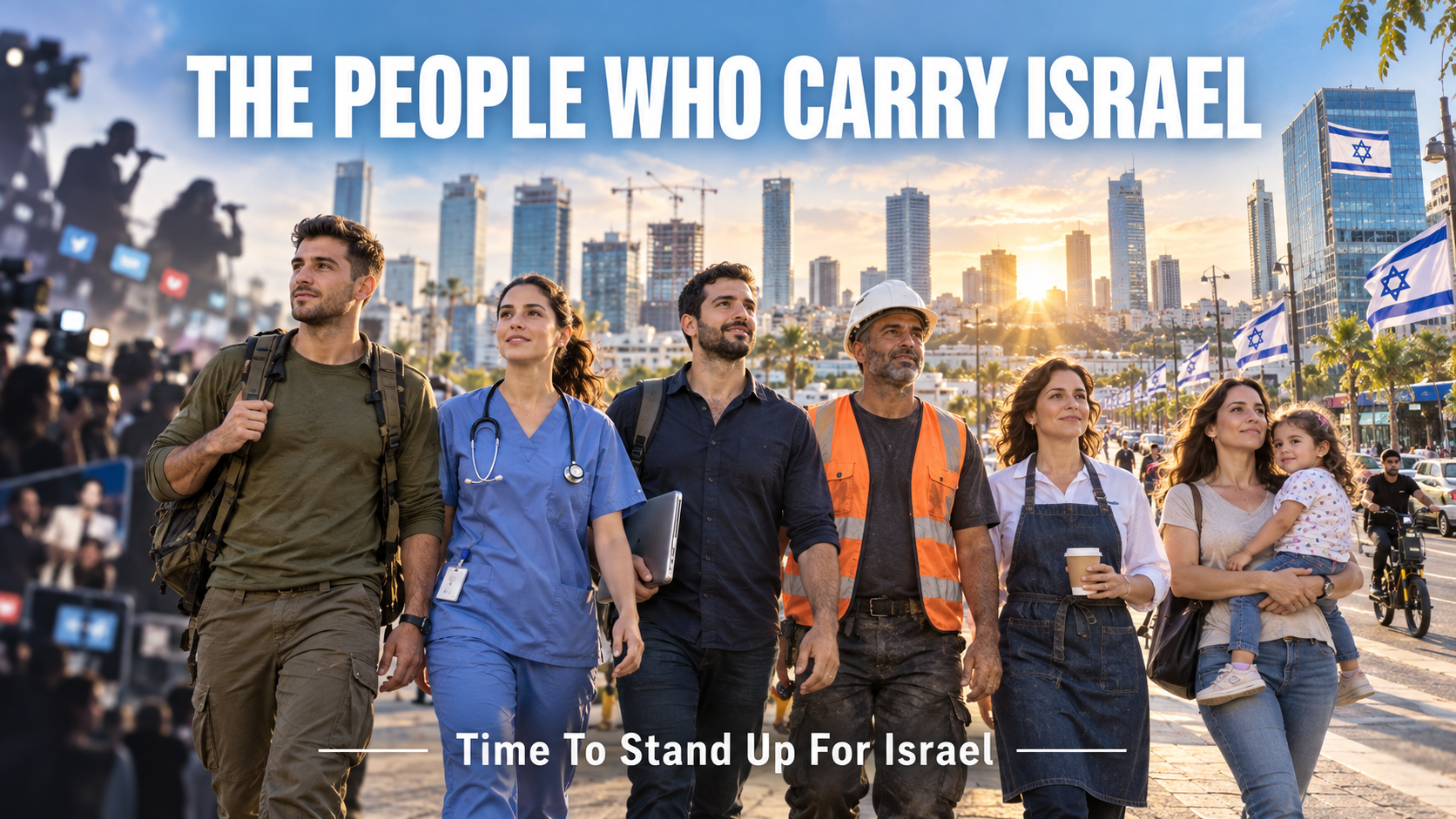
Photo Credits: Sabine Sterk ( AI)
Why should the opinion of a singer, actor or artist be important to Israel?
Whether it is Ed Sheeran, Pink, members of Pink Floyd or any other famous person who suddenly feels qualified to lecture Israel, do they honestly believe the average Israeli cares what they think? Do they imagine that Israelis waiting for loved ones to return from reserve duty are checking the social media accounts of musicians for moral guidance? Do they believe that families living under the threat of rockets need political instructions from entertainers who may never have visited Israel, studied its history or understood the Middle East beyond a slogan shared by millions?
The international campaign to vilify and delegitimize Israel has been going on for years. What has changed is that attacking Israel has become fashionable. Famous people can now present themselves as courageous humanitarians simply by repeating the opinion of the largest and loudest crowd.
When you earn your living from having an enormous audience and remaining popular, opportunism is never far away. Most celebrities understand exactly which message will generate applause, headlines, likes and attention. Supporting Israel requires courage because Israel is currently the unpopular side. Condemning Israel requires very little courage when thousands of people are already waiting to reward you for doing it.
Is their hostility toward Israel genuine concern for the “Palestinians,” or is it simply an easy route to greater visibility? How many of them have studied Hamas, the history of Jewish sovereignty, the wars launched against Israel or the realities of fighting terrorists embedded within a civilian population? How many have spoken seriously with Israelis whose children were murdered, kidnapped or sent to defend their country?
Some may sincerely believe what they say, but sincerity is not the same as knowledge. A microphone, a record contract and millions of followers do not transform a performer into an expert on war, terrorism, international law or the Middle East.
Yet the pro Israel world repeatedly writes about these celebrities. We quote them, condemn them and publish their photographs. In doing so, we make them even more important. We give their opinions a relevance they have not earned.
Perhaps we should stop.
Instead of focusing on famous people who have contributed little to the survival of Israel beyond making music, we should focus on the people who actually carry the country.
On Friday, I bought a ticket to Israel. I was shocked by the price. In only three and a half years, it had more than tripled. Today, I searched for a hotel and was shocked again. The prices were unbelievably high. It is only because my philosophy is that you live once that I decided to continue with the trip. Otherwise, I might have cancelled it altogether.
That experience made me think about ordinary Israelis.
They do not visit Israel for a few days and then return to comfortable lives elsewhere. They must pay these prices every day. They are coping with an expensive housing market, higher living costs, disrupted businesses, reserve duty, uncertainty and the enormous financial consequences of prolonged war.
Still, they continue.
They live, work, study, invent and build. They develop technology, create companies, protect their families and defend their country. On top of that, Israel continues helping other countries through medical knowledge, emergency assistance, agricultural innovation, water technology and security expertise.
That is the story worth telling.
Israel’s economy is performing reasonably well in 2026, especially considering the extraordinary security pressure placed upon it. The recovery is not perfect and the financial costs of war are serious, but the country has demonstrated resilience that deserves far more international attention than the latest statement from an entertainer.
Israel’s gross domestic product grew by approximately 3.2 percent during the first half of 2026 compared with the second half of 2025. The OECD expects growth of approximately 3.3 percent for the full year and 5.6 percent in 2027, provided the security situation remains relatively stable.
The labour market has remained remarkably strong. Unemployment fell to 2.6 percent in February, even while reserve duty and worker shortages continued to disrupt construction, services and other industries.
Inflation remained relatively controlled at around 1.9 percent during the early months of 2026. High technology, cybersecurity, artificial intelligence and defence technology continue to provide economic strength. The Israeli stock market has reached record levels, while the shekel has generally strengthened since 2025.
Israeli consumers have also shown extraordinary resilience. Credit card purchases were 9.2 percent higher in February than one year earlier, although military operations temporarily damaged consumption and public confidence during March and April.
These are not merely statistics. Behind every figure are Israelis who got up in the morning and went to work despite war, grief and uncertainty. There are entrepreneurs who continued investing, researchers who kept developing new technology, business owners who reopened their doors and reservists who returned from military service and attempted to rebuild their ordinary lives.
There are, of course, serious weaknesses. Government expenditure remains extremely high because of defence requirements, compensation and reconstruction. The OECD expects the budget deficit to reach approximately 5.3 percent of gross domestic product in 2026. Tourism and aviation also remain badly damaged by security concerns, cancelled flights and reduced airline capacity. Ordinary households feel pressures that economic forecasts cannot fully describe.
Israel’s economy is not collapsing. It is proving resilient under conditions that would overwhelm many other countries. Strong employment, controlled inflation, a stable financial system and continuing innovation demonstrate what Israelis are capable of doing, even while confronting enemies on several fronts.
This resilience should never be romanticized to the point that we ignore the price Israelis are paying. They deserve recognition, encouragement and support. They deserve affordable flights, returning tourists, international investment and friends who understand that resilience does not mean life is easy.
So let the singers sing. Let the actors act. Let famous people chase the approval of whatever crowd happens to be cheering the loudest.
Our attention is more valuable than that.
Instead of amplifying celebrities whose knowledge of Israel may fit inside a social media slogan, let us focus on the average Israeli who struggles through life and war and still manages to move forward.
That person is doing amazingly well.
That person deserves the headlines.
Related Topics
Related Posts