An Aging Jewish Feminist
Blessings, Curses, and the Hope of Elul
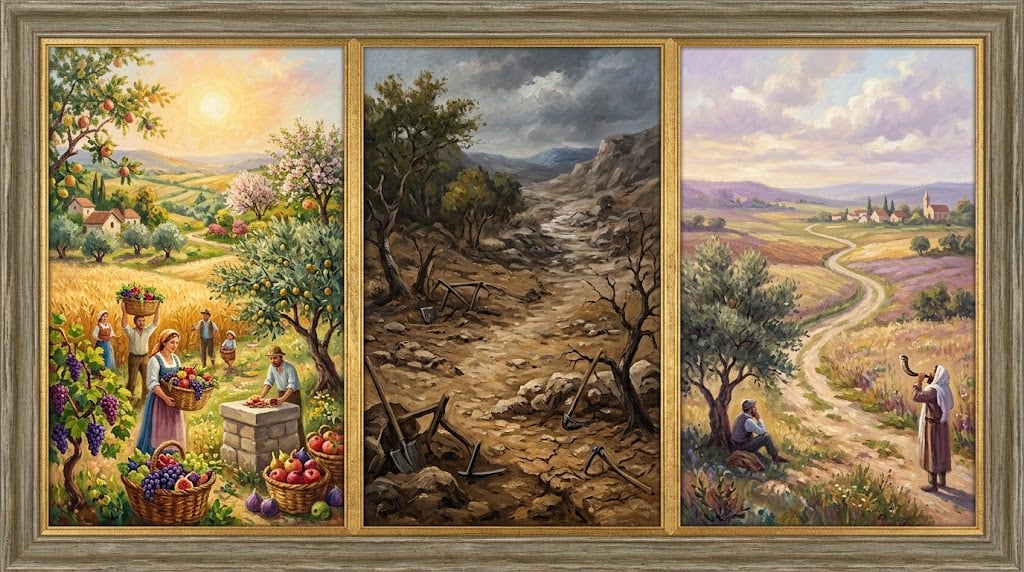
My association with this week’s Parashat Ki Tavo has always centered on the “wandering Aramean”—arami oved avi—about whom I have written elsewhere. The phrase appears in the declaration that accompanies the first fruits: ve-hayah ki tavo el-ha-aretz—“When you enter the land.” After all our wandering, we finally arrive in the Promised Land. We are told to remember where we came from and how we got here: “The Lord brought us to this place and gave us this land, a land flowing with milk and honey” (Deut. 26:5–10).
But the gift of the land comes with a condition. We are expected to behave morally. The idyllic promise of arriving in the land is followed, toward the end of the parasha, by an extraordinary catalogue of blessings and curses.
This year, as we approach the end of Elul, I find myself returning to that contrast—not simply as a biblical theme, but as a personal and national one.
My role model for dealing with adversity was my life partner, Rabbi Michael Graetz—Ramag. He had an extraordinary ability to see the glass as half full, even when circumstances gave him every reason to see it as empty.
For almost ten years, he struggled with basal cell carcinoma (BCC). When people expressed concern, he would joke that, “If you have to have cancer, that’s the one you should get.” Once he decided to undergo treatment, he owned the decision. He read an article about the treatment written by his oncologist and began quoting it. He told everyone how fortunate he was to have this particular doctor and how good the treatment was. The man who had resisted treatment now became its greatest advocate.
That transformation has stayed with me. Optimism does not magically eliminate suffering; rather, the manner in which we respond to hardship alters the nature of the experience itself. Mind over matter. Blessings over curses. Positivity over negativity. This became my mantra. If you think about it the opening of this parsha expresses this sentiment beautifully:
And you shall enjoy, together with the Levite and the stranger in your midst, all the bounty that the ETERNAL your God has bestowed upon you and your household (Deuteronomy 26:11).
This verse concludes the ritual declaration and offering of the Bikkurim (first fruits) brought to the Temple in Jerusalem. After expressing gratitude for the harvest and the history of the Jewish people, the farmer is commanded to celebrate. Another way of expressing my husband’s legacy is what the sages wrote in Pirkei Avot:
“Who is rich? One who is content with what they have” (M. Avot 4:1).
A Family Simcha in the Month of Elul
And so, there is much to celebrate now while I am in New York–the place where I grew
up, met my husband and got married. Last year, I was here for my grandniece’s bat mitzvah, which took place during Parashat Ki Tavo. This year I am here again, this time for her twin brother Peret’s bar mitzvah–same parshah, but different celebrant. And this month of Elul has been filled with semachot: just last week we celebrated a wedding, and now another member of the family is marking a passage into Jewish adulthood.
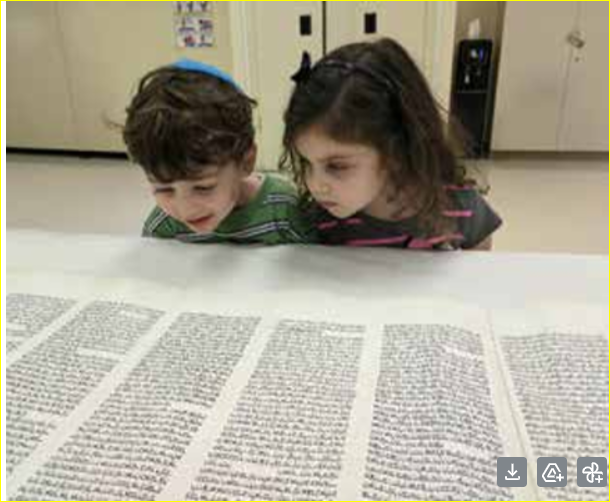
וְלֶקֶט קְצִירְךָ לֹא תְלַקֵּט… וּפֶרֶט כַּרְמְךָ לֹא תְלַקֵּט
My favorite—and only—niece shared Peret’s d’var Torah with me, which he will deliver on Shabbat morning after leading Shacharit and reading the entire Torah portion, except the curses, which his father will read. Here are some excerpts:
Peret’s D’var Torah (excerpted and summarized)
Imagine that you were one of the Anshei Knesset HaGedolah, the Men of the Great Assembly, deciding what should go into the siddur. You want to include three ideas: our history in Egypt, the consequences of our actions, and reminders of the mitzvot so that we will observe them in the future.
You could choose Ki Tavo, because it contains all three themes. It speaks about Egypt, about blessings and curses as consequences of our actions, and about remembering the mitzvot. Or you could choose the Shema and the paragraphs that follow it.
The Anshei Knesset HaGedolah chose the Shema.
Maybe there is a reason.
The three paragraphs of the Shema can be understood as three stages in the development of our relationship with God.
The first paragraph, Ve’ahavta, is about love. It is the foundation of our relationship with God, and it corresponds to childhood, when we teach children the basic principle of loving God and transmitting that love to the next generation.
The second paragraph, Ve’hayah im shamoa, introduces blessings and curses. It teaches that our actions have consequences. This corresponds to adolescence, when we begin making our own choices and learning that our decisions affect both ourselves and the world around us.
The final paragraph, Vayomer, looks back to the Exodus and reminds us of what God did for us. It represents a more mature stage of life, when we reflect on our experiences and remember where we came from.
But as I think about the Shema and Ki Tavo, I find something missing: the possibility of making a mistake and then changing.
That is where the connection to the haftarah and to Eikhah, Lamentations, becomes important.
Ki Tavo describes the consequences of failing to follow the mitzvot. Eikhah describes what happened after the destruction of Jerusalem. But the haftarah is one of consolation. It tells us that even after destruction and failure, redemption is possible.
That is the lesson I take from the connection between Ki Tavo, Eikhah, and the haftarah: it is not enough to know how we should act. We also need to know how to respond when we fail.
Redemption can happen throughout our lives—in saying we are sorry, repairing something we have damaged, and trying to change what is negative in our lives.
Rosh Hashanah is approaching. We are entering the month of teshuvah, a time when we ask forgiveness and try to repair our relationships.
For me, that is the bridge between Ki Tavo and the month of Tishrei: we are not defined only by our mistakes. We have the possibility of changing what comes next.
My Final Words
I could not have asked for a more meaningful lesson to hear on this particular Shabbat. Peret has reminded us that the story does not end with the curses. There is always the possibility of turning, repairing, remembering—and beginning again. And perhaps that is exactly what I needed to hear as I come to the end of my own reflections on Ki Tavo.
I am enormously proud of Peret and deeply grateful that I can be here with my family to celebrate this wonderful occasion. At the same time, two people whose absence is felt so deeply are missing from this simcha: Peret’s grandmother, my beloved sister Menorah Rotenberg, and his granduncle, my husband, Rabbi Michael Graetz. I wish with all my heart that they could be here with us. Instead, I will imagine them watching from above, smiling at Peret and at all of us, keeping an eye on the family they loved so much—and perhaps, as only they could, quietly working together on world peace.
So, despite everything, I am going to try to take Ki Tavo at its word—but not necessarily in the way its authors intended. This year, I choose to pay attention to the blessings. Not because the curses are not real. They are. Not because the country’s problems have disappeared. They have not. And certainly not because optimism can erase grief or suffering. Rather, because we still have a choice about what we do with the reality we have been given.
Who is rich? One who can recognize what is still worth being grateful for. And these two weeks, surrounded by family and celebrating a new generation, I know what I am grateful for. I am grateful for Peret, for his thoughtful words, for the family gathered here, and for the privilege of witnessing another generation take its place in the Jewish story. May Menorah’s and Michael’s memories be a blessing—and may their imagined work for world peace somehow continue through all of us. And may this simcha be only the beginning of many more blessings to come.
Shabbat shalom.
Related Topics
Related Posts