
Book review – How to Read the Mishnah and Midrash
At age 10, a student will be in 5th grade. In math class, they will start using long division with two-digit divisors, and in language arts, they will write multi-paragraph essays and reports. According to Judah ben Tema in Avot 5:21, the time to commence the study of Mishnah is also at 10.
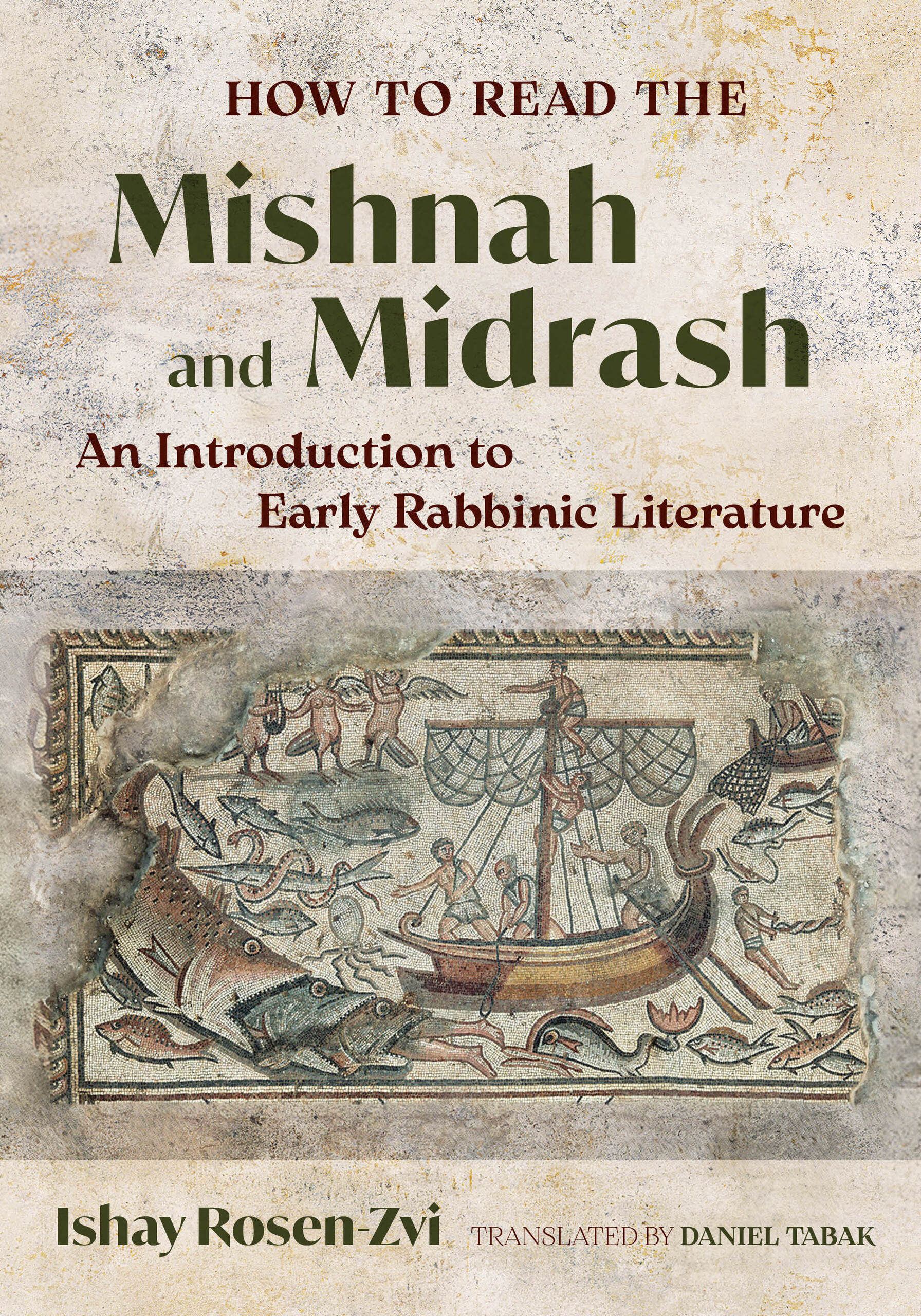
This might make Mishnah seem elementary. However, in How to Read the Mishnah and Midrash: An Introduction to Early Rabbinic Literature (University of California Press), Dr. Ishay Rosen-Zvi of the Department of Jewish Philosophy and Talmud at Tel Aviv University articulately shows that the Mishnah is a meticulously edited text of great depth and meaning.
The Mishnah is one of the foundational texts of rabbinic Judaism. Here, Rosen-Zvi lays out his brilliance and has written an engaging, engrossing work.
Rosen-Zvi may have based the title and approach on How to Read a Book: The Classic Guide to Intelligent Reading by Mortimer Adler and Charles Van Doren. There, they detail how to become a more active, thoughtful, and critical reader. Rather than focusing on what to read, the book shows how to read in a way that leads to genuine understanding. What Adler and Van Doren did for books, Rosen-Zvi does for Mishnah and Midrash.
The Mishnah was not written by a single author. Rather, Rabbi Yehuda HaNasi edited and organized earlier oral traditions into the structured text we now call the Mishnah. One might mistakenly think that Rabbi Yehuda HaNasi simply gathered a wide range of oral traditions and compiled them into a single large written volume. But seeing it like that misses the mark.
The book argues that the Mishnah and Midrash are not merely records of oral tradition but distinct literary systems with their own logic and structure. The book is organized into two sections: one focusing on the Mishnah and the other on the Midrash.
A key point is that the Mishnah is not merely a commentary on the Chumash. It is a self-contained legal text with its own structure and language (Mishnaic Hebrew) and often works independently of the Chumash.
Downloading all 3,000 years of Jewish texts from Sefaria uses about 26 GB – barely noticeable on a new iPhone, making it possible to carry all of Jewish knowledge in your pocket.
When it came to writing the Mishnah, the goal was not to have the knowledge in one’s pocket; it was to create a text that could easily be memorized. In an oral culture, such as during the Mishnaic period, association can be a powerful tool for memory, and it was a crucial organizing principle of the orally transmitted Mishna.
The book shows that the genius of Rabbi Yehuda HaNasi was not just that he could codify all of Jewish law, but also that he created a work of sophisticated legal thought. Behind the often-simplistic language of the Mishnah (which is perhaps why Judah ben Tema says that a 10-year-old can start learning it) is a razor-sharp conceptual analysis, with a formal, structured legal logic.
Finally, contrary to popular belief, Rosen-Zvi writes that the Mishnah, after it was codified, was not necessarily written down. It continued to operate within an oral framework for many centuries. He writes about the reasons for that and explores the implications of the Mishnah’s original orality and its eventual shift to the written medium.
The second half of the book examines Midrash, another key element of early rabbinic literature.
While often called a Bible commentary, Rosen-Zvi writes that Midrash is fundamentally an interpretive practice, a way to read Chumash, rather than a strict interpretation of it. Midrash is based on the premise that the Chumash has nearly infinite interpretations, serving as a source for new laws, stories, and ideas.
One of his central claims is that the rabbis used Midrash creatively and generatively, not merely as an explanatory tool. The Rabbis used Midrash to fill gaps in the biblical narrative, derive new laws or ethical teachings from linguistic cues, sometimes radically reframe the meaning of a verse, and more.
For example, in contrasting the views of Rabbi Yishmael and Rabbi Akiva, he shows that Rabbi Yishmael tended to look at the broader picture, to detect patterns in the way the Torah communicates. This was done in part via his exegetical principles.
In fact, the Baraita of Rabbi Yishmael is a text reciting 13 hermeneutic rules for interpreting the Torah. It is recited daily at the start of the morning prayers.
Rabbi Akiva, on the other hand, scrutinizes Chumash through a macro lens, inspecting individual words and letters. To the extent that the Talmud in Menachot 29b states that Rabbi Akiva was able to derive mounds of laws from the crowns on letters in the Torah.
It can often seem that Midrash is all over the place. Yet Rosen-Zvi notes that although it can feel as if the Midrash does what it pleases with the text of the Torah, it actually operated on a set of assumptions and constraints that stimulate as well as limit its interpretation.
Rosen-Zvi has done a wonderful job, aided by Daniel Tabak’s astute translation, of writing a work that, while academically rigorous, remains accessible.
While a 10-year-old can start to learn Mishnah, there’s a complexity, sophistication, and depth of thought that is not readily apparent to a 5th-grader. The truth be told, it’s not readily apparent to a lot of people.
Rosen-Tzvi has written a masterpiece of a book that uncovers the many layers of Mishnah and Midrash, revealing that these are sophisticated, deep texts, carefully constructed intellectual systems.
One can’t understand rabbinic Judaism by reading these texts superficially; one needs to grasp the rules, structures, and assumptions that underlie them. In How to Read the Mishnah and Midrash: An Introduction to Early Rabbinic Literature, Rosen-Tzvi shows how to do that.