Books and Stuff
Last week, having missed the bus from Tel Aviv to Mevasseret, I found myself unexpectedly on the train. My natural instinct on being in that situation is to read a book, but I didn’t have one with me. I know I have various books uploaded onto my iphone-Kindle, but sitting in a train and looking at one’s phone isn’t quite the same thing.
As an avid reader since childhood, my most natural position in life is to be sitting comfortably, reading a book. In the course of my years in London, like most denizens of that city I spent many hours traveling by train (the infamous Tube), going to and from school, university or work, and could not contemplate any journey without having a book to read. But last week I had to endure that half-hour journey without proper reading matter, a predicament I hope never to have to repeat.
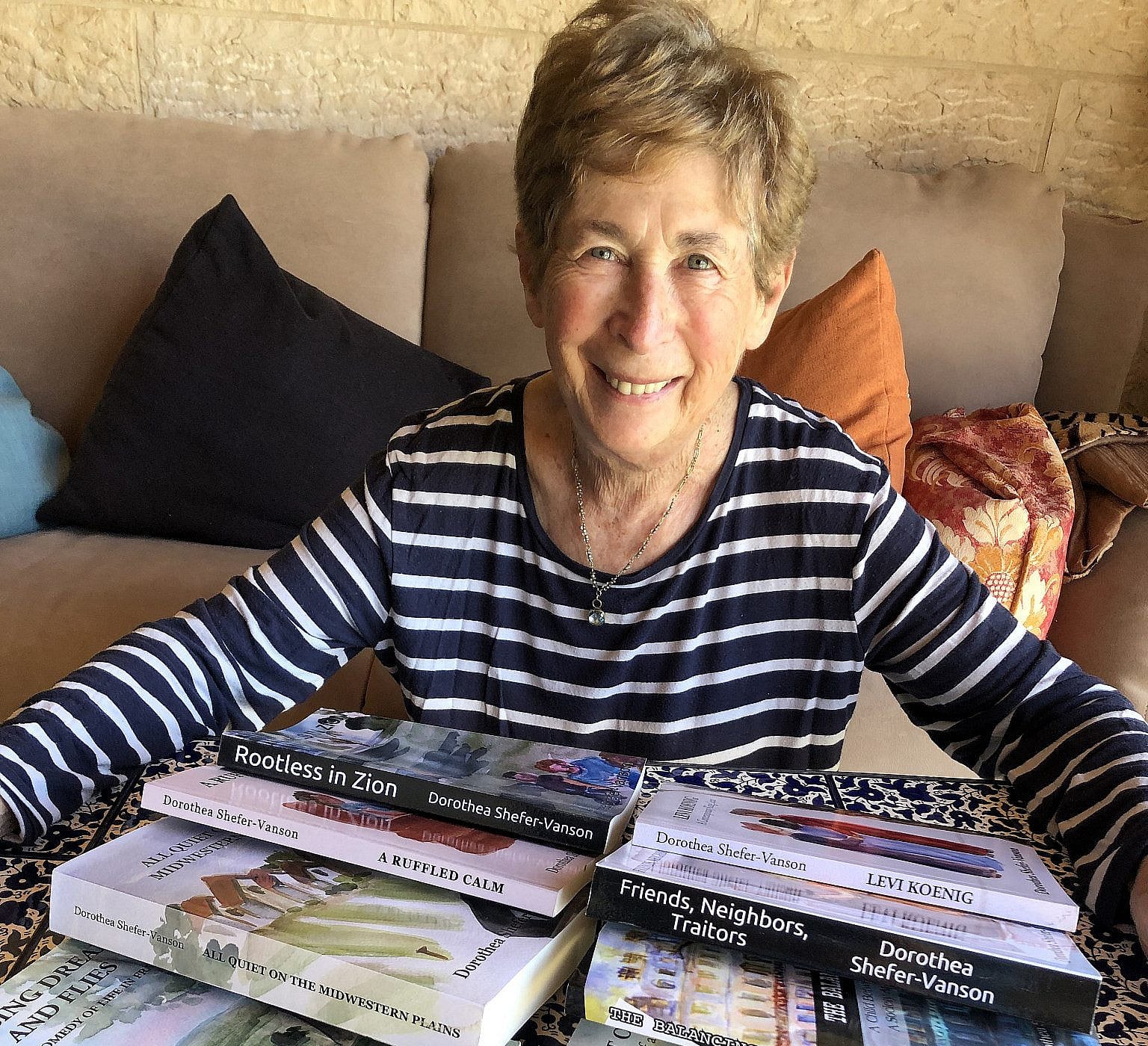
After many years of living and reading, there came a point in time when I felt that I had something to say. It was then that I sat down and wrote my first book. After that, I continued writing, and to date have written and published eight books, all of them novels about various aspects of contemporary life. In addition, as an amateur painter, I managed with the help of my son to produce book covers based on my own watercolor paintings. All my books are available from Amazon in paperback, ebook and audiobook form.
My first novel, The Balancing Game; a Child Between Two Worlds, a Society Approaching War, came out in 2013. It describes the dilemmas faced by a child growing up in an orthodox Jewish household in post-war Britain. The book focuses on the duality of the child’s life in a wider non-Jewish society and her relationships with the people around her. Interspersed with accounts of aspects of Naomi’s life are the reminiscences of a young woman, Felicity, who is living in Jerusalem and expecting her first child. As she tries to navigate the unfamiliar territory of married life the general and political atmosphere deteriorates, becoming threatening and even ferocious, eventually erupting into the Six-Day War of 1967.
Pregnant Felicity is forced to negotiate that period of time, with its initial tension, actual combat, ending in victory and elation, while contending with her own emotional roller-coaster. She clings to the idea of the spirit displayed by London’s inhabitants during the Second World War, when the Nazis bombed London, and their defiance of the Blitz. Felicity does her best to emulate that idea, and manages to get through all the difficulties, emerging into the additional trial of going into labour and giving birth to her first child.
It is only after enduring the physical ordeal of ‘natural birth’ that Felicity is able to come to terms with the events that overshadowed her own childhood and face her future as a mother.
People who have read the book have told me that they enjoyed it and thought it was well written, though some family members have expressed reservations about some of the descriptions of some of the characters. My response has been that this is a work of fiction and any similarity to real persons is purely coincidental.