
Writer covering Israel–Africa, Jewish affairs, and Israel worldwide
Breaking: Radical Hate Marches from Shabbat Straight Into Sunday Service
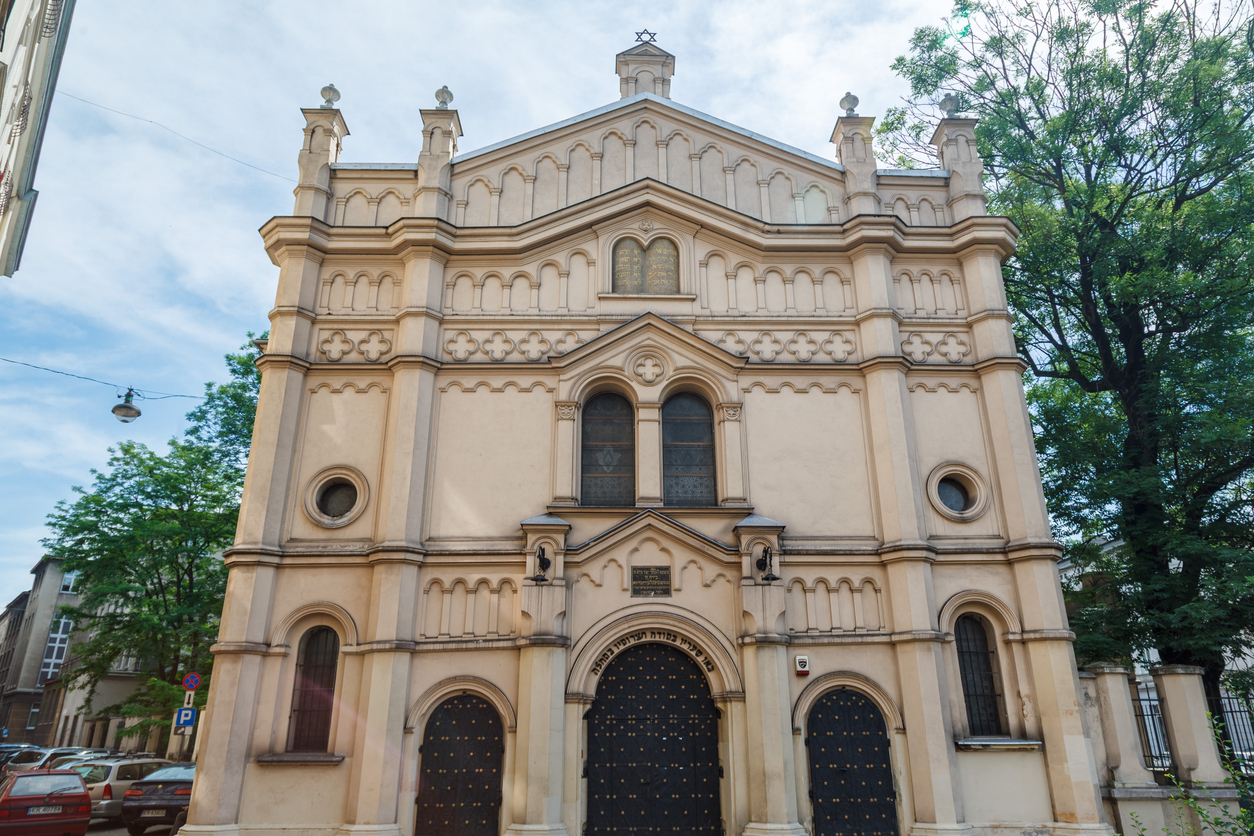
The Temple Synagogue, Kraków — a vibrant testament to Jewish faith and resilience in the historic Kazimierz quarter, now standing as a timely reminder that when the Saturday people need defenders, the Sunday people should already be at the door (Alexandre Fagundes, iStock)
When terror strikes the synagogue, too many of my fellow Christians sigh, grieve, and then scroll on. “Tragic,” they say, “but that’s their fight.” It isn’t. The same hate that slaughters on Shabbat doesn’t take a Sabbath rest. It’s already eyeing the Sunday service. And as history keeps reminding us when evil finishes with the Saturday people, it doesn’t retire. It reloads.
The Origins of “Saturday People, Sunday People” — and What It Means for All of Us
The haunting phrase “First the Saturday people, then the Sunday people” wasn’t coined for headlines. It grew out of a grim reality: the targeting of Jews and Christians alike by radical Islamist movements that see both faiths as enemies of their “pure” ideology. Jihadist propaganda has long defined its hierarchy of hate. Jews, the “Saturday people,” are marked first, symbolizing the oldest covenant and the heart of Western moral order. Christians, the “Sunday people,” are second, heirs to the same God of Abraham, Isaac, and Jacob, and to the same principles of human dignity, freedom, and conscience.
It’s not lost on me, as a Christian, that this logic is rooted in the same poisonous obsession that once fueled pogroms, inquisitions, and crusades. But in our day, the threat wears new clothes, streaming live, hashtagged, and global. For radicals, attacking Jews isn’t just about Israel; it’s about testing the free world’s resolve. The synagogue is the first frontier, and the church is the next. When I first heard the phrase, I thought it was metaphorical. Then I saw the headlines and realized it’s more like a playbook.
When Radical Hate Crosses from Synagogue to Church: The October 7 Pattern
October 7 was not only a tragedy for Israel, it was a revelation for all of us. The brutality of Hamas’s attacks, the deliberate murder, beheadings, and kidnappings of civilians, reminded the world what unrestrained ideological hate looks like. It was evil in broad daylight, streamed for applause. And yet, that same evil has left its fingerprints elsewhere. In northern Mozambique, Islamist insurgents have burned churches, kidnapped Christian women, and beheaded believers. The Guardian described entire Christian villages “cleansed,” an atrocity echoing the same fanaticism that targeted Jewish kibbutzim.
From Nigeria’s Boko Haram to ISIS in Syria and Iraq, the strategy is identical: target Jews to send a message, target Christians to prove consistency. The Counter Extremism Project has shown how ISIS’s bombings of synagogues and churches follow the same theological logic, both represent covenantal faiths that reject submission to tyranny. The horrific scenes of October 7, including entire communities erased overnight, should feel painfully familiar to anyone who’s watched the slow martyrdom of Christian minorities across Africa and the Middle East. Different names, same ideology. Different Sabbath, same hatred.
So when I say that Christians must stand with the Jewish people, it’s not charity, it’s clarity. It’s moral realism. If we don’t stand with you on Saturday, we may find no one standing with us on Sunday.
Why Christians and Jews Must Stand Together: Natural Allies in a Dangerous World
It’s fashionable today to speak of “interfaith dialogue” as if it’s a polite coffee-table exercise. But what we need is not more dialogue, it’s shared defense. Christians and Jews are natural allies in a dangerous world; we share the same spiritual DNA, the same sacred texts, and the same moral language of life and liberty. And when radicals attack either of us, they are declaring war on both the Sinai covenant and the Cross, on the God who calls every human sacred.
For that reason, we Christians can’t afford to watch anti-semitism as spectators. When Jewish students are harassed on campuses, when synagogues need police escorts, when “From the River to the Sea” is chanted as if it were a hymn, our silence is complicity dressed as neutrality. Practical solidarity means showing up: churches partnering with synagogues, Christian leaders defending Israel’s right to exist, congregations educating themselves about modern anti-semitism. It also means humility, acknowledging the centuries when Christians were not the defenders of the Jewish people but their persecutors. True repentance isn’t guilt; it’s guardianship.
When Christians and Jews stand together, it doesn’t just frustrate the radicals. It defies their worldview. It tells them that the descendants of Sinai and Calvary are still here and still united by the same God they hate.
When Bullies Knock, Pray First, Then Pass the Hummus
So here’s the lighter side of a heavy truth: turns out Christians and Jews have more in common than just awkward family dinners. And why that matters when bullies show up is simple: if we’re not sitting at the table together, we might both end up on the menu. Radical hate doesn’t check calendars. It doesn’t stop at the synagogue and politely wait for Sunday. It marches on, uninvited, from Shabbat to service, from menorah to cross. But here’s the hope: when Christians and Jews link arms, we don’t just protect one another, we remind the world what moral courage looks like. And maybe, just maybe, we’ll hear the bullies outside realize they picked the wrong house.
Because faith, like friendship, is strongest when shared before the fire starts.
Related Topics
Related Posts