
Working to protect people and our shared planet.
Breakthrough Exhibit at Emory Brings History of Judaic Studies to Life
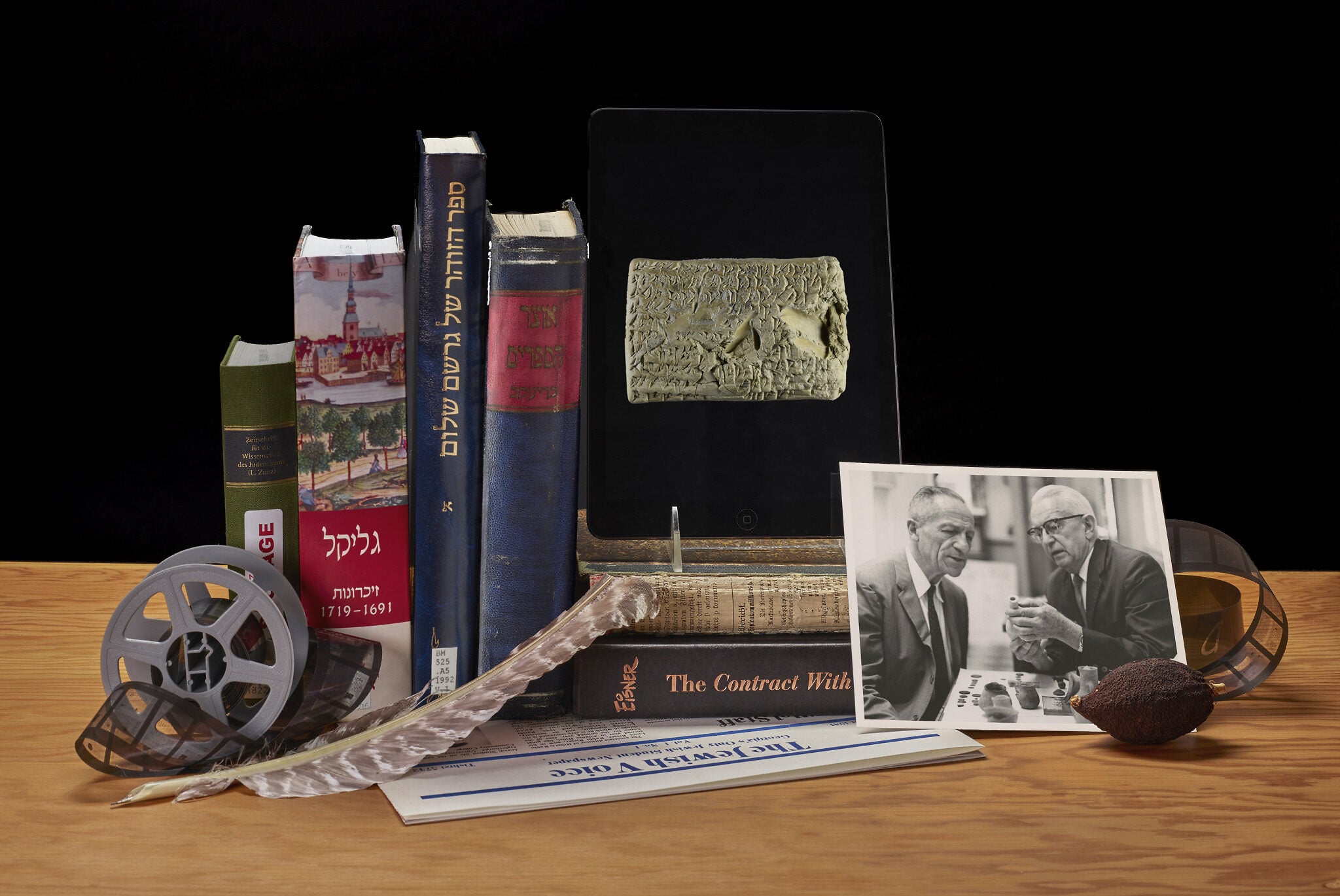
Outstanding special exhibit, From Tablet to Tablet, brings the history of Judaic Studies to life. Photo courtesy of Emory University.
What can a 4,000-year-old clay tablet, a letter from Martin Luther King Jr., and a postcard documenting an antisemitic lynching teach us about the world we live in today? An extraordinary exhibition at Emory University offers a compelling answer: history is not simply something we preserve. It is something we must understand, confront and carry forward.
“From Tablet to Tablet: Exploring Emory’s Jewish Studies Collections” is a moving, intellectually rich exhibition that I urge anyone interested in Jewish history, American history, religious understanding or the power of scholarship to experience. Celebrating 50 years of Jewish Studies at Emory, it brings together remarkable artifacts that illuminate Jewish civilization across millennia—and reveal how the past continues to resonate today.
Two histories, one powerful story
One of the exhibition’s most compelling features is a corridor with two complementary histories. One side traces the development of Jewish Studies as an academic discipline in the United States and beyond; the other tells the story of Jewish Studies at Emory.
Together, they reveal how much effort it took to establish Jewish history, religion, literature and culture as subjects worthy of rigorous academic study in their own right.
In 19th-century Europe, Jewish intellectuals associated with Wissenschaft des Judentums, or the Science of Judaism, sought to apply critical scholarship to Jewish life and win greater respect for Jewish civilization. Meanwhile, Christian scholars had long studied biblical Hebrew and Jewish scriptures, helping establish academic traditions on which modern Jewish Studies would later build.
The development of the field reflects both the value of intellectual partnership and the importance of Jews being able to study their own history on their own terms. Jewish Studies eventually emerged as a distinct academic discipline, growing significantly in American universities during the 1960s and 1970s.
Emory’s transformation from a fledgling program into a thriving center of excellence is part of this larger story. I graduated from the program (which I loved!) in 1986. Since then the program, like Jewish life at Emory overall, has gone from strength to strength. Thus, the exhibition celebrates the scholars, students, librarians, archivists, donors and community members whose collective efforts made that progress possible.
From ancient clay to modern technology
The exhibition begins with a remarkable pairing: an ancient Babylonian cuneiform tablet dating to approximately 2000–1600 BCE and a modern electronic tablet. One is made of clay; the other represents the digital age. Both, however, serve the enduring human desire to record and communicate knowledge.
From ancient tablets and parchment scrolls to rare books, photographs and digital media, the objects demonstrate the extraordinary variety of ways people have preserved ideas across generations.
The main gallery explores Jewish civilization through four broad areas: history and memory; Jewish law and religious studies; medicine, natural sciences and technology; and arts, literature and culture.
Visitors encounter treasures including a handmade High Holiday prayer book from Charleston, South Carolina, dated 1804, and a rare 1492 edition of the Book of Isaiah by David Kimhi. Other objects reveal connections between Jewish ritual and botany, the study of Jewish mysticism and the evolution of medical knowledge.
The breadth is striking. Jewish Studies is not confined to sacred texts or ancient history. It offers a window into the creativity, intellectual life and lived experiences of Jewish communities around the world.
A letter from Martin Luther King Jr.: the power of solidarity
Among the exhibition’s most moving artifacts is a letter from the Rev. Dr. Martin Luther King Jr. to Rabbi Jacob M. Rothschild of Atlanta’s Hebrew Benevolent Congregation, known as The Temple.
In March 1965, King thanked Rothschild for organizing an integrated public banquet honoring him after he received the Nobel Peace Prize. He also recognized the rabbi’s contributions to desegregation and the Civil Rights Movement.
King described the occasion as evidence of the nation’s capacity to overcome past conflicts and build what he called the “beloved community.”
The letter reminds us that Jewish leaders played important roles in the Civil Rights Movement and that interfaith partnerships can help advance justice. Rothschild’s actions reflected a willingness to put moral commitments into practice, while King’s words recognized the importance of that work.
Today, when communities can feel divided by religion, identity and politics, this artifact offers a powerful reminder of what solidarity can accomplish. Working across differences is not merely an aspiration. It is a practice that can change lives and institutions.
The Leo Frank postcard: the danger of hatred
Another artifact is deeply disturbing: a postcard showing members of the lynch mob posing around the body of Leo Frank after he was hanged from a tree in Georgia in 1915.
Frank, a Jewish factory superintendent convicted of murdering a young employee, was taken from prison and lynched by a mob. His conviction was later posthumously overturned. The case remains one of the most notorious examples of antisemitic violence in American history.
The postcard is chilling not only because of what it depicts, but because of what its circulation represented. The perpetrators proudly distributed the image through the mail, turning murder into a public spectacle and a message of terror.
The exhibition explains that local Jews were so intimidated that many remained silent about the case for decades.
This artifact forces us to confront an uncomfortable truth: antisemitism is part of America’s own history. Hatred can be normalized, celebrated and used to silence an entire community.
Preserving this postcard matters because history cannot be understood honestly if we retain only the evidence that makes us comfortable. We need to see what happened, understand the circumstances that made it possible and recognize the warning signs when they appear again.
Placed alongside the King–Rothschild letter, the postcard creates a powerful contrast. One documents solidarity across religious lines; the other records the devastating consequences of antisemitism and mob violence. Together, they illuminate both the possibilities of human goodness and the consequences of hatred.
Why you should go
The exhibition’s achievement extends beyond the extraordinary objects on display. Co-curators Katalin Rac, Emory’s Jewish Studies librarian, and Eric Goldstein, associate professor of history and Jewish Studies, have brought together materials from across the university’s libraries, archives, museum and other collections, revealing connections that might otherwise remain hidden.
Visitors are also invited to reflect on books and resources that have influenced their own lives. That invitation captures the enduring nature of Jewish learning: knowledge is preserved, questioned, interpreted and passed from one generation to the next.
From a 4,000-year-old tablet to a postcard documenting a lynching, these artifacts show why history matters now. They remind us that scholarship can deepen understanding, that interfaith cooperation can advance justice, and that confronting painful truths is essential to resisting hatred.
This is not simply an exhibition about Jewish history. It is an invitation to think more deeply about who we are, how our societies have evolved and what responsibilities we inherit from the past.
If you have the opportunity to visit Emory, I encourage you to experience it for yourself. From Tablet to Tablet: Exploring Emory’s Jewish Studies Collections is on Level 3 of the Robert W. Woodruff Library, in the Schatten Gallery, through February 14, 2027.
Go for the remarkable artifacts. Stay for the stories they tell—and leave thinking about how those stories still speak to us today.
Related Topics
Related Posts