Breathing Again
There is a moment, in every new life, when breath first fills the lungs. A baby, moments after birth, gasps for air — a raw, instinctive act that signals both pain and possibility. It is the sound of life beginning. Or a diver surfacing after too long beneath the sea, breaking through the water’s surface, lungs burning, desperate for air, and then—finally—breathing again. That first breath after struggle is not just survival; it is renewal.
Over the past week in Israel, following the return of all the living hostages from Gaza and the somber homecoming of some who did not survive, following the reunions, burials, and memorial ceremonies, the refrain most often heard has been: “We can finally begin breathing again”. But as with every rebirth, that first breath is only the beginning of the work ahead.
From the very beginning of humanity, breath has carried sacred meaning. In the book of Genesis, we are told that God formed Adam from the dust of the earth and then “breathed into his nostrils the breath of life, and man became a living being.” Breath is divine connection — the bridge between body and spirit, between what is earthly and what is eternal. To breathe again is not merely a biological act; it is a spiritual one. It is the moment when life, faith, and hope return. Yet, just as Adam rose from the dust and began his work in the world, so too must we. The air now filling our lungs carries the weight of both mourning and mission, of hope and healing.
The sight of hostages reunited with their families and of communities in the South and North reclaiming their homes and lives marks the first time in two years that Israelis have experienced a collective moment of joy. Yet these are only Israel’s first, shallow and tentative breaths after an extended period of suffocation. Breathing again must mean rebuilding — physically, emotionally, economically, civically, and educationally.
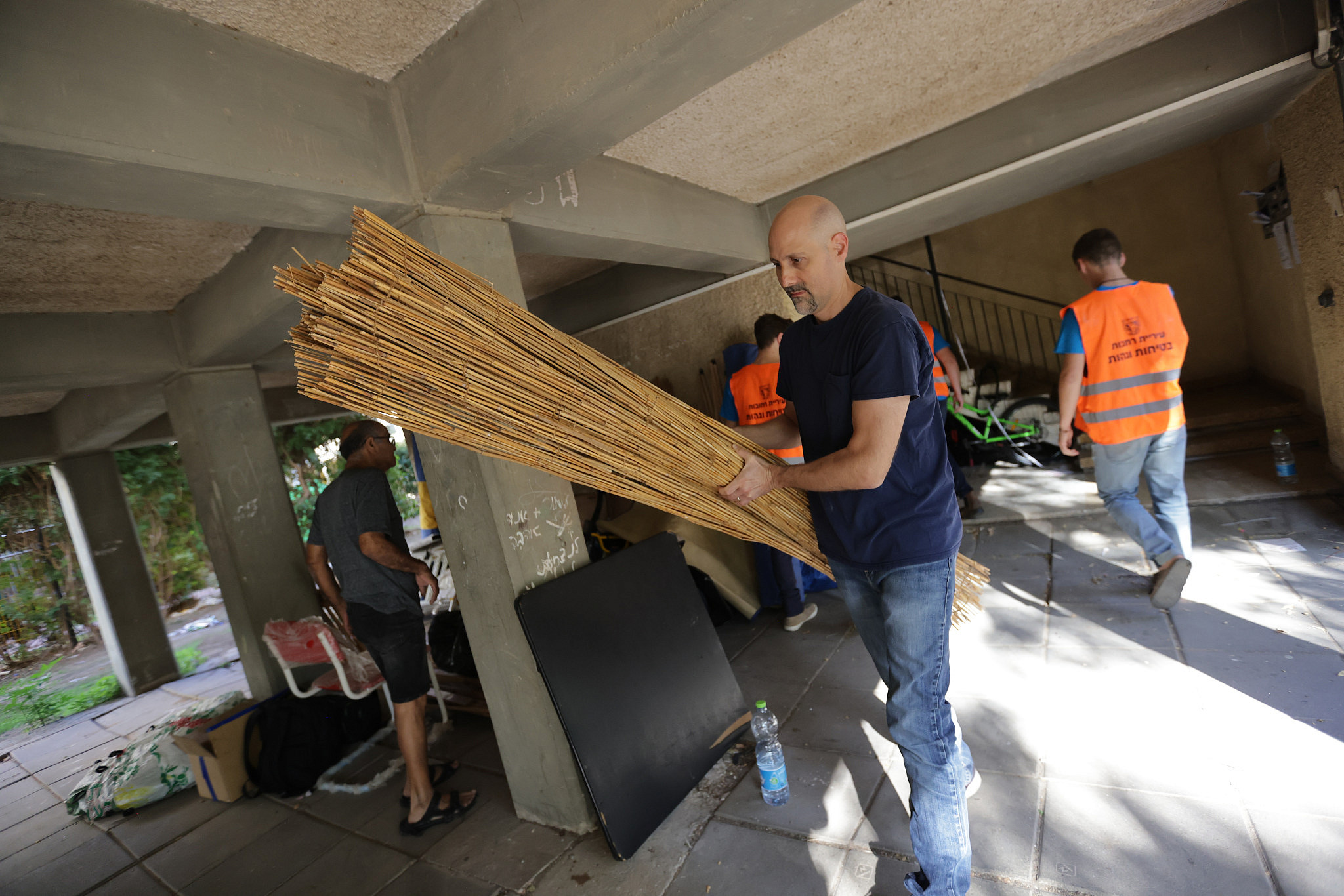
Physical rehabilitation is the most visible and immediate need. Thousands bear wounds that may never fully heal — soldiers injured in battle, civilians scarred by terrorists, and towns and kibbutzim devastated. The challenge before us is not only to rebuild what was destroyed, but to reimagine how we live, how we thrive, and how we protect ourselves in the shadow of remaining threats. Rehabilitation demands more than hospitals and construction cranes; it calls for compassion, patience, and the strength to rebuild lives and homes that feel safe again.
Then comes the quieter, more elusive task — mental and spiritual rehabilitation. The trauma of the past two years will echo for decades. Children who hid in shelters, parents who feared they would never see their sons or daughters again, soldiers who saw too much too young — all must learn to breathe again, to find peace within the noise of memory. This is sacred work: to comfort the broken-hearted, to restore the spirit of people who have endured shock and sorrow. The prophets of Israel often spoke of renewal not in terms of armies or borders, but of hearts made whole. That renewal is our spiritual frontier.
Yet trauma also tears through the economy. Economic rehabilitation is essential if Israel is to sustain itself and grow stronger. Hundreds of thousands were called up for reserve duty, leaving businesses shuttered and livelihoods uncertain. The cost of war is not measured only in loss of life but in years of labor diverted, innovation delayed, and opportunity deferred. As we begin to breathe again, we must ensure that the economy breathes with us — that small businesses reopen, that industries rebound, that innovation and investment, the lifeblood of our nation, flow once more.
But the wounds of this time are not only personal or financial, they are also civic and global. The covenant that binds Israelis — Jews, Arabs, Druze, and others — has been tested. We must rediscover what it means to share this fragile and miraculous home. Civic rehabilitation means restoring trust in one another, renewing our social contract, and forging unity. It means remembering that Israel’s greatest strength is its capacity to come together when it matters most.
We must also seize this moment to rehabilitate the bonds between Israel and Jewish communities across the globe. On October 7th, Jews everywhere were horrified by the slaughter of their brothers and sisters in Israel and have since done everything imaginable to stand by Israel’s side. While Israelis fought enemies on their doorsteps, Jews worldwide were thrust into a global war against anti-Semitism and Israel delegitimization unlike anything seen before. Together, we must breathe new life into the understanding that we are inextricably interconnected and that our shared future depends on deepening that relationship.
Our children are inheriting not only our pain, but our potential. Educational rehabilitation means that our schools must become places of healing, resilience, and preparation — equipping the next generation not only with knowledge, but with hope. Education must teach them how to ask questions, how to think critically, and how to care deeply — for each other, for their communities, and for their land. Our future depends on the courage of our children to believe in one.
And finally, as we look outward from the center of the country, we must turn our attention to the periphery — the North and the South, which together comprise 87% of Israel’s land and yet hold only about 30% of its people. It is there that the promise of Israel’s future will be built. These regions, scarred and displaced by war, must become the heart of renewal. Investment, infrastructure, and imagination are needed to transform them into hubs of growth, creativity, and resilience. Rehabilitation, in this sense, is not only recovery — it is rebirth.
“Beginning to breathe again” is a phrase of relief, but it must also be a phrase of resolve. The act of breathing, once renewed, must give strength to movement, to rebuilding, to becoming. Like the baby taking its first breath or the diver breaking the surface, Israel is reemerging from two years of war into a new and uncertain light — hurting, alive, grateful, and hopeful. God has once again breathed life into us. Now it is our turn to use that breath: to lead, to heal, to build, to love, and to create a future worthy of the lives that were lost and the lives we’ve been given.
Aaron Goldberg is the Senior Vice President, Israel and Director of the Israel Office of Jewish Federation Los Angeles (JFEDLA). JFEDLA deployed nearly $40 million to support Israel in the wake of October 7th which unlocked an additional $20 million of investment from foundations, federations, and government partners.