Bringing Home Our Own Is a Defining Jewish Quality
As a young man in Brooklyn, I volunteered with the chevra kadisha, the burial society that prepares the dead according to Jewish law. My father coordinated it for the Va’ad HaRabbonim of Flatbush, so I grew up around the work. Four of us would go to the funeral home together. None of us were rabbis. We were simply Jewish men who had been asked to do something sacred.
One visit has stayed with me for decades. We arrived shortly after Thanksgiving, and the body in front of us needed some cleaning before we could begin. The funeral home staff stood nearby trading jokes about the man’s holiday dinner. I remember the contrast more than anything. They saw a job. We saw a person who had lived, who had a family, and who deserved to leave this world with dignity. We worked quietly and washed him with care, since that is what you do for one of your own.
I have thought about that day often over the past few weeks.
On September 20, an Israeli hiker named Ami Yogev went missing on Mount Olympus in Greece. Local search teams could not find him. After a call for help went out, four volunteers from the Israeli rescue group Haverim Mechaltzim spent nearly three weeks combing streambeds, climbing down cliffs on ropes and pushing through waterfalls and thick brush. Finally, one of them spotted an Israeli passport. Ami’s belongings were nearby, and then they found him, hidden under the vegetation.
This took an incredible amount of effort. Four people left their homes and jobs to search a foreign mountain for a man they had likely never met, knowing the best outcome would be a funeral. They went anyway.
Then came a story reported recently by i24NEWS. An Israeli submarine was on a classified mission at one of the farthest points an Israeli force has ever reached when the commander received an urgent call. The brother of one of his sailors had been killed fighting in Gaza, and the family was already preparing for the funeral.
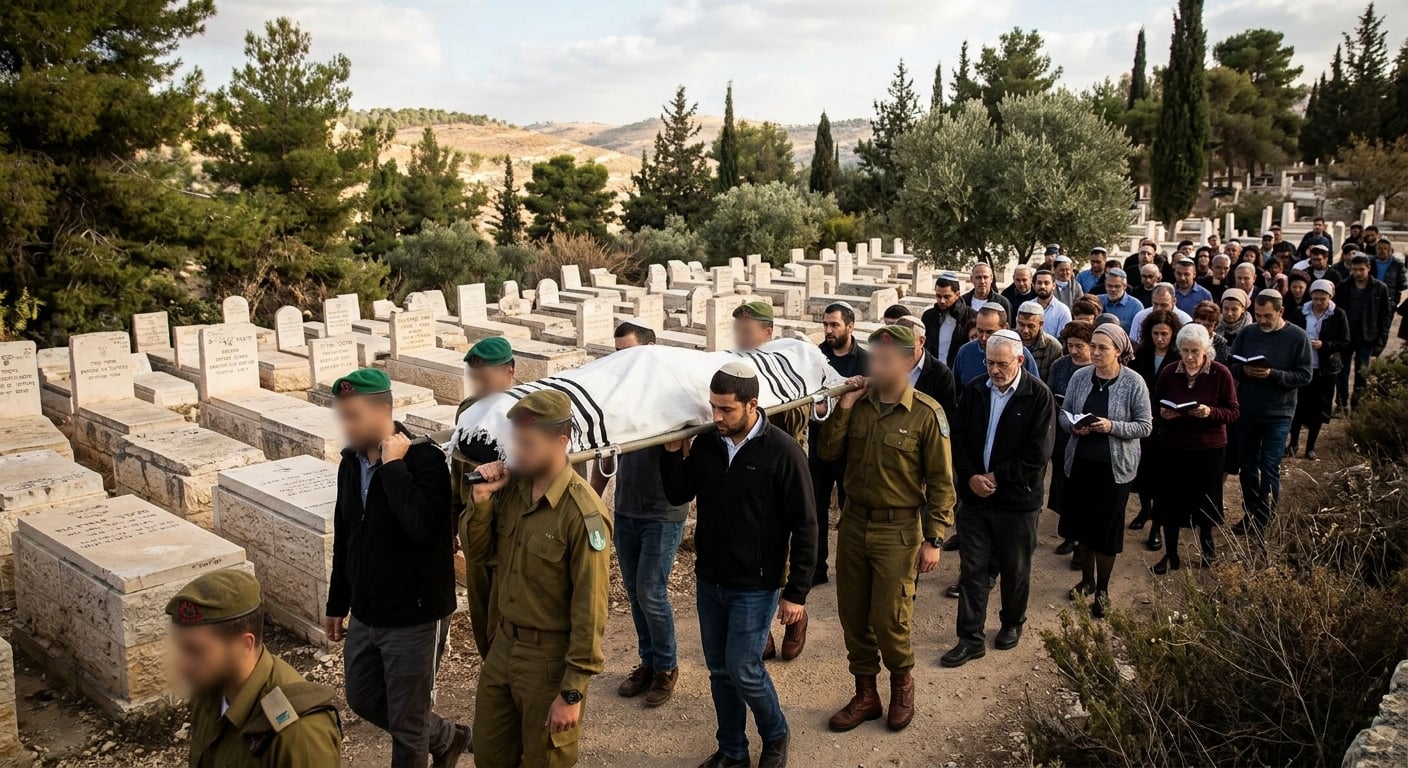
The mission could not be called off, so the Navy and Air Force built a second mission around one grieving sailor. A distant ship carrying a special unit was sent, a helicopter was assigned solely to bring him back, meeting points were set at sea, and the plan was approved at the highest levels. The commander sat with the young man in his cabin, told him the news, and the two cried on each other’s shoulders. A day later, the signal came that he could begin the journey home. He arrived in time to bury his brother and say kaddish.
I have never been prouder to be a Jew, or prouder of the IDF, than when I read that story.
Early in the war, Greta Van Susteren interviewed me on Newsmax and asked a question I have heard many times since. Why do Jews care so much about bodies? In the days after October 7, volunteers went into the devastated communities of the south to gather every remains they could find, so families could lay their loved ones to rest. Much of the world struggled to understand why.
I saw that same learning curve at a Hanukkah party where President Trump spoke about the hostages. As I recall it, he explained that when he returned to office, he understood the mission as bringing home the living. Over time, he realized the Jewish people would keep pushing until every hostage, living or dead, was back in Israel, and he had to rethink his approach.
The answer to Greta’s question starts with the soul. Judaism teaches that every person carries a divine soul, and that the body is how that soul does good in this world. The hands that gave charity, the feet that walked to synagogue, the voice that comforted a friend all served something holy, and that holiness remains after death. Caring for the body is called chesed shel emet, a kindness of truth, since the one receiving it can never repay it.
There is a second part to the answer. People have long struggled to define the Jews. Nation, religion, and race each capture a piece. The word that fits us best is family. Families bring their people home. They show up for the funeral, sit together in mourning and say kaddish. Our entire tradition of mourning is built on the idea that nobody grieves alone.
That is why the Holocaust remains such an open wound. Six million members of our family were denied a grave, and countless children never had a place to stand and say kaddish for their parents.
Every soldier in the IDF carries this knowledge with them. If the worst happens, they will be brought home, and their families will have a grave to visit. Four volunteers on a Greek mountain understood it, and so did a submarine commander deep beneath a faraway sea. President Trump came to understand it too, once he saw that this family would never stop until every last hostage was home.
A people that believes the body is holy will climb a mountain to recover it. A family that refuses to let anyone grieve alone will send a helicopter into the open sea so a brother can stand at a grave and say kaddish. Wherever a Jew falls, whether on a battlefield in Gaza or on a hiking trail in Greece, someone will come looking for them. That promise has held our family together through every chapter of our history, and it is holding us together now.