
Engineer, Entrepreneur, Author and lifelong student
Bringing Torah Reading to Life in the Digital Age
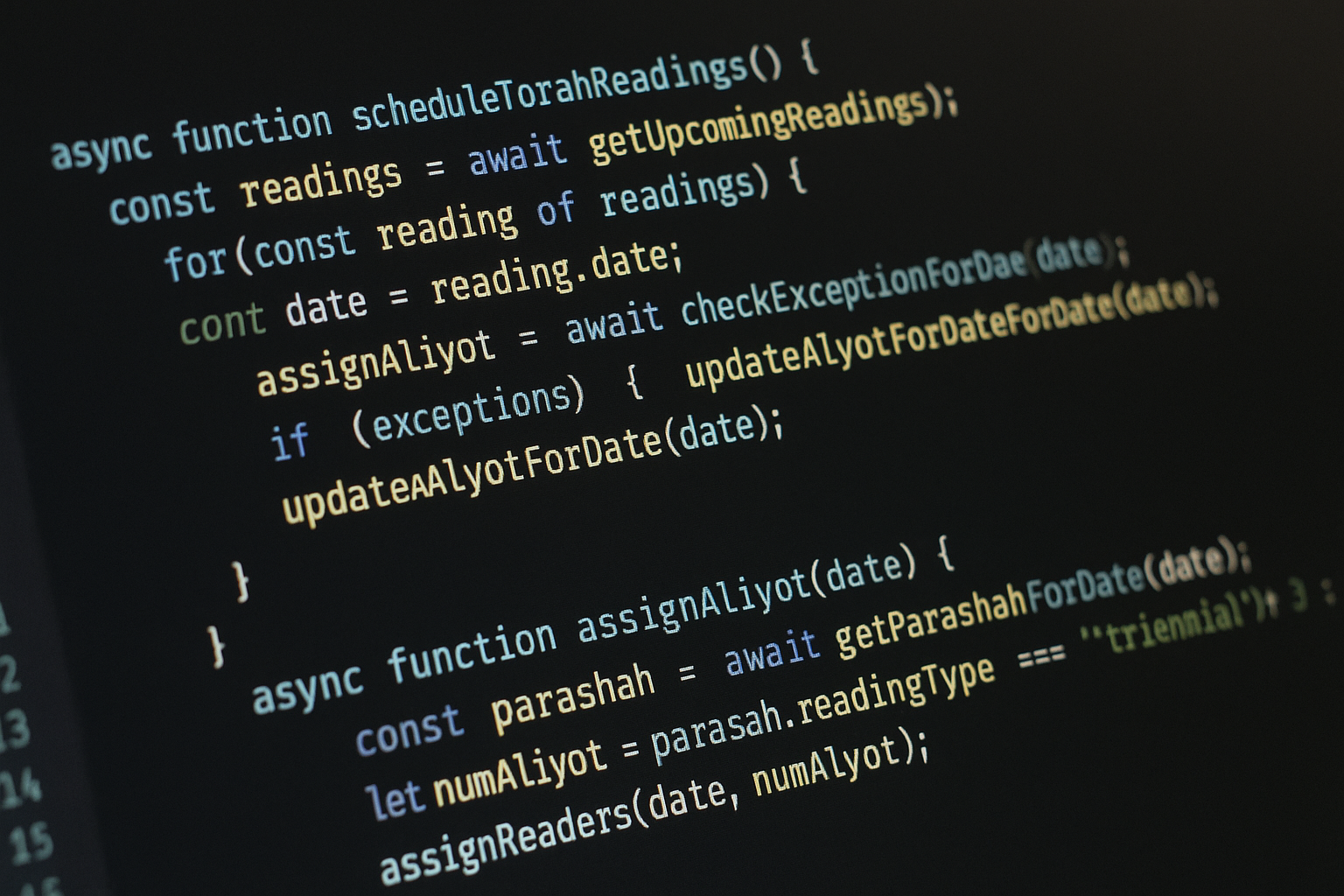
Torah Reading in the Digital Age
When I was younger and still figuring out what religion meant to me, I went to synagogue most Shabbats. I loved the rhythm of the service, the sense of belonging, the melodies that felt familiar and eternal. But I was never one of those people who could walk up to the bimah and read confidently from the Torah.
The only portion I ever read back then was my bar mitzvah portion; even to this day, I remember how nerve-racking that was. It wasn’t that I couldn’t read; it was that I didn’t have the confidence to do it in front of everyone. I remember watching those who did, admiring their composure, the ease with which they chanted, and quietly wishing I could do the same.
Years later, after moving to the U.S., I found myself attending a Conservative synagogue. It wasn’t necessarily where I found all the answers about faith, but it felt like home; a place that was rooted in tradition, warm in community, and centered around the Torah reading that had always stirred something in me.
Eventually, I decided it was time to face the fear I’d carried since my bar mitzvah. I remember standing on the bimah, heart pounding, hands trembling, the yad quivering as it drifted across the parchment, landing everywhere except where it should. My voice wavered at first, but then something unexpected happened—the words and melody began to flow as if they’d been waiting for me all along. They steadied me, filled me with calm, and gave me the confidence I’d been missing. For the first time, I chanted from the Torah and Haftarah not as a nervous spectator, but as a full participant in the sacred rhythm of our tradition.
That moment stayed with me. It also made me realize how many others shared that same quiet fear; the desire to read, the hesitation to try. Many wanted to, but the process of preparing a Torah reading felt intimidating and time-consuming. The tradition was alive, yet participation was shrinking to a small circle of experienced readers.
That realization eventually led me to build TorahReaders.net more than a decade ago. What started as a simple scheduling tool for my own congregation has grown into a platform used by Conservative and Reform synagogues across North America.
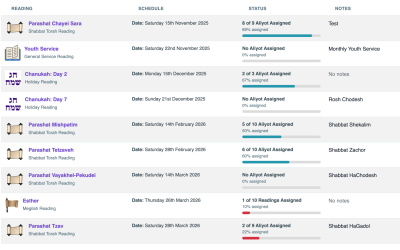
At its heart, Torah Readers was never just about logistics—it was about participation. Most synagogues managed Torah reading through spreadsheets, endless email chains, or handwritten notes. Keeping track of who was reading which portion, or organizing special holiday readings, was a constant challenge. Torah Readers brought all of that into one central place: a clean, user-friendly system where clergy, coordinators, and laypeople can schedule, assign, and track readings effortlessly.
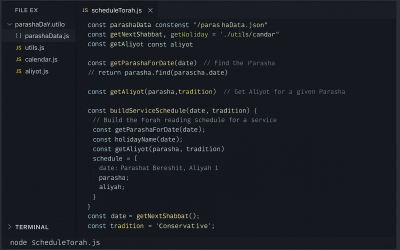
When I first began developing Torah Readers, I quickly discovered that building a platform for Torah reading wasn’t simply a programming task — it was an act of translation. In an earlier essay I wrote called “Coding Tradition,” I described the struggle of taking three thousand years of Jewish laws, customs, and reading patterns and expressing them in code. Every tradition had its own nuance, every exception its own meaning. How do you design software flexible enough to honor all of that? The Torah reading cycle isn’t just data — it’s a living rhythm, filled with variations that depend on community, holiday, and heritage. From the challenge of rendering vowel-less Hebrew text to accommodating the different reading customs of Orthodox, Conservative, and Reform congregations, each line of code became an attempt to preserve something sacred while making it accessible to anyone, anywhere.
As the platform grew, something deeper came into focus. Torah reading isn’t just an administrative task—it’s a sacred act, a spiritual skill, and a shared mitzvah. So, our mission evolved. We began focusing not only on scheduling, but on helping people learn to chant confidently.
That’s when we developed our freely available digital Tikkun technology, now at the core of Torah Readers and its companion sites, iTorah.life and Tutor.iTorah.life.
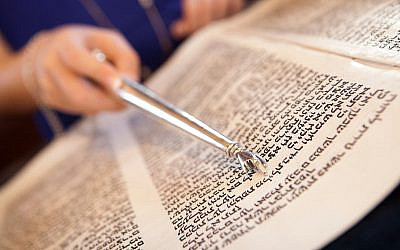
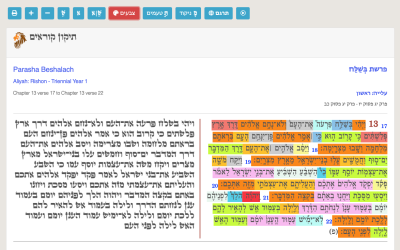
Traditionally, a Tikkun is a printed text showing the Torah script as it appears in the scroll alongside the Hebrew text that has the vowels (niqqud) and cantillation marks (trope, or taʿamē hammiqrā) version used for practice. Our digital Tikkun re-creates that experience online, accessible anywhere, on any device. Users can toggle between versions, listen to recordings, and practice interactively with the correct melodies.
iTorah.life opens this experience to everyone, free of charge. It allows anyone—whether revisiting their bar or bat mitzvah portion or exploring Torah study for the first time—to practice and learn at their own pace. Thousands of users from across the world—from Seoul to São Paulo, Nairobi to New York, Adelaide to Oslo—have logged on to learn.
Behind the scenes, the digital Tikkun is built on a powerful technological foundation. Every single Hebrew word of the Torah is carefully indexed and stored in a MongoDB database, in two distinct versions: the right-side text (as it appears in the Torah scroll, without vowels or trope) and the left-side text (the fully vocalized version used for study and practice). When a user selects a chapter or verse, the system dynamically assembles the correct portion in real time—displaying both sides together, just as they appear in a traditional Tikkun. This precise structure allows learners to switch views seamlessly, highlight their verses, and listen to recordings synchronized with the text.
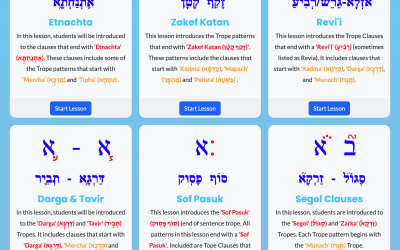
Then there’s Tutor.iTorah.life, built specifically for teachers and students. It lets educators assign portions, track progress, review recordings, and offer feedback all in one place. Tutors tell us it’s transformed the way they teach—students can practice at home with precision, while teachers spend their time guiding rather than managing.
At its core, all three platforms share a single purpose: to bring Torah learning and reading into the digital age without losing its soul. They serve different people—administrators, learners, and teachers—but they work together to make Torah reading more approachable, engaging, and alive.
The response has been remarkable. Congregations say participation has increased. Tutors say their students are learning faster. And readers—young and old alike—say they finally feel confident to chant again, some after decades away.
What moves me most are the stories from users who tell me this technology made them feel part of something bigger. One synagogue leader put it best: “It’s not just software—it’s how we share the responsibility of Torah.”
That’s exactly what I hoped for.
In a time when community can feel fragmented and tradition can seem distant, technology can do the opposite. It can unite, empower, and renew. The Torah Readers suite wasn’t built to replace tradition—it was built to help it thrive in a world that’s constantly changing.
Our focus remains on listening to rabbis, cantors, coordinators, tutors, and readers who shape their communities week after week. Every feature, from audio playback to automated reminders, was inspired by real feedback from them.
The Torah is eternal. But how we engage with it can—and should—evolve.
My dream is simple: that every person who wants to read Torah, teach Torah, or hear Torah can do so with ease, confidence, and joy. When technology serves that purpose, it becomes something sacred in its own right—a vessel for connection, continuity, and community.
Innovation and tradition aren’t opposites. Together, they can keep the ancient melodies of our people alive for generations to come.
Related Topics
Related Posts