Impacting Tomorrow, Today
Building Israel’s Future Through Long-Term Philanthropy
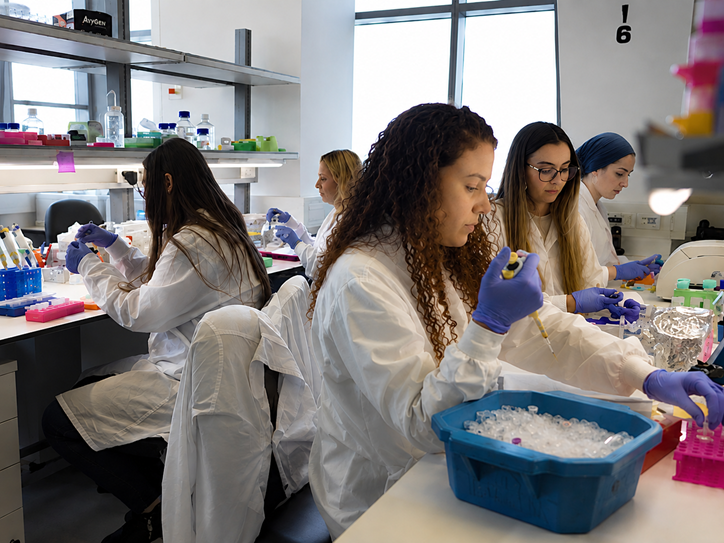
Bar-Ilan University students in a scientific laboratory. Photo courtesy of Bar-Ilan University.
How can I make the biggest impact for the people and places I love?
If you’re like me, you’ve asked yourself that question many times over the past three years. Since the October 7 attacks, we’ve wanted to help Israelis through immediate hardship while also giving them the chance to move forward.
American Jews responded to October 7 with extraordinary generosity. We understood that people needed help, and we acted. But now, we must ask something more of ourselves: How can we stay involved for as long as it takes for our support to make a lasting difference? By working with Israeli universities, you can do both.
A student returning from reserve duty may need tuition assistance now. That same student could need tutoring next semester, and ongoing guidance through graduation.
A community facing gaps in healthcare needs better access to services today, along with more physicians trained to serve it in the years ahead. Giving to the institutions doing this work fills both short- and long-needs.
Through an initiative called Academic Armor, Bar-Ilan University demonstrates the real impact of higher education institutions from the present to the future. This includes academic, financial, and emotional support that helps students overcome a variety of obstacles.
A student can prepare for an exam, get help with an assignment, or continue a semester that might otherwise have been disrupted by military service. Over time, that support also helps Israel’s workforce gain another engineer, teacher, physician, or researcher. The investment begins with a person who needs help and extends to the people their work eventually serves.
The same connection is clear in northern Israel, where Bar-Ilan’s Azrieli Faculty of Medicine combines medical education with a commitment to the health of the Galilee’s communities. Through the Russell Berrie Galilee Diabetes SPHERE, the faculty works with healthcare providers, local authorities, and community partners to improve diabetes prevention and care.
Continued investment in academic institutions allows such partnerships to develop, gives healthcare providers practical tools, and supports research into better care. It shows how an institution built for the long run can respond to immediate needs.
Other work requires patience before its full impact is known. Bar-Ilan’s partnership with Sheba Medical Center on the Health Tech Valley project brings researchers, clinicians, and industry together to turn scientific discoveries into treatments and medical technologies. This research ranges from cancer to medical robotics to artificial intelligence. Long-term investment gives such initiatives the opportunity to test ideas and pursue the ones that show promise.
Impactful and responsible philanthropy makes room for long-term thinking, while expecting clear goals and honest reporting from institutions along the way. Multi-year commitments can help universities plan around those goals. They allow institutions to maintain student services, recruit faculty, and support research beyond a single funding cycle.
When we consider what Israel needs to recover and grow, higher education belongs in the center of the conversation. Universities are helping people regain their footing while preparing them to contribute to the country’s future.
The question is not whether we should focus on Israel’s immediate needs or its future. Through sustained philanthropy, we can do both. We can help students overcome today’s challenges while preparing them to strengthen Israel’s communities, advance its economy, and improve lives for generations. That is how we make a lasting difference, beginning today.
Related Topics
Related Posts