Liberal Zionist
Built by Activists, Not Publicists
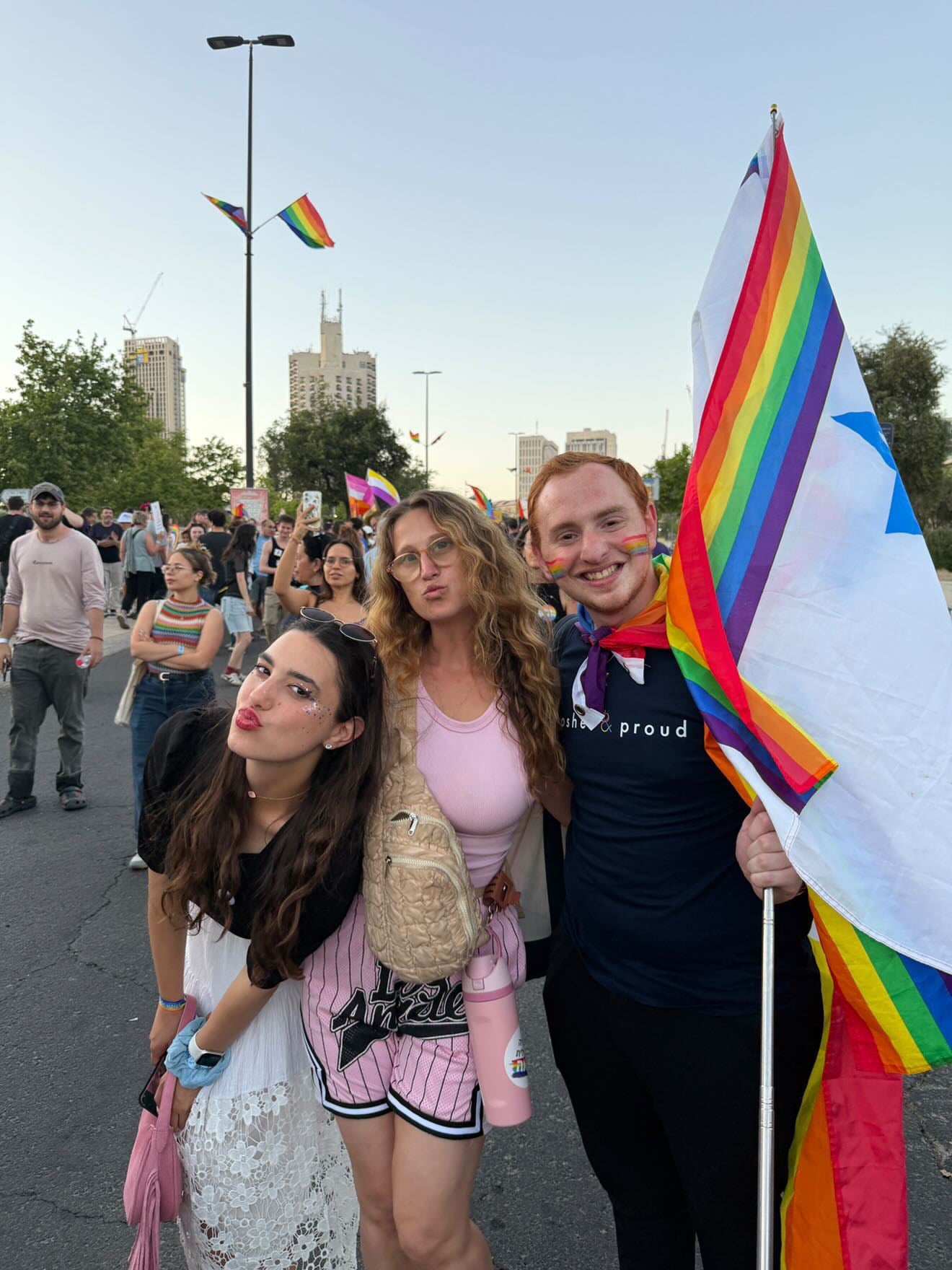
Hallel Silverman at Jerusalem Pride (courtesy)
Jerusalem Pride is not Tel Aviv Pride.
It’s more political, religious and smaller. It has counter-protesters. This is not a parade built around beaches, parties, or corporate sponsorships. It is a march that exists because activists fought for the right to hold it. Since 2002, LGBTQ Jerusalemites and their allies have organized, protested, petitioned courts, challenged institutions, and insisted that visibility belongs in every city—including Israel’s most contested one.
Every year, social media fills with claims that Israel uses LGBTQ rights to distract from other political issues.
The accusation has a name: pinkwashing.
It is a criticism that resurfaces every Pride season, especially around Jerusalem Pride. People who have never attended the march, spoken to its organizers, or experienced what it feels like to walk through Jerusalem’s streets on Pride Day often dismiss the entire event with a single word.
As a liberal Israeli activist, attending Jerusalem Pride each year feels even more important to me than attending Tel Aviv Pride. Tel Aviv is largely a celebration of how far we’ve come. Jerusalem is still a movement.
Using the term pinkwashing to describe Jerusalem Pride is not only inaccurate—it is deeply unfair to the thousands of LGBTQ Israelis who spent decades fighting to make this march possible.
The story of Jerusalem Pride is not a government story.
It is an activist story. A story of perseverance, visibility, and love in the holy city.
When people reduce Jerusalem Pride to “pinkwashing,” they are not criticizing a marketing campaign. They are minimizing decades of work by LGBTQ Israelis who fought for recognition, safety, and equality, often at significant personal cost.
That feels especially frustrating because Jerusalem Pride is arguably the most meaningful Pride march in the Middle East.
For many participants, Pride here is not primarily about celebration.
It is about survival.
It is about transgender Israelis demanding to be seen.
It is about young people looking for hope.
It is about families showing up for their children.
We show up for religious LGBTQ Jews, some of whom spent years choosing between their faith and their identity. We show up to prevent another tragedy like the murder of Shira Banki.
In 2015, sixteen-year-old Shira Banki was murdered in a stabbing attack while attending the march. She was not there as a politician or public figure. She was there because she believed in a more accepting society.
Every year, marchers carry her memory with them.
Every year, they return.
And that return matters.
If Jerusalem Pride were merely a public relations exercise, people would not continue marching through grief, fear, and controversy year after year. Activists would not spend decades organizing. Families would not travel across the country to participate. Religious leaders would not risk criticism from their own communities to stand alongside LGBTQ Israelis.
A public relations campaign can buy advertisements.
It cannot manufacture courage.
None of this means people should stop discussing difficult political questions. It does not mean Israel should be immune from criticism, nor does it mean LGBTQ rights erase other issues.
But it does mean that Jerusalem Pride deserves to be understood on its own terms.
Standing among thousands of marchers the other day, I saw religious and secular Israelis walking together. I saw activists, students, parents, rabbis, teenagers, and grandparents.
I saw people who disagree on almost everything else choosing to stand together for dignity and equality.
Most of all, I saw a community.
Jerusalem is complicated.
Jerusalem is diverse.
Jerusalem can be frustrating, beautiful, inspiring, and heartbreaking all at once.
But dismissing the only Pride march of its kind in the Middle East as nothing more than “pinkwashing” does a disservice to the activists who built it, the people who continue to defend it, and the generations of LGBTQ Israelis who fought to make sure it exists at all.
On Thursday, thousands of people marched through Jerusalem.
What I saw was not propaganda.
What I saw was resilience.
What I saw was courage.
What I saw was love.
And love belongs in Jerusalem too.
Related Topics
Related Posts