
Burning Shops, Silenced Cafés: The Dangerous Mainstreaming of Jewish Extremism
The social contract that binds Israeli society—a fragile agreement between disparate groups to coexist under the rule of law—is currently being subjected to a stress test of unprecedented proportions. As the fires of sectarianism and ideological violence are stoked from the fringes, the current government, rather than acting as a stabilizing force, appears to be acting as a silent—and sometimes overt—enabler. From the burned-out shells of businesses in the West Bank to the intimidated patrons of a café in the heart of Jerusalem, the message is clear: the state is losing its monopoly on order, and in its place, a culture of impunity is rising.
Violence in the West Bank: A Calculated Campaign
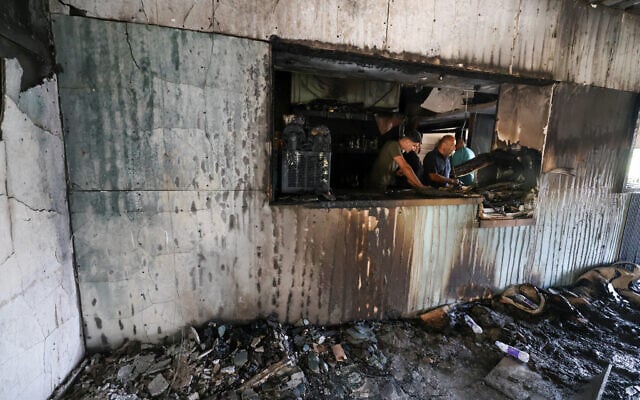
This past weekend, we were reminded once again of the visceral cost of this drift. Near Nablus, a Palestinian restaurant was reportedly raided, robbed, and set ablaze—a calculated act of destruction that leaves behind more than just financial loss, estimated at NIS 1 million. It is a blow to the fundamental principles of individual property and security that we claim to uphold. This was not an isolated incident. Across the West Bank, reports of residents being rammed by vehicles and pepper-sprayed in their own communities have become a tragic, near-daily rhythm. These acts of violence are not merely “friction”; they are acts of terror designed to displace, intimidate, and rewrite the reality on the ground through brute force.
Coercion in Jerusalem: The Battle for Public Space
Simultaneously, in the center of Jerusalem, a different but related brand of intolerance is on display. At Cafe Basimta, the simple act of operating a business on Shabbat became the pretext for organized harassment. Haredi protesters, many of them minors, treated the café as an affront to their worldview, banging on windows and overturning tables. While the reaction—secular citizens flocking to the business to express solidarity—was a heartening display of civic resolve, the necessity of that resolve is an indictment of our current reality. When citizens must “vote with their feet” just to enjoy a cup of coffee on their day of rest, we have moved beyond simple religious disagreement and into the realm of enforced conformity.
The Political Cost of Impunity
The thread that ties these disparate events together is the pervasive sense of impunity granted by the current political leadership. Whether it is the tacit approval of extremist settler violence in the West Bank or the indulgence of street-level religious coercion in our cities, the Netanyahu cabinet’s radical flank has fostered an environment where the law is no longer seen as a universal obligation, but as an optional constraint.
When ministers flirt with radical ideologies, they signal to their most extreme constituents that the rules of the game have changed. This erosion of the rule of law is not just a moral catastrophe; it is a strategic disaster. By failing to consistently prosecute these acts—or worse, by allowing the rhetoric of radicalism to permeate government policy—this administration is actively weakening the democratic foundations that define Israel’s identity as a Jewish and democratic state.
Reclaiming the Rule of Law
We are witnessing the transformation of “Jewish extremism” from a fringe phenomenon into a mainstream political tool. When violence against Palestinians in the West Bank is met with bureaucratic shrugs, and the intimidation of secular Israelis in Jerusalem is dismissed as “community disagreement,” we are inviting a future of anarchy. The state’s primary responsibility is to protect all its citizens—to ensure that a restaurant owner in Nablus can earn a living without fear of arson, and a café patron in Jerusalem can exist in the public square without fear of assault.
The defense of our democracy starts with the courage to call out these acts for what they are: a betrayal of our national values. We cannot claim to be a nation governed by laws if those laws are only applied selectively to appease a radical base. If we do not decisively reject this drift toward sectarian violence, we will find ourselves in a country that is increasingly unrecognizable—and increasingly fragile. Silence in the face of this extremism is not neutrality; it is complicity. The time for the silent majority to demand the restoration of the rule of law is long overdue.