
Israeli-American Jewish medical anthropologist, and peace advocate
Divide and Conquer Is Destroying Israel
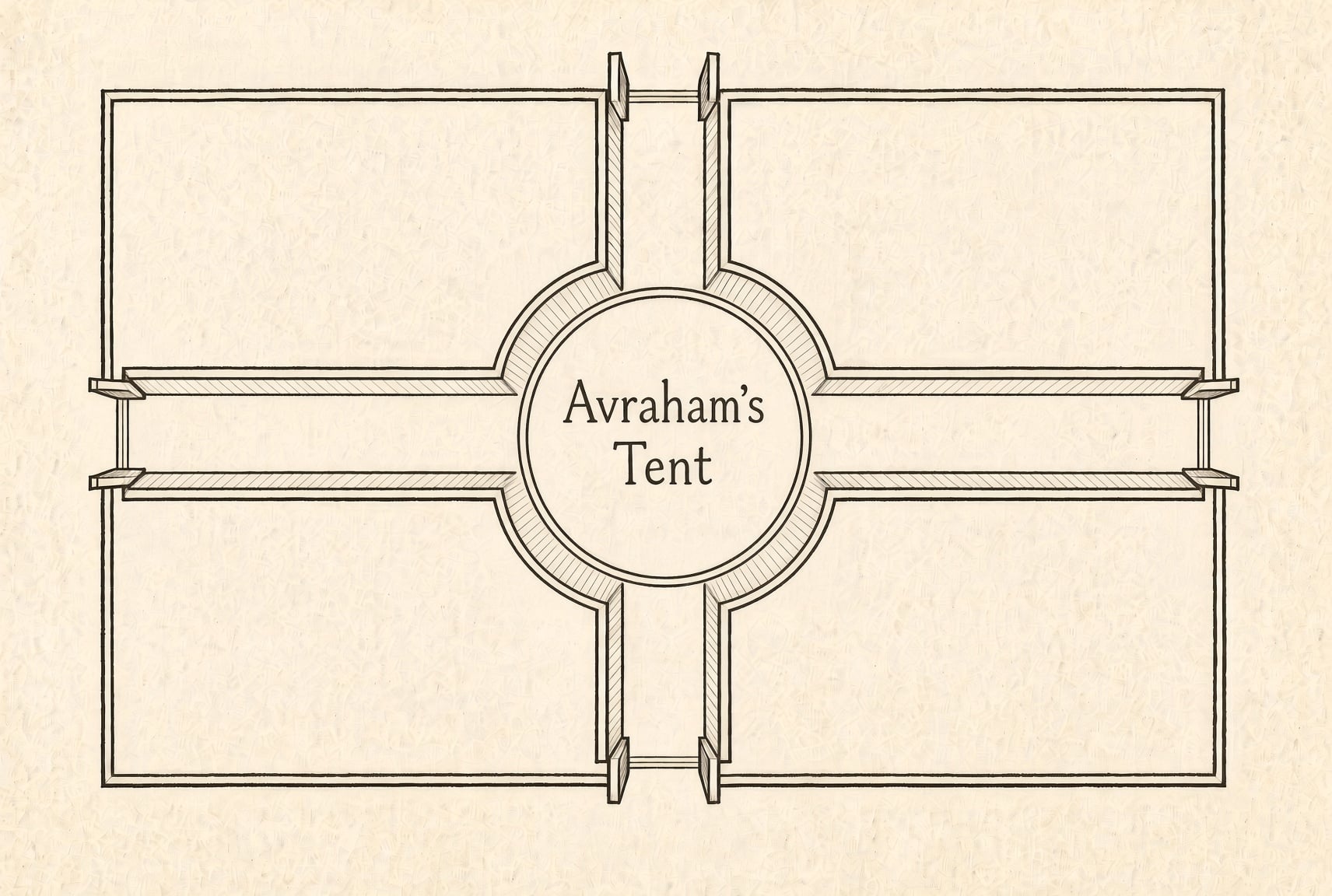
The tent of Avraham has a similar design to the inside of the tefillin
The Divide and Conquer strategies are not sustainable in a sovereign state. They are a holdover from the British Mandate and raise internal security costs while reducing voluntary contributions. A country where each citizen is at war with the other is untenable; the system will, over time, collapse in on itself because someone has to win.
When Israelis stop treating one another as comrades, whether it is because of their gender or because they are a religious minority, the country becomes weaker when we lack inclusion. Warnings get ignored. Crime rises. Trust collapses. Support for the State of Israel wanes, even from once staunch Jewish supporters abroad.
The numbers show these costs are real: record killings inside Arab communities, intelligence failures before October 7 (including the dismissal of warnings from female soldiers at posts like Nahal Oz), deep political polarization, and growing alienation among American Jews.
The British Mandate Has Come to An End; We Must Leave Behind Divide and Conquer and Come Together to Build a Nation
These problems have multiple causes, and they did not begin overnight. But policies that treat large groups as permanent outsiders or non-contributors have made them worse rather than better. This is the core of the argument. A country that runs on divide-and-conquer cannot hold together. Unity is not a slogan; it is a practical requirement for security, loyalty, and the future of Klal Yisrael.
Early institutions such as the kibbutz absorbed immigrants, defended borders, and built shared experience. The pure collectivist model later hit economic limits recognized across the political spectrum by the 1980s, but the cohesion function remains relevant. Recent governments have protected Haredi service exemptions while male employment in that sector stays far below average. Arab citizens (about 20 percent of the population) show high NEET rates among young men and record intra-communal homicide. Abraham Initiatives data show the toll more than doubled in 2023 (from roughly 104–116 to 227–244) and reached 252 in 2025, with clearance rates around 10–12 percent. The elevated pace continued into 2026. Organized crime networks, illegal weapons, and weak local policing have deep roots; exclusionary approaches have not reversed them.
An Overall Eroding of Our Genuine Respect for One Another and Sense of Unity as a Nation
October 7, 2023, was the largest single-day massacre of Jews since the Holocaust. Senior security officials later accepted responsibility and left; reports indicate warnings reached the political level. Netanyahu has rejected personal responsibility and blocked a full state inquiry. The security establishment’s own long-standing conception that Hamas was deterred was also a severe failure. Multi-front fighting followed, with high costs. At Nahal Oz, female observation soldiers’ repeated warnings about unusual activity were ignored, and their status was treated as secondary. Regarding them as low-status rather than as comrades whose data must be taken seriously directly reduces warning capacity.
Rape-crisis centers recorded over 51,000 approaches in 2024. About 81 percent of sex-offense cases handled by the State Attorney’s Office were closed without indictment. IDF reports of sexual assault and harassment rose to 2,420 in 2025; most were handled disciplinarily, with only dozens of indictments. Harassment and the dismissal of female personnel’s judgment both reflect the failure to treat every member of the force as a comrade whose competence and safety matter.
Headline GDP growth has recovered (the Bank of Israel projects 5–5.6 percent for 2026), but domestic growth, excluding overseas high-tech production, is lower (3.4 percent). War-related losses, defense spending, and debt are elevated. Diaspora surveys show 61 percent are unfavorable toward Netanyahu (If we care about Israel, this should concern us). JPPI’s 2026 index found 55 percent of Israelis name internal polarization as the top existential threat, ahead of Iran (23 percent) or the Palestinian conflict (18 percent); 60 percent see a real danger of bloodshed or civil war.
Arab parties persist because many Arab citizens experience state institutions as external. Removing the conditions that generate that experience would reduce demand for ethnic vehicles. All citizens deserve the same basic respect one would wish for oneself. Sustained otherness is a security liability: environments with few legitimate pathways raise the relative return to clan, criminal, or rejectionist alternatives. Fear of the Arab vote is the observable result of incomplete incorporation.
Evidence shows reciprocity raises voluntary contribution. Caprettini and Voth (2023) found that U.S. counties and individuals who received greater New Deal support later exhibited higher rates of war-bond purchases, voluntary enlistment, and combat decorations in World War II. Israel needs to create a New Deal for all its citizens to ensure no one falls through the cracks; this is the best security we could create for ourselves.
Loyalty is partly a return on prior state investment in citizens’ concrete welfare. The Biblical account of Avraham illustrates the same point: he raised up hundreds (by some readings, thousands) in his household; when Lot needed rescue from Sodom, those he had treated as his own rose up and formed a fighting force. We are all klal yisrael. Treating one another as comrades is the practical condition for the same response.
Benign Dominance Theory: Upholds the Idea that when the state provides pathways for safety and a sense of belonging, loyalty and service to the state follows.
Benign Dominance Theory is a simple idea: most people who end up in crime or alienation do so because their daily life offers few real ways to stay safe, earn money, learn skills, and feel they belong. When the state creates settings that actually provide those things under clear rules, the pull of crime or rejection drops. Help is given step by step and only if the person meets the conditions.
Israeli leadership, teachers, and soldiers must ask themselves two questions when advocating and implementing policies: Does this help Israel in the long run? Does this make it more likely the person becomes a contributing citizen? The program grows only if it measurably reduces arrests and the number of idle young people.
There are many active measures Israel can and must enact immediately if it wishes to avoid further civil unrest.
Schools can give every child the same basic tools: solid Hebrew, knowledge of Israeli history, and the clear expectation that they will contribute to the country.
Four small, voluntary pilot programs could test this idea in practice. They would cover school-age children, older teens in paid work, at-risk adults, and young families. Together they would cost about 2.75 million shekels in the first year. They would use existing organizations, and results would be compared with those of similar people who are not in the programs. The pilots are only a test. They should be expanded only if they actually reduce arrests and the number of idle young people.
A short training course for teachers, army educators, and employers would make the same point simply: helping people integrate makes loyalty practical and useful. Managing people by group, the way the British did, does not.
If the state keeps paying for arrangements that let large groups avoid contribution or leave them with weak paths into work and belonging, crime stays high, voluntary service stays low, and the risk of deeper division stays high. Changing daily conditions in measured, results-based ways is a cheaper way to find out what works. So far this period has not brought lower crime inside Israel, greater personal safety, or stronger unity. Treating people as permanent outsiders and losing the sense that we are comrades has real costs. Treating every citizen and every soldier as someone whose contribution and safety matter is what Klal Yisrael actually requires.
Related Topics
Related Posts