Burqa bans are for losers
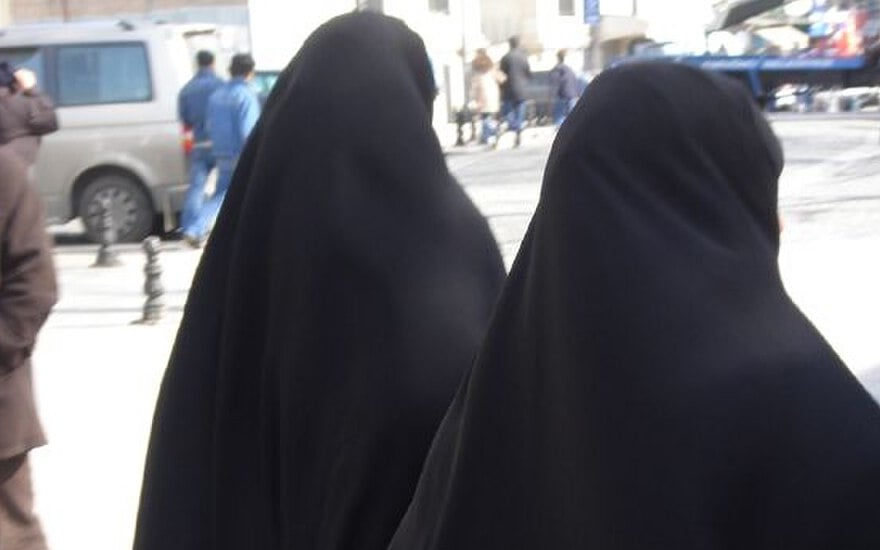
Europe is banning cloth again, and this season it is a continental fashion. France went first in 2010 and remains the champion: no niqab on the street, no hijab in the public school — and, note it well, no kippah there either. Belgium followed in 2011, then Bulgaria, Austria, Denmark, the Netherlands. Latvia and Norway wrote their own versions.
Switzerland put the burqa to a referendum and the ban has been in force since January 2025. Portugal’s parliament passed its own last autumn — a gift from the far right that the respectable center happily co-signed. Italy’s government has tabled a bill to fine veiled women in schools, shops, and offices. Britain’s Reform party demands a “debate.” In Spain, the Balearics are pressing Madrid to join. More than 20 countries in, and half a continent applauds itself.
I will say something that irritates almost everyone: A society that bans the hijab, the burqa, or the kippah is not defending liberal ideology or Western civilization. It is signing a confession that it can no longer defend it.
And the kippah is not a rhetorical flourish. In a French public school, a Jewish boy may not cover his head any more than a Muslim girl may cover hers. The law that was sold as a shield against Islam turned out, as such laws always do, to be a blade that cuts everyone within reach.
Say the next part precisely, because this is where readers reach for the wrong shelf. I am not asking Europe to tolerate the values sewn into the burqa. Free people are supposed to drag those values into the light, examine them, and decide out loud whether they want them in their society. That is what freedom is for. What free people are not supposed to do is hand the argument to a policeman. A ban is not a society defending itself. A ban is a flush handle: the frustrated voter swallows the stick along with the bait; the government pulls the lever. Everyone enjoys the sound of running water — and nothing whatsoever has been cleaned.
The French and Belgians, nations that once administered half the planet, have shrunk from the posture of empire to the posture of nervous spectators at their own demonstrations. I write this as an Israeli who has learned something ugly by simple experiment: the most dangerous place for me is not Israel. It is not even Ukraine. It is Europe.
If not for my dog, evacuated after the Battle of Bucha, my daily life here would look very different. When I walk with him, men who do not share Western values keep their distance; when I enter a shop alone, they do not. A shell-scarred animal with fragments still in his body commands more respect on a European street than the European state does. He carries more courage than most European governments — and, unlike them, he has the wounds to prove it.
After Israel, and then Ukraine, Europe looks strange to me. In Ukraine, when someone breaks the peace of the country, nobody hides behind legal ritual. People there understand the oldest sentence in political science: a state defends itself, or it stops being a state.
Now look at Israel, because Israel is the control group of this entire experiment. One Israeli in five is an Arab — close to two million citizens, most of them Muslim. Beyond the Green Line live millions of Palestinians. Around the country stands a ring of states that spent decades trying to erase it; some, like Egypt and Jordan and later the Emirates, are now bound to it by peace, while others still dream.
Through all of it — wars, intifadas, buses torn apart, October 7 — Israel banned neither the hijab nor the burqa, and never seriously considered doing so. A Muslim woman in a hijab has sat in Israel’s parliament; she fills prescriptions in Israeli pharmacies and delivers Jewish babies in Israeli hospitals. Israel has no shortage of problems. But a country that fights real enemies cannot afford the luxury of mistaking a piece of cloth for one. The ban is populist junk food: it fills the voter for one evening and changes nothing by morning.
So when a politician offers you a ban and you cheer — when you wrap your profile picture in the flag for the World Cup and feel, for one month, like a nation — you convince me of exactly one thing. You still believe the problem is them. It is not. The problem is you.
The burqa did not empty your maternity wards. The hijab did not teach your children that starting a family at 25 is a prison and that doing so at 50 is a triumph of planning. No imam ordered you to treat your own country as a departure lounge — a place you will cheerfully leave the moment the taxes rise, or the weather disappoints. You relaxed on your own. You stopped being able to answer what you live for, and no clothing regulation on earth will answer it for you. On the day you believe you belong to your land the way you believe you belong to your football club — born here, will die here, would give years of your life to defend it unpaid, would not leave under any circumstances — on that day, you will stop losing sleep over a piece of cloth.
A confident civilization does not prove itself by banning clothes. It defends its borders, its laws, its language, its families, its birthrate and its future. A weak civilization bans symbols because it no longer has the courage to defend substance.
The veil is not what is covering Europe’s face. The ban is.