By the Grave
Sometimes the dead do not wait for us beneath the earth.
They wait within the letters that still bear their names.
I remember
almost nothing
of the walk
through the abandoned cemetery.
Only the shock.
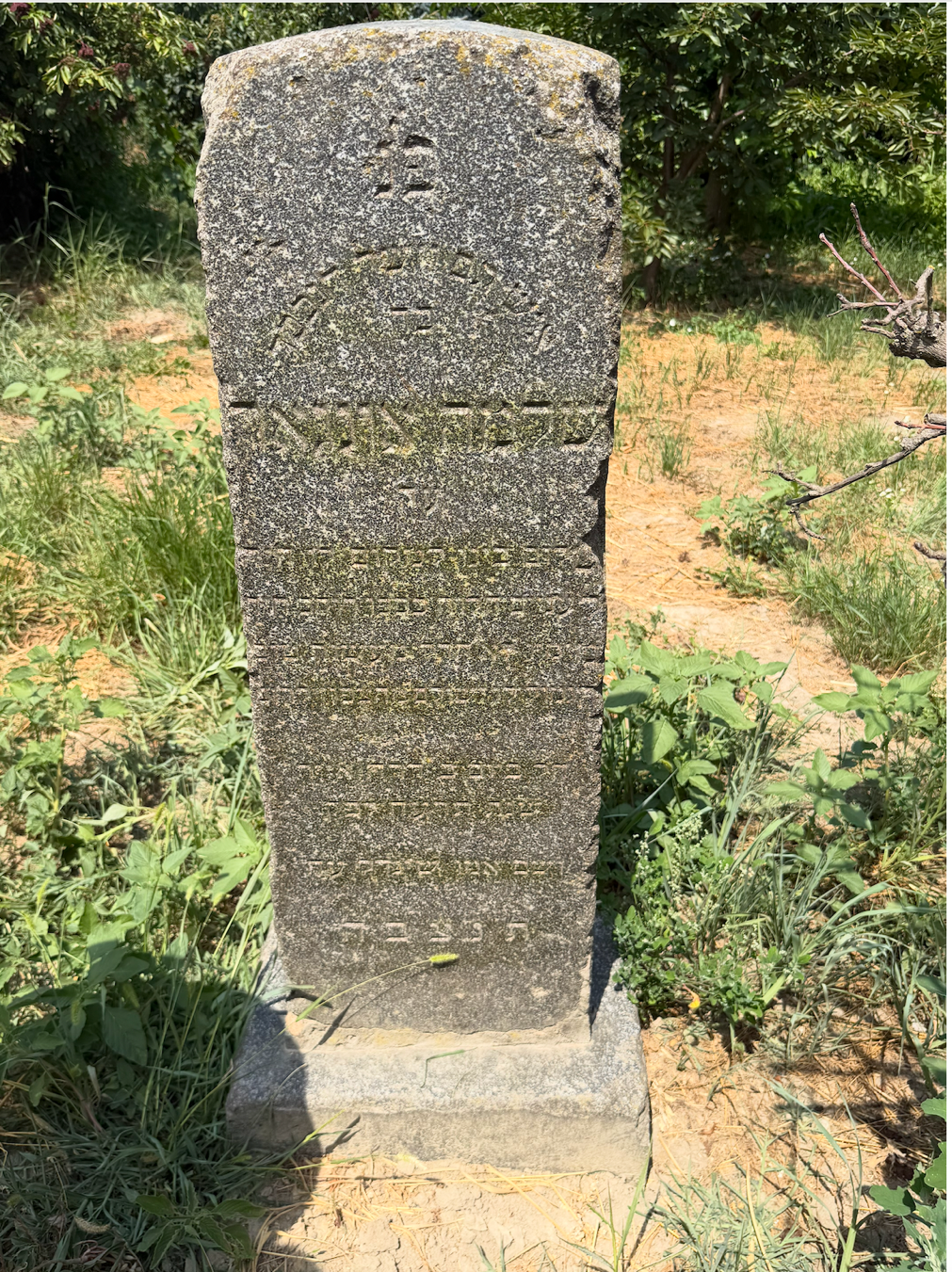
One tall granite stone.
Standing.
Alone.
Every other monument
had yielded
to weather,
neglect,
and time.
Broken.
Fallen.
Swallowed
by grass
and silence.
Yet this one
still stood.
Unbowed.
As though
it had refused
the verdict
of history.
I did not yet know
whose grave
it marked.
Only that
it had survived.
Only later
would I understand
that perhaps
my great-grandfather,
dead since 1918,
had left me
one final lesson.
Even here,
survive.
I came
thinking
I was searching
for the dead.
Instead,
the dead
were waiting
for me.
My father grew up
an orphan
of a civilization.
He inherited memories
without hands
to hold them,
photographs
without anyone
left to name the faces,
a family tree
whose trunk
had been cut
close to the earth.
So I, too,
learned to live
among fragments.
Names.
Stories.
A city
spoken with longing.
A language
half remembered.
A silence
that occupied
more space
than words.
For years
my ancestors
lived only
inside
my imagination.
Then
I stepped
toward the stone.
Cold
beneath my fingertips.
Weathered
by rains
that had fallen
for more than a century.
I bent down
and brushed away
grass,
reeds,
and years.
Slowly,
the letters
began
to emerge.
A name.
Then another.
His mother’s name.
Letters
waiting patiently
beneath weeds,
beneath seasons,
beneath history,
for someone
of their own blood
to read them again.
Perhaps
I was the first
since they were carved.
The miracle
was not merely
that the stone
remained standing.
The miracle
was that
the words
remained.
I stood there
unable
to calculate
the improbability
of it all.
An abandoned cemetery.
One surviving monument.
One chance discovery.
One family.
One name.
Some moments
refuse
statistics.
They ask instead
for gratitude.
For decades
I had searched
for meaning
inside words.
Sacred texts.
The arguments
of sages.
The hidden worlds
of Scripture.
The stories
of patients,
whose lives
often revealed
their deepest truths
between sentences.
I had spent
a lifetime
looking beneath
the text,
certain
that meaning
always lay
hidden.
But standing there,
with one hand
upon the granite
and the other
clearing away
the last blades
of grass,
I felt
something
I cannot prove —
only receive.
Whether it came
from him,
or from
the One
who had quietly
guided
my wandering steps,
I cannot know.
But it seemed
to whisper:
Return
to the letters.
Before
there is mystery,
there is speech.
Before
there is interpretation,
there is listening.
Read
what is written.
Honor
what is plain.
Do not hurry
past the words
in search
of something
greater.
Sometimes
the deepest meaning
is simply
waiting
to be read.
And then,
one final whisper —
one I felt
more than heard:
Do not merely
read
the text.
Allow
the text
to read
you.
Only then
will you discover
that these weathered letters
have waited
through wars,
through silence,
through a century
of absence,
not simply
to preserve
the name
of your ancestors,
but to reveal
your own.
Here lay
my great-grandparents.
Not legends.
Not victims.
Not numbers.
A husband.
A wife.
Souls
who hurried
through streets,
lit Sabbath candles,
laughed
with children,
dreamed
of futures
they believed
would come.
Standing there,
something inside me,
long unnamed,
recognized itself.
It was not
grief alone.
It was
recognition.
The strange relief
of discovering
that my own story
did not begin
with catastrophe.
I had roots.
Deep ones.
Hidden beneath
the ash
of history,
still alive.
I realized
that I was perhaps
the first
of our family
to return
since the world
came apart.
The first
to speak
their names
into the open air.
The first
to answer
their long silence.
The graves
did not give me
a past.
They gave me
a place
within it.
Standing there,
I felt
my father’s orphanhood
rest,
if only
for a moment.
The child
who had lost
everyone
was no longer
alone.
His son
had come home
to find them.
And then
I understood
why that one
granite stone
had mattered
so much.
It was never
only
the stone.
Stone
can endure.
Stone
can survive.
But stone
cannot speak.
It was
the letters.
Weathered.
Patient.
Still waiting.
I had crossed
an ocean
thinking
I had come
to read
an inscription.
Instead,
the inscription
had been waiting
to read
me.
I arrived
the grandson
of an orphan.
I departed
the great-grandson
of a family.
And between
those two truths,
held in silence
beside one
impossible
granite stone,
I found
the oldest part
of myself.