Call him ‘Rabbi’ Carlebach
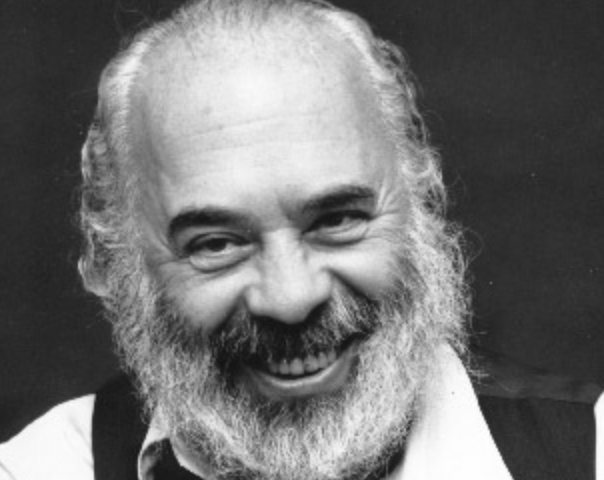
The one part of us which needs fixing the most is the part we always cover up. We always cover it up. (Rabbi Shlomo Carlebach, recorded in Teachings of Joy and Oneness & Other Stories)
Every so often, I find myself in a position where I am forced to explain Rabbi Shlomo Carlebach’s legacy and why I won’t willingly attend or promote any service with his name on it. In each of those situations, I receive pushback. Because for some people, Rav Carlebach was godly — which I don’t deny.
But for other people, Rav Carlebach destroyed God. For other people, Rabbi Shlomo Carlebach made belonging to a Jewish community impossible.
I call Rabbi Shlomo Carlebach “rabbi” for many reasons. The first is that his role, his title, gave him access to victims. The second is that it protected him from the consequences. And the third is the most profound: his spiritual title darkened the name of God and the Jewish nation for some of his victims. It is this third legacy we must reckon with, still, today. When we prop up a religious role model and they harm others, we destroy the very spiritual contract we have with God and our people. Rav Carlebach’s making of some souls cannot ever be squared with his breaking of others.
Anita Feng, who so bravely wrote about her own abuse at his hands, articulates it profoundly:
I carry an illness with me. This illness can be infectious. My daughter, who is now a teenager, asks questions about Judaism. I see her yearnings toward spirituality and understanding. She would like to see what it’s like to belong to a synagogue. She will have to find her own way there. I cannot go near a place of worship without feeling the tension build. My teeth clamp shut.
Moshe Rabbeinu was punished severely for hitting a rock because of his role as a spiritual leader. Jewish tradition teaches that the punishment for a leader who errs is much more harsh than for the average person because they are held to higher standards. And yet we hold Rabbi Shlomo Carlebach to a different standard. We justify using his music, his name, his teachings, his stories. We hem and haw about separating the art and the artist. But Rav Carlebach isn’t quoted like Chris Brown or Woody Allen; he’s quoted like the Lubavitcher Rebbe or Rashi. His “legacy” isn’t art; it’s spiritual light, which should be drowned out by the darkness he created.
Sexual violence, especially done in secret, is destructive beyond a crime that breaks skin. Sexual violation is an assertion that the violator’s gratification is more important than the victim’s soul. Being sexually assaulted is an internal experience as much as it is an external one: it wounds the core, the self, the soul. It harms any belief a person has that they have worth and deserve good. To do it to a child — 12 or 14 years old, as some of Rav Carlebach’s victims were — is an even greater crime; they have not finished developing their senses of self.
And when our institutions defend the violation? When we put his name on our religious services, when we celebrate his yahrtzeit, when we argue his legacy is “complicated”?
Every one of us, then, is responsible for the devastation of those souls.
I return to Anita Feng, whose words hurt to read: “Jewish law has no jurisdiction over me; I’ve slipped out of the circle in that place where the laws were already broken.”
Chatanu, pashanu.
We have all sinned.