
Founder | Children’s Book Author | Empowering Women and Girls & Supporter of Global Peace Initiatives | Mom | Yema
Calling for the Death of Arabs Won’t Bring the Mashiach (Messiah)
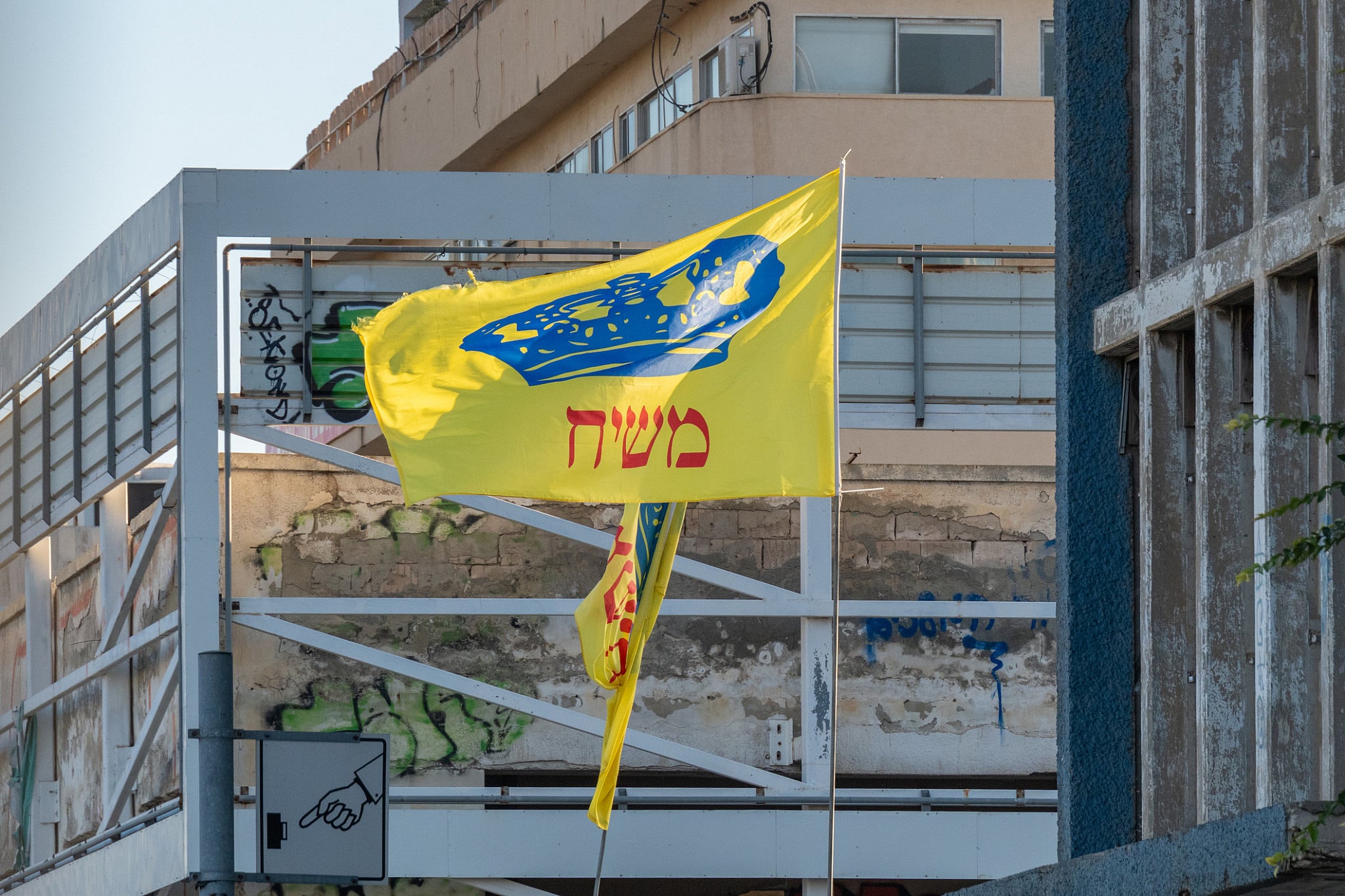
Mashiach Flag, Messiah Flag on a building in Tel Aviv, Israel Sept 2022 (IStock by Barbara Gabay)
The October 7 attacks, the ongoing war, and the continued captivity of hostages in Gaza have been a deeply traumatic experience for Israelis and Jewish communities around the world. Not just because of what happened—but because of what it awakened.
The massacre reopened wounds that had never fully healed—not for me, not for my family, and not for the country I once called home. I was ten when we left Israel for Canada. My father, a veteran of both the Six-Day War and the Suez Crisis, carried invisible scars. He rarely spoke of them, but they lingered in our home—quiet and constant. I grew up in their shadow.
On October 7, that shadow returned. In the aftermath, horror gave way to chaos—and then to something darker.
When Fear Becomes Rage
As often happens after tragedy, everyone had something to say. Political narratives took over. Debates ignited. Grief blurred into ideology. And then came fear—not just in Israel, but in cities around the world and on US campuses.
For many Jews in the diaspora, that fear turned inward. Synagogues were defaced. Jewish students were harassed. Fear became anger. And that anger metastasized into something far more dangerous: dehumanization.
People I care for—people I once admired—began saying things I couldn’t unhear. A Canadian friend dismissed every Muslim protester as a Hamas sympathizer and expressed anger that Canada allows Muslims not only to protest, but even to live there. An Israeli relative said to me over the phone, “Let them kill all the Palestinians.” He didn’t even have to look me in the eye.
These weren’t fringe voices. These were people I had dined with, celebrated special occasions alongside, and shared life’s ups and downs with. And suddenly, I no longer recognized them.
The Breaking Point: Jerusalem Day
Then came Jerusalem Day. What should have been a celebration turned into a parade of hatred. Ultra-nationalist marchers flooded the Old City, chanting “Death to Arabs,” harassing Palestinian vendors, provoking violence. One shopkeeper quietly swept bay leaves from the ground after his stall had been ransacked. A Palestinian woman was stalked through alleyways by young Israeli men shouting “charmouta”—Arabic for “whore.”
Meanwhile, Israel’s National Security Minister declared, “Our enemies are only worthy of a bullet to the head,” while blocking humanitarian aid to Gaza.
And I found myself asking:
What Torah are we reading?
What kind of redemption are we even waiting for?
Because this—
This is not the path of the Mashiach.
This is the road to moral collapse.
The Grief That Could Have Become Hate
Years ago, while serving on the Middle East Committee of WILPF (Women’s International League for Peace and Freedom), I met two women whose stories changed the way I understand peace. Peace isn’t just about ending conflict—it’s about recognizing the heavy price mothers pay.
One was Palestinian. The other, Israeli.
Both had lost children to the conflict.
They were part of the Parents Circle–Families Forum, a group of over 600 bereaved Israeli and Palestinian families who chose reconciliation over revenge.
Robi Damelin’s son, David, was killed by a Palestinian sniper.
Layla al-Sheikh’s six-month-old baby son, Qusay, died after Israeli military troops hurled tear gas in her village and filled their home.
They had every reason to close their hearts. But they didn’t.
They chose dialogue. They chose healing. They chose courage.
Their stories taught me something I’ll never forget:
Peace is not weakness.
Peace is defiance—defiance against the very forces that took their children.
What Happens When We Look Away?
It’s easy to grow numb after tragedy. But we must resist that impulse.
When Israeli families are torn apart by terror, we must not look away.
When Palestinian children are pulled from rubble, we must not look away.
These lives are not political props.
They are not statistics.
They are sacred.
And they are watching us—especially the hostages.
There Is No God in Hatred
Judaism teaches that every human being is created B’tzelem Elokim—in the image of God. That truth doesn’t change with ethnicity. It doesn’t change with religion.
So, when mobs chant “Death to Arabs,” they are not defending Judaism.
They are desecrating it.
When leaders call for bullets instead of peace, they are not protecting us.
They are betraying us.
The Mashiach will not come on a wave of bloodlust.
And God will not arrive through dehumanization.
We’ve Seen What Peace Looks Like
Yitzhak Rabin. Anwar Sadat.
Two leaders who dared to end the bloodshed.
Rabin, an Israeli.
Sadat, an Egyptian.
Both were assassinated—not by their enemies, but by extremists from their own people.
Peace didn’t kill them.
Fanaticism did.
So no—peace isn’t naïve.
War is naïve.
War promises safety and delivers only coffins.
Peace is hard. Uncertain. Fragile.
But it’s the only path worth walking.
If You Feel Alone, You’re Not
Yes, I’ve walked away from some people I’ve known forever, recognizing that our paths have diverged.
Peace requires clarity—
Not loyalty to hate.
So, if you’ve chosen peace and found yourself isolated, please remember this:
You are not alone.
Everyone carries a spark of the Mashiach.
Everyone who dares to hope.
Why believe that light belongs to just one person?
All the Jews in the world have a role to play in bringing the Mashiach.
You are not lost.
You are the one lighting the way.
Related Topics