CFO | Empower Society for Good I Author
Can Justice Be Applied Fairly?
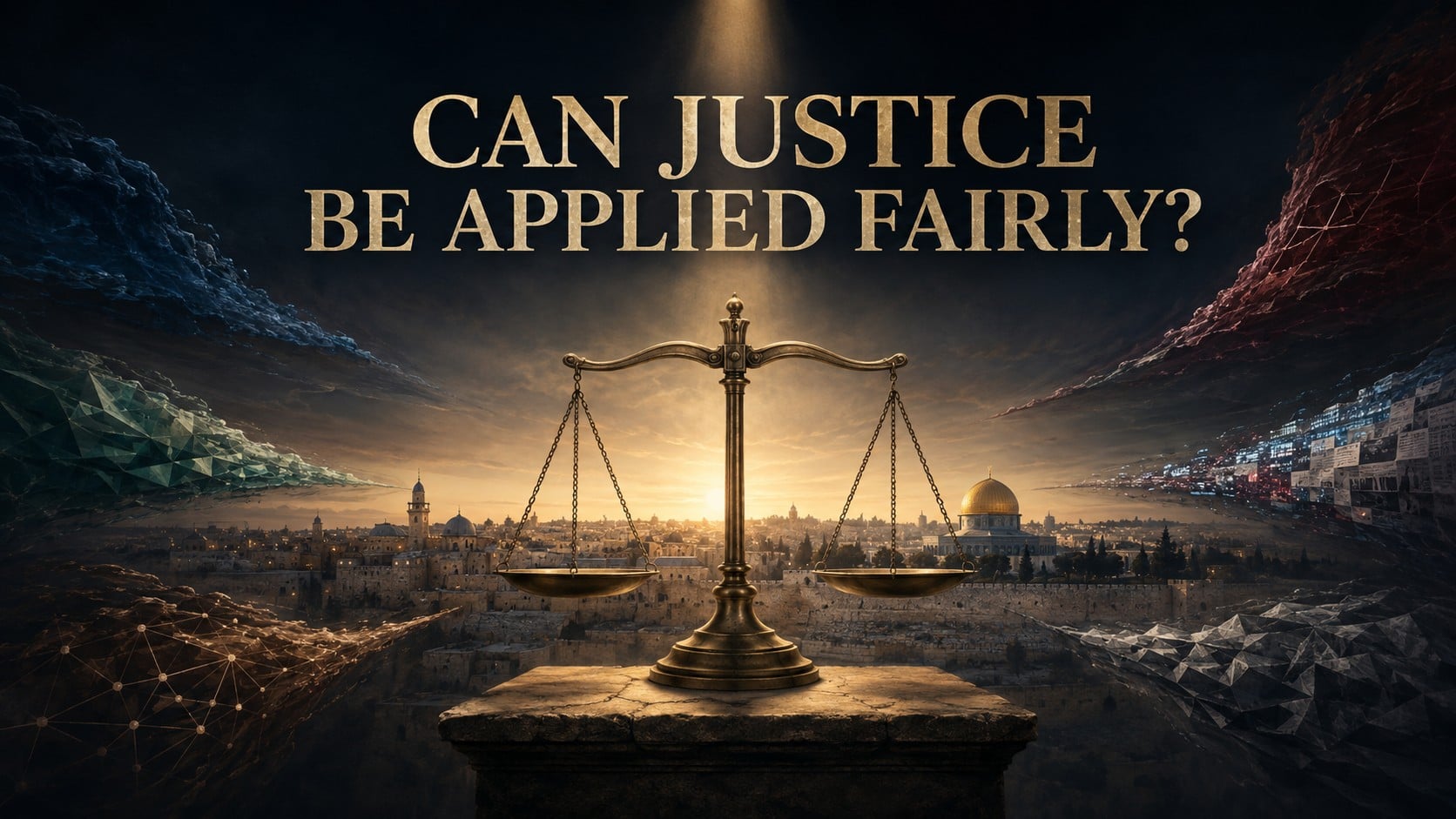
What Parsha Shoftim teaches about conviction, radicalization and building a Good Society
Parshat Shoftim offers one of the Torah’s clearest blueprints for building a Good Society. It establishes courts, regulates political and religious authority, demands reliable testimony and insists that justice must not be distorted by money, status or political influence.
Its defining command is:
“Justice, justice shall you pursue.”
—Deuteronomy 16:20
Why is the word “justice” repeated? One explanation is that it is not enough to pursue a just outcome; the means used must also be just. Justice must be applied fairly—to our friends and opponents, majorities and minorities, the powerful and the powerless.
We cannot defend morality through corruption, protect freedom through coercion or demand standards from others that we refuse to apply to ourselves.
Yet Shoftim also contains passages that challenge modern sensibilities. The Torah is uncompromising about idolatry and prescribes severe punishments for certain violations. How did Judaism, rooted in such demanding texts, develop into a largely non-missionary faith capable of living alongside people with profoundly different beliefs and ways of life?
The question extends far beyond Judaism: Can a society retain strong moral convictions without turning those convictions into persecution?
Restraining the power to punish
Judaism did not simply remove the Torah’s difficult passages. The Written Torah was interpreted through the Oral Torah: centuries of legal reasoning, disagreement, precedent and safeguards.
The rabbis surrounded capital punishment with extraordinarily demanding requirements concerning witnesses, prior warning, intention and judicial procedure. The Mishnah teaches that a court executing one person in seven years was considered destructive. Rabbi Eleazar ben Azariah said once in seventy years, while Rabbis Tarfon and Akiva declared that, had they served on such a court, nobody would have been executed.
The moral boundary remained, but the human power to impose irreversible punishment was restrained.
This distinction is essential. Declaring conduct religiously prohibited does not give the state, religious authorities or individual zealots unlimited power to persecute people. Moral disapproval does not justify cruelty. Religious conviction does not cancel due process. No human being should be reduced to one belief, identity or action.
Consider homosexuality. Traditional Jewish law prohibits a particular sexual act between men. It does not define the modern identity category of “gay,” nor does it permit humiliation, violence or vigilantism. Jewish communities disagree profoundly about how these laws should be understood and applied, but many recognize the need to distinguish between preserving a religious teaching and protecting the dignity of the person.
Nor is this struggle unique to religion. Britain prosecuted Alan Turing for homosexual activity in 1952, despite his extraordinary contribution to defeating Nazi Germany. He received a royal pardon only in 2013.
Societies evolve when they recognize that enforcing a moral norm can itself produce terrible injustice.
Tolerance is not moral relativism
A Good Society must distinguish between tolerance, pluralism and moral relativism.
Tolerance means permitting people to live according to beliefs we may not share. Pluralism goes further, recognizing that another tradition or community may possess legitimacy, dignity or elements of truth. Moral relativism suggests that no belief or practice can be judged better or worse than another.
Judaism need not embrace moral relativism to uphold tolerance and human dignity.
The Torah’s covenant was given specifically to Israel. Judaism did not demand that all humanity become Jewish. The Noahide framework recognized that other peoples could live moral and meaningful lives without accepting every commandment of the Torah.
This creates room for a powerful principle:
I can believe that my path is true without believing that your existence threatens my own.
Tolerance, however, cannot mean surrender. A democratic society should protect the rights of Muslims, Christians and Jews to practice their religions, and the right of gay citizens to live without fear. But it need not tolerate coercion, incitement, violence or movements seeking to replace equal citizenship with religious supremacy.
The fundamental dividing line is not between religious and secular people. It is between those prepared to share a society and those determined to dominate it.
The six radicalizations
Israel and the Jewish people today confront six distinct but sometimes overlapping forms of radicalization.
The first is radical Islamism. Islam is not a monolith, and millions of Muslims seek peaceful and constructive lives within democratic societies. Nevertheless, Islamist movements openly pursue religious and political domination. Their treatment of religious minorities, women, homosexuals and dissidents cannot be ignored in the name of cultural sensitivity.
The second is the lingering Christian difficulty with Jewish restoration. For centuries, influential Christian traditions viewed Jewish exile and powerlessness as evidence that the Church had replaced Israel. Much of Christianity has moved decisively away from this theology, but the restoration of Jewish sovereignty—particularly in Jerusalem—still unsettles assumptions embedded over generations.
The third comes from the radical left, which frequently interprets Israel almost entirely through the language of colonialism, race and oppression. Yet Jews do not fit neatly into these categories. We are both a faith and a people, indigenous to the land yet returned after exile, sovereign yet carrying the memories and vulnerabilities of a persecuted minority.
The fourth is the extreme right, where Jews remain alien, conspiratorial or dangerously influential. Jews were distrusted when dispersed among the nations and are condemned when gathered in their ancestral homeland. The accusations change, but the underlying discomfort with independent Jewish existence remains.
The fifth radicalization comes through the media and social-media ecosystem. Most ordinary people are not ideological extremists. They are busy living their lives and form their understanding of Israel through headlines, images, algorithms and short video clips.
A free and questioning press is essential to a Good Society. But reporting can become activism, disputed allegations can be presented as established facts, and emotionally charged images can reach millions before their origin or context has been verified. Corrections seldom travel as quickly as accusations.
Social-media algorithms intensify this process. They reward outrage over context, certainty over complexity and condemnation over careful investigation. Ordinary, fundamentally decent people who may never have visited Israel or studied Jewish history are drawn into a simplified moral drama. Zionism becomes detached from Jewish history, while Israel is presented as the embodiment of oppression.
Repetition can turn allegations into assumed truths. Concern for Palestinian suffering—which is legitimate and necessary—can be manipulated into hostility towards Israel and eventually towards Jews everywhere.
The danger is not simply misinformation. It is the industrialization of moral outrage: encouraging people to choose a side before understanding the facts and to treat disagreement as evidence of wickedness. Ordinary people can be drawn towards radical positions without recognizing that they have been radicalized.
The sixth radicalization is the one we must confront within ourselves.
Judaism and Israel are not immune to zealotry. Religious certainty can become Jewish supremacy. Love of the land can become contempt for its non-Jewish inhabitants. Necessary concern for security can become collective hatred. Loyalty to a political leader can be placed above loyalty to justice.
Israelis and Jews can also become trapped within media bubbles that reinforce fear, anger and suspicion. After massacres, terrorism, international hostility and repeated rejection, such emotions are understandable. But when anger becomes an identity, it can corrode the very society we are defending.
These six radicalizations are not historically or morally equivalent. Jewish extremism should not be exaggerated to excuse movements committed to Israel’s destruction. Yet Shoftim does not permit us to examine only the failures of others. Its restrictions on kings, judges, witnesses and religious authorities were addressed first to us.
Why Zionism unsettles the world
Why does Jewish return and sovereignty generate such an intense reaction?
Mecca is accepted as the sacred centre of Islam and Rome as the institutional heart of Catholicism. Jerusalem is different. It is sacred to three great faiths, but it is also the ancient and modern centre of Jewish national life—the place where the Jewish people connected sovereignty, justice and holiness.
For almost two thousand years, much of the world became accustomed to Jews living under the authority of others. Zionism overturned that arrangement. The Jew was no longer merely a tolerated minority, theological symbol or victim. The Jewish people had returned to history as sovereign actors.
That return challenges elements of Christian theology, Islamic political memory, left-wing ideological categories and right-wing antisemitism. It also challenges us.
Sovereignty means that we can no longer judge our moral tradition only by how Jews behaved when they lacked power. We must ask what Judaism looks like when Jews possess an army, police force, courts and government.
Are our courts trusted? Are our leaders restrained by law? Are minorities protected? Do religious authorities defend human dignity? Does the media report competing claims fairly? Can we distinguish legitimate criticism from delegitimization—and necessary self-defense from hatred?
These are not expressions of weakness. They are the questions Shoftim commands a sovereign Jewish society to ask.
The answer to fanaticism is not a society without convictions. It is a society in which conviction is disciplined by justice, procedure, humility and respect for human dignity.
Conviction without restraint becomes fanaticism. Tolerance without boundaries becomes surrender. Justice applied selectively ceases to be justice.
Israel’s response to those who deny Jewish sovereignty cannot rest only upon historical rights or military strength. We must demonstrate what Jewish sovereignty is for: to build a nation confident enough to remain Jewish, strong enough to defend itself and just enough to protect those who believe and live differently.
That is Zionism’s unfinished mission—and the Good Society we are called to build.
Related Topics
Related Posts