This Arabic Jew
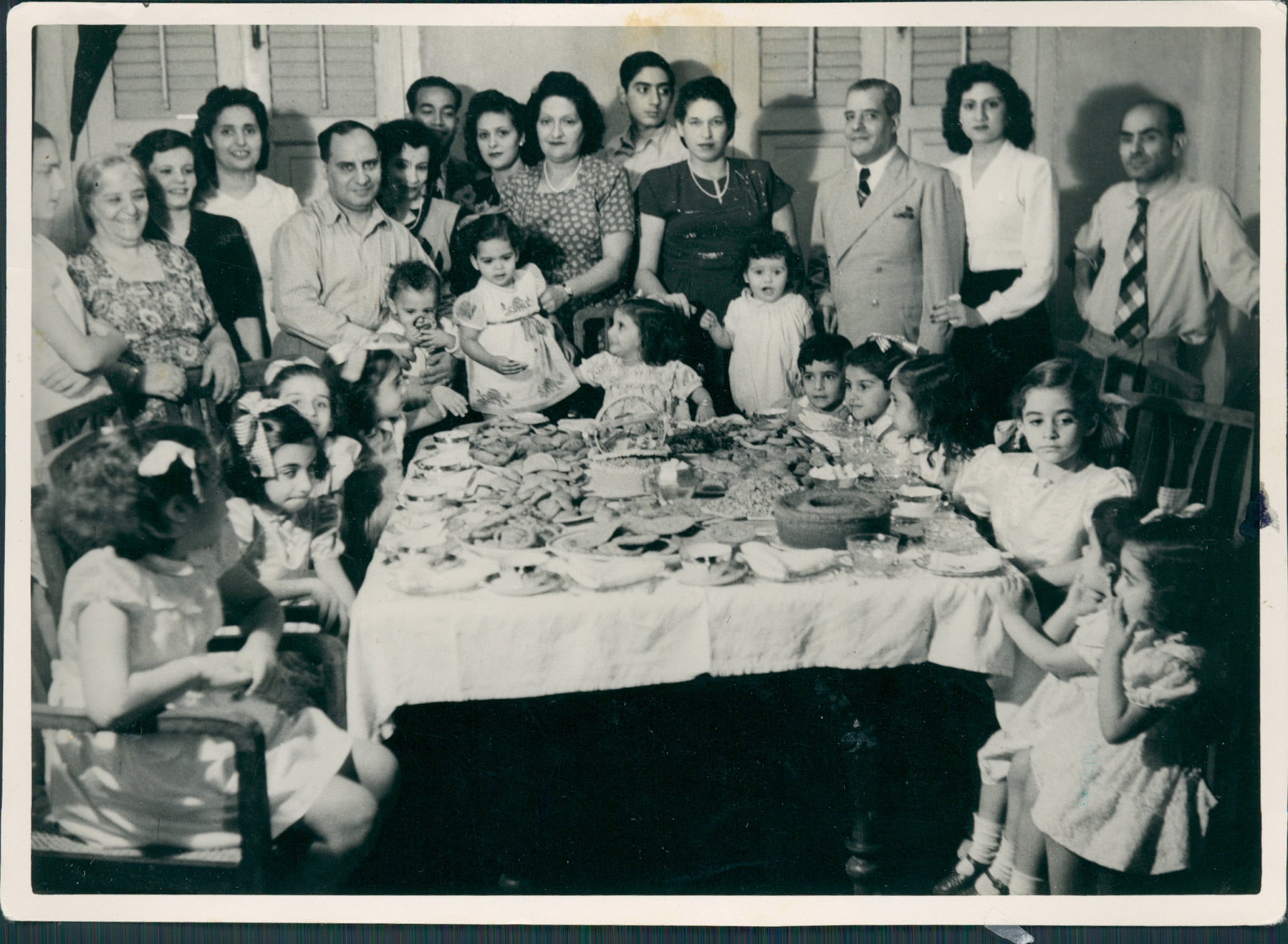
When I call myself an Arab Jew, it never fails to provoke both emotional and intellectual objections from those who insist there is no such thing. While Arabized may be the more historically precise term, I find it too distant, too academic, to describe who I am. I prefer using Arab or Arabic as the adjective; Arab/Arabic Jew.
“Arabized” describes a historical process, Arabic describes my inheritance, the culture that shaped my family – the language, the music, the food, idioms, gestures, and sensibilities.
My family came from ancient Jewish communities in lands that were conquered and over centuries Arabized. Jew has always been not only my primary identity, but in fact my only “nationality.”
I grew up Stateless, no country, no passport – an Egyptian-Iraqi Jew from an Arabic Jewish family. Most of us Mizrahi Jews in our small Sephardi-Mizrahi community in Japan in the 1950s into the late Sixties were waiting for visas to America.
When I arrived in the United States for college I confused people. Textbooks on “History of the Jews” gave us no or very little notice.
There was no context for me. Invisible. My history as a Mizrahi Sephardi Jew, my warm Arabic speaking family, the community that ended plans with “Inshallah”, and greeted us children with “Mashallah,” was suddenly invisible.
People didn’t understand, how could I be Egyptian and Iraqi, and a Jew? “Oh, so you are Arab, not Jewish!” was the sigh of relief, the common response before social media.
How could I be a Jew if my grandparents didn’t speak Yiddish? “Ruchala, you really don’t know Yiddish?” my Holocaust survivor psychoanalyst asked in those moments he felt particularly close to me, as a fellow Jew who understood Jew hatred.
It seems ridiculous but I had to explain to my college professor in 1980, a Jew, that no, my family did not “go from Poland or Russia to Egypt and Iraq.” Remember Sarah and Abraham? He didn’t.
It was only after I discovered Albert Memmi in 1976 that I learned how to frame my identity as an Arabic Jew. Memmi’s essay, “What is an Arab Jew” in Jews and Arabs unpacks how we were shaped by the Arabic cultures we lived in and how at the same time as Jews, we did not, could not, go all the way. We acculturated but never assimilated. We could never be Jewish Arabs the way American Jews can be Jewish Americans.
A Jew could not be a Jew and an Arab, we were not allowed to integrate and become Jewish Arabs. Memmi clarified for me how the Jew was and was not Arab – we were Arab Jews but never Jewish Arabs.
It’s natural for Jews who have lived in exceptional times, particularly in the USA not to understand this difference. In America, American Jew and Jewish American is interchangeable.
Fortunately or unfortunately, it was never possible for a Jew to assimilate and identify as a “Jewish Arab” the way an American Jew can be a Jewish American. We never forgot our first nationality was Jew.
My father was always an Egyptian Jew, my mother an Iraqi Jew. They were never Jewish Egyptians or Jewish Iraqis. Imagine an American Jew knowing they could never refer to themselves as a Jewish American.
Under Islamic rule Jews were legally second class citizens, at the mercy of Muslim rulers. There was nothing wonderful about living under Muslim law as dhimmis,“protected infidels” punished financially, emotionally and socially, for rejecting Islam.
Too often we Mizrahim hear how golden it was for us in comparison to Europe’s Jews. Not only did we have our pogroms too many Ashkenazim never heard of, but to make the comparison to the horror of Europe’s “Final Solution” is way too low a bar.
Life under Muslim rule was not golden by any means. We lived in varying states of active persecution, “reminders” and constant unease under legalized racist laws originating from *The Laws of Omar.*
The laws terrified the Jewish community. The laws specified what colors a Jew could wear, mismatched shoes, a cowbell to warn a Jew was approaching. The Jew could never ride a horse and have his head be higher than a Muslim’s. Or have a house higher, or synagogue and so on. We knew the price, including the special jizyah tax Jews had to pay for being a Jew.
We had to know our place, my mother said. She grew up watching devout Muslims wash their hands to cleanse themselves after doing business with her father, a Jew.
It was hard, my mom said, but what could we do, we adjusted…and then, the Farhud, that was something else, we were sitting ducks, we never expected such a thing, the Farhud was on a whole other level…
Jews never expect that “whole other level” do we? It’s always a shock.
My mother was one of some 90,000 Iraqi Jews living in Baghdad when the Farhud broke out in 1941. She never forgot the sights… the screams, the gunshots, getting louder and louder as she escaped the mobs via rooftop terraces to a cousin’s house further away.
She was sixteen when the Farhud erupted. It was sudden, shocking in its unbridled brutality, the raping and killing and looting rampage destroying the Jewish Quarter and spilling into the streets and neighborhoods of Baghdad. Jews were terrorized for forty-eight hours, before the British, who could have stopped it sooner (they had a base nearby), made the Iraqi government intervene and stop the mobs.
Most Jews from the Levant associate our tenure under Arabs with persecution and subjugation. There is no interest in adding Arab to their identity. I understand that. But when Ashkenazi Jews ask me why I would want to claim an Arabic identity when we were persecuted and then ethnically cleansed out of our native lands, I ask why my attachment to an Arabic cultural inheritance should be so difficult to understand – Ashkenazi Jews hold on to Yiddishkeit despite the horrors they experienced as Jews in those lands. They identify with their cultural inheritance (food, humor, language, love), despite the ultimate catastrophe of the Shoah. Some Hasidic communities even preserve styles of dress with roots in the clothing of early modern Eastern Europe elites.
It’s not only the West that has been unaware of Mizrahim. Young Arabs all over the MENA no longer see us in these countries we inhabited until the ethnic cleansing in the last eighty years. Most of us, the one million Jews now gone from our ancient communities, live in Israel today as Mizrahim.
Tal Oran/The Traveling Clatt, Talia Yoseph, and Abraham Hamra’s Instagram accounts are exactly what we need today. Witness the surprise on young Arab faces tuning in to discover native Arabic-speaking Jews. It’s brilliant.
These Influencer-Educators continually surprise young Arabs all over the Middle East and North Africa who mirror them with their cultural fluency. How is it possible these young Arabs wonder outloud, you Yahoudi, Jew, sounding like us? Walla!
Young Arabs have no idea unless they go searching for information that Jews, who are so culturally similar in many ways actually exist.
Arabic Jews are no longer in Memmi’s Tunisia, or Sami Michael’s and my mother’s Iraq, or my father’s Egypt. It’s ok, it has to be. And those of us who need to keep our identity as Arab Jews do. Those that don’t, don’t.
The ones who pretend away the daily humiliation of being a Jew under Islam. Who seem to claim they were Jewish Arabs. The nostalgia of some authors like Ella Shohat and Avi Shlaim who have made a career out of antizionism does not change history.
I understand the horror of living as a Jew under Islam, resent the persecution of the past, the ongoing hatred, and the continued refusal of Arab states to live side by side, normally, with Israel, the no longer Dhimmi Jew.
This Zionist Arabic Jew has no desire at all to disavow the particular warmth of my very Arabic Jewish family – the warmth and connection bound in language, mannerisms, food, music, kisses around the table at Shabbat, multitude superstitions to adopt or refuse, the lost-in-translation jokes, blessings and oh the curses!
Mashallah, I am home today in myself, in my history, among people who understand the particular warmth I am talking about, and regular refueling, inshallah, among my people in Tel Aviv.
*Sir Martin Gilbert’s In Ishmael’s House, the history of Jews in Arab Lands.