
Strategic Intelligence Consultant & Insights Advisor
Can the Middle East really live a ‘Golden Age’?
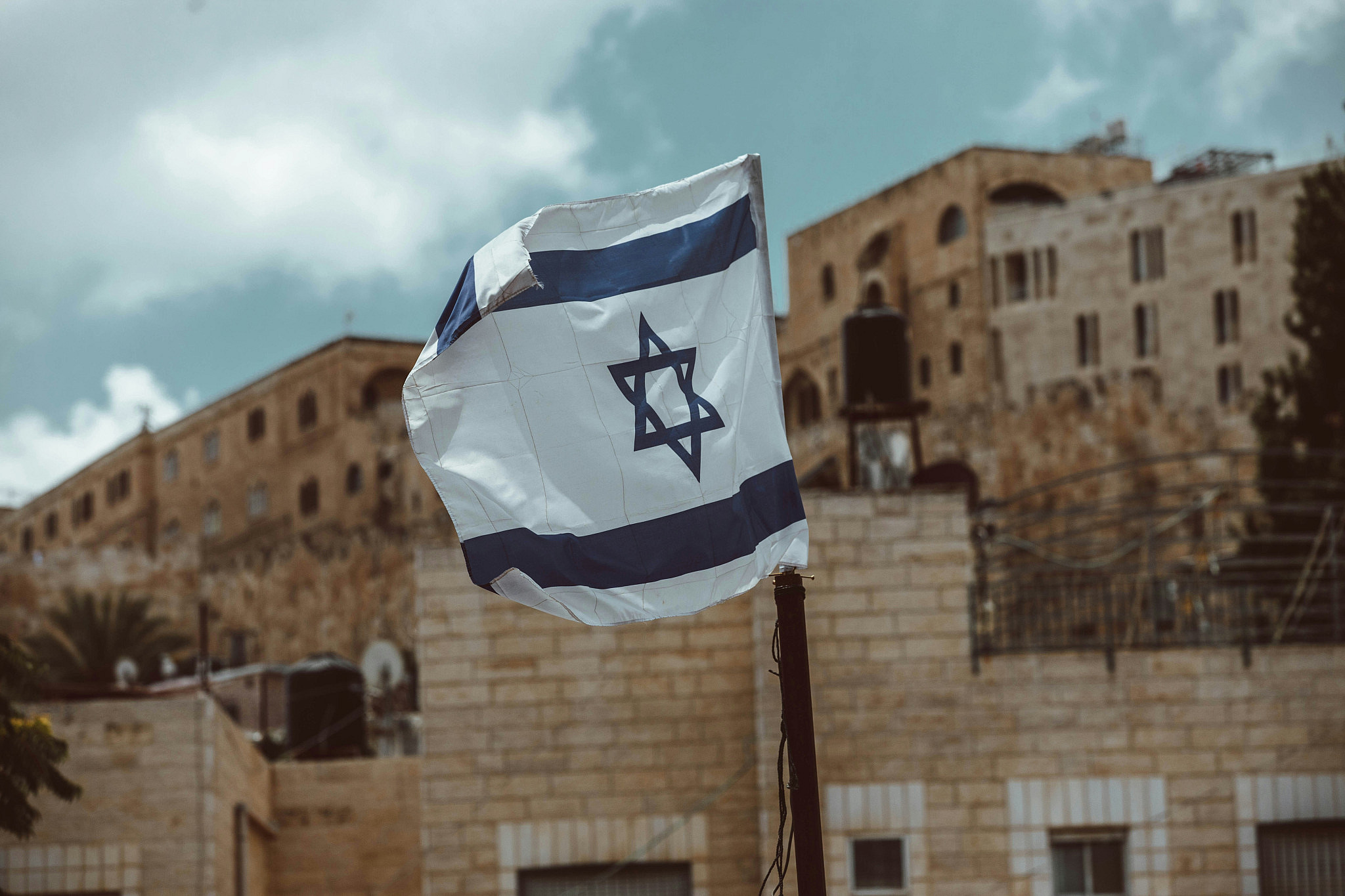
Israel Flag (Taylor Brandon via Unsplash)
A rare convergence of developments is changing the data in the Middle East and nurturing the idea of a “golden age”: a detailed cease-fire framework for Gaza, the overthrow one year ago of the Bashar al‑Assad regime and the emergence of a transitional leadership in Damascus, strong blows to the Iranian influence network and a window for expansion of the Arab-Israeli normalizations.
The question is whether these events — which so far function mainly as political declarations of intent — can be turned into a coherent architecture of security, development and institutional progress with lasting effect.
In Gaza, the twenty-point framework tries to shift the weight from a purely military logic and process to a managed transition. The general ceasefire that came into effect on October 10 2025, is accompanied by a partial withdrawal of Israeli forces and a final target of a limited security zone, on the condition that the threat of Hamas revival is prevented.
The agreement does not end at the silence of weapons: it foresees hostage and prisoner exchanges, mass increases of humanitarian flows, as well as an unprecedented post-war governance arrangement. An international stabilization force, with American and Arab participation, is called to oversee security and to train a new Palestinian police, while a technocratic Palestinian administration, under the supervision of an international council, takes on services and reconstruction.
Crucial is the commitment to demilitarization: neutralising ammunition stores and infrastructure, weapons-handover programs and destruction of the underground tunnel network beneath Gaza. Hamas is not included in the future administration, with some provisions for amnesty for those who renounce violence or withdraw from Gaza.
The economic dimension, finally, introduces a development model with a special economic zone and access to markets, under strict accountability, since reconstruction needs are estimated in tens of billions of dollars. Running through all of these is a political horizon: the mention of Palestinian self-determination as a goal does not constitute an immediate promise of statehood, but brings back a negotiable prospect that can act as a catalyst for broader regional normalization.
At the same time, Syria enters an unknown but potentially transformative phase. After Bashar al-Assad’s departure from Damascus in December 2024 and the rise of Ahmed Hussein al‑Shar’a, Washington lifted the main parts of sanctions while keeping some targeted penalties. Damascus opened its doors to the IAEA, while the rhetoric of national co-management and minority protection seeks to reassure internal and external audiences — though with uncertain guarantees.
Meanwhile the ground remains fragile: incidents in Latakia and Suweida, Israeli warning moves on the border and Turkish security ambitions in the perimeter show how thin the line is between stabilization and renewed fragmentation.
From the Israeli point of view, the weakening or expulsion of Iranian networks and the disruption of the weapons axis to Lebanon via Syria constitute strategic gain; however, the integration of former fighters into the new Syrian army and sectarian tensions still keep the risk of a return to a patchwork of enclaves alive.
The third strand concerns Iran. The Israeli strikes of June 2025 inside Iranian territory, combined with the systematic pressure on proxy groups in Gaza, Syria, Iraq, Yemen and the Red Sea, showed the limits of Tehran’s conventional power and, according to estimates, delayed its nuclear progress.
Despite its visible inability for direct, prolonged conflict with Israel, the Islamic Republic still retains tools for asymmetric harassment — in the Persian Gulf, via paramilitary networks, with cycles of escalation–de-escalation around even the minimal possible levels of uranium enrichment.
The balance between deterrence and negotiating pressure remains delicate. An informal deal that would freeze and ideally stop altogether any nuclear acceleration in exchange for limited economic benefits would shift the discussion from military conflict to manageable supervision, without removing the need for strict international control.
In this backdrop, the Abraham Accords reappear as a platform for a new phase of regional integration. Saudi Arabia is the decisive catalyst: it seeks a tangible Palestinian horizon, American security guarantees and technological cooperation, as well as an ambitious economic component. Oman keeps a discreet mediation role, while Indonesia remains strategically attractive but politically more complex. The essence, however, does not lie in ceremonies and shared photos.
It is estimated in direct air links, in bilateral trade transactions that expand, in shared energy and water infrastructures, in technology investment funds and in tourism that acquires interconnections.
A flagship example is the India–Middle East–Europe economic corridor: a combined maritime and rail artery with parallel energy and digital infrastructures that, if advanced, would compress and shorten transport time and cost and “bind” the Gulf, Israel and the Mediterranean economically. Its implementation, however, presupposes peace between Jerusalem and Riyadh and sufficient political will in multiple capitals.
Between intention and action lies a series of uncertainties. The executability of the disarmament in Gaza will be judged by the credibility of the international force and the ability of the new Palestinian structures to impose themselves on the factions. The sustainability of the transitional Syria depends on whether sectarian lines will turn into administrative decentralizations or fractures.
Iran’s “grey zone”, from shipping harassment to use of proxies, may undermine the fragile balance without leading to open war. And the social legitimization of normalization will be tested: without visible benefits for citizens and without credible progress on the Palestinian question, governmental moves risk being seen as fragmentary.
The coming twelve months operate as a “test of intent”. The observance of the cease-fire, the flows of aid and the first substantial progress in Gaza’s demilitarization will show whether the transition stands. In Syria, the reduction in conflict density and the increase in refugee returns will signal that central administration is gaining ground over informal structures.
In the diplomatic field, the small, technical steps between Jerusalem and Riyadh — from over-flights to commercial offices — will foreshadow if the big leap is feasible. Behind, but not invisible, lies the shadow of the Iranian decision: every move, revival or even hint toward higher uranium enrichment or inspection limitations will reignite the cycles of crisis.
Somewhere between the optimistic and baseline scenarios lies the most realistic path. A cemented cease-fire with sporadic incidents, a Gaza improving at a slow pace, a Syria that does not relapse into full war but neither fully unifies, an Iran that leeches through its proxies without crossing red lines, and a partial expansion of the Abraham Accords with infrastructure projects that start and stall, compose a progress scenario with obstacles.
The pessimistic outcome — derailment in Gaza, new fragmentation in Syria, Iranian nuclear “surprise” — reminds us that spoilers, state and non-state, are reading the agenda too and are looking for windows.
Ultimately, the weight falls on consistency and rule-enforcement. Without strict adherence to the framework in Gaza, without long-term backing of institutions and security in Damascus, without social dividends from normalization and without a realistic political horizon for the Palestinians, the slogan of a “golden age” for Israel and the Middle East (as said by President Donald Trump in the Knesset) risks remaining rhetorical.
Conversely, with political capital, accountability and patience, the region can move from seasonal lull to structural convergence — and then, looking back in a few years, the narrative will not need quotation marks.
Related Topics
Related Posts