Can You Belong to a Place You’ve Never Lived?
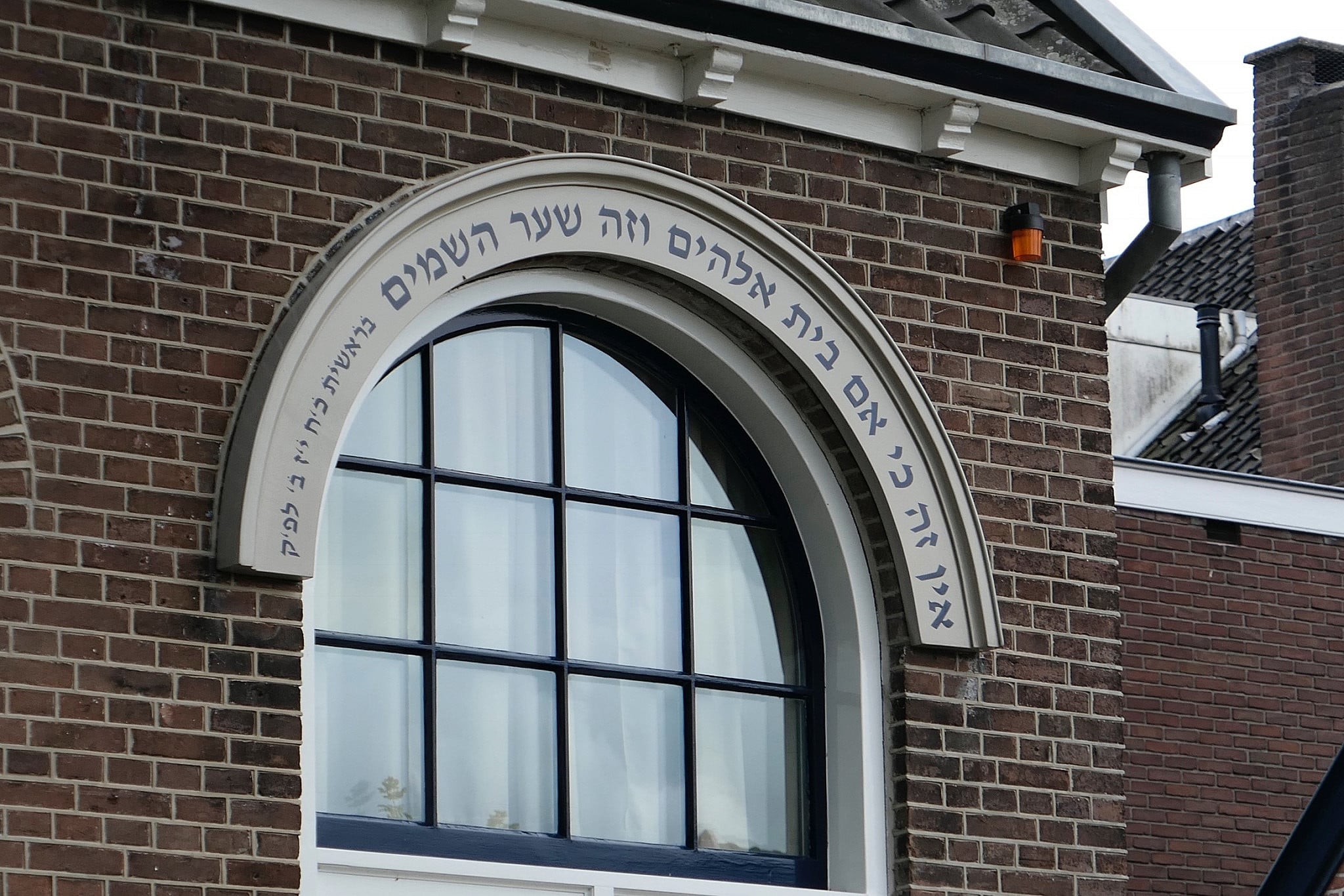
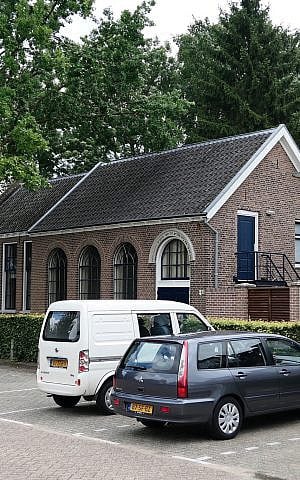
I have never prayed in the synagogue in Dieren, the Netherlands. I don’t know the rabbi. I’ve never attended a Shabbat service there or celebrated a holiday with its congregation. I don’t receive its emails or know the people who walk through its doors each week.
And yet, every time I walk inside, I feel as though I belong.
I’ve felt a version of this before. There is something about walking into a synagogue almost anywhere in the world that feels familiar to me. The language spoken outside may be different. The melodies may change. The building may be hundreds of years old or part of a modern community center. But I know what I am looking at. I know the ark. I know the Torah. I recognize the prayers.
When the Torahs are placed back into the ark, I hear words I have heard throughout my life: Etz chaim hi lamachazikim bah. It is a tree of life to those who hold fast to it. In those moments, I feel connected to generations of Jews who stood in other synagogues, in other countries, saying the same words long before I was born.
But Dieren is different.
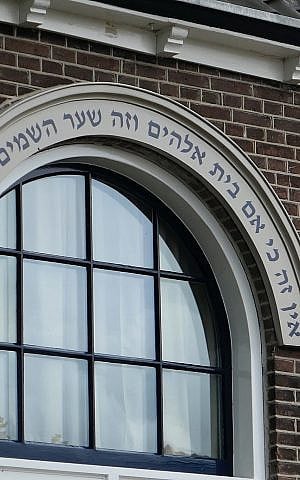
There, the connection pulls harder. Even before I walk through the door, Hebrew words curve above the entrance: “This is the gate of the Lord; the righteous shall enter through it.” I have passed beneath those words several times now, entering a synagogue where I’ve never prayed but somehow never feel entirely like a visitor.
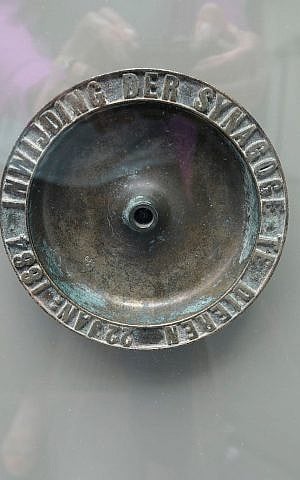
Once inside, I am surrounded by pieces of a world I know mostly through stories and research: an old photograph of the street, the notice announcing the synagogue’s dedication in 1884, and an exhibition poster from my family’s gallery advertising a 1937 exhibition of Dutch masters. The gallery itself stood directly across the street. I can walk into this synagogue and find my family’s name hanging on the wall.
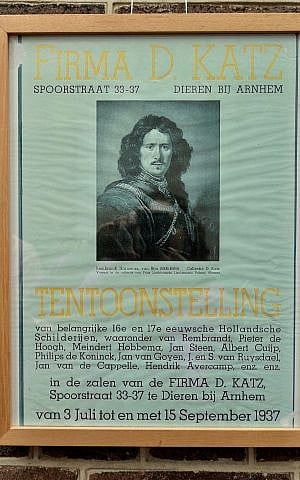
My family’s connection to the synagogue went much deeper than proximity. My great-grandfather served as its vice chairman, and the Katz family, along with another prominent Jewish family in Dieren, provided much of the support that sustained the congregation. This wasn’t simply the synagogue across the street from the family business. It was their synagogue and their community.
In 2024, I returned to Dieren for a very different reason. Two retired Dutch journalists had spent years researching prominent people and families from the region, including mine. Their book was being presented and dedicated at the synagogue. I sat there listening to them talk about my family and opened the book for the first time. Until that moment, I hadn’t realized how far back they had been able to trace us in this place- 1727
Nearly three hundred years after the earliest record they had found of my family in this part of the Netherlands, I was sitting in the synagogue my great-grandfather had helped lead, listening to two Dutch journalists tell me pieces of my own family’s history. I had traveled to Dieren for a book presentation, but I came away thinking about something much larger: what it means to belong to a place.
The synagogue itself was consecrated in 1884. Jewish religious lessons were taught there until 1942. By 1930, Dieren had a Jewish population of just 114 people.
Then came the war.
My family was forced to flee the Netherlands. Most of the Jews of Dieren were deported through Westerbork to Nazi death camps in 1943. After the war, the Jewish community that had once existed there was never reestablished. In 1950, it was officially incorporated into the Jewish community of Arnhem.
The synagogue building survived, but it stopped being a synagogue. It was sold in 1952 and over the years was used for other purposes, eventually becoming a church. For decades, that could have been the end of the story.
In 2005, a foundation began working to return the building to its original purpose. The building was acquired in 2007, restored, and reconsecrated as a synagogue on March 7, 2010. Today, liberal Jewish services once again take place there.
There is another connection that means something to me. One of my cousins is now an active member of the synagogue’s board. My great-grandfather helped lead this congregation before the war; generations later, another member of the family is helping care for it.
Inside the synagogue is a single candlestick that was discovered in the woods nearby after the war. Somehow, it survived. There is also a piece of glass over the old mikveh. You can stand there and look down into the ritual bath that was used when this small Jewish community was thriving.
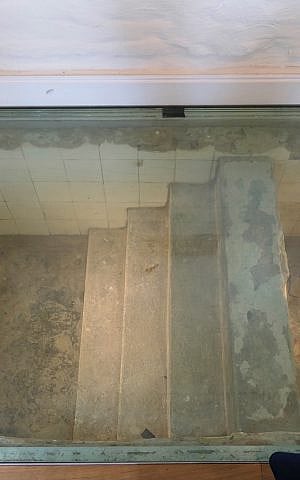
Every time I am there, I look at these things and have the strangest feeling.
I know this place. Except I don’t.
I never lived in Dieren. I didn’t grow up in this synagogue or attend Hebrew school there. I never knew it when Jewish families filled its seats or when members of my own family crossed the street between the synagogue and the gallery. That world disappeared long before I was born.
So why do I feel at home there?
I’ve been thinking about that question a lot lately. For much of my life, I thought belonging was fairly straightforward. Home was where you lived. Your country was the one on your passport. Your community was made up of the people you actually knew.
Being Jewish has made me realize that it isn’t always that simple. I can walk into a synagogue almost anywhere in the world and recognize something of myself. I can be thousands of miles from home, surrounded by people I’ve never met, and still understand what is happening around me.
Maybe that is part of what it means to be a Jew in the diaspora. For generations, Jews have built homes in different countries. We’ve spoken different languages and absorbed the cultures of the places where we’ve lived. And yet certain things have traveled with us: the prayers, the Torah, the rituals and the stories.
Etz chaim hee. A tree of life.
I’ve said those words more times than I can count, but lately I’ve been thinking about the metaphor differently. A tree needs its roots, but it doesn’t stay at its roots. It grows outward. Its branches extend in different directions. New branches can end up a long way from where the tree first broke through the ground.
Families do that too.
My mother’s family put down roots in the Netherlands generations before she was born. They built businesses and raised families there. They helped sustain a Jewish community. Then they had to flee. The family scattered, the synagogue became something else, and a Jewish community that had existed for generations was largely gone.
And yet neither story quite ended there. The synagogue became a synagogue again. A descendant of one of the families that once supported it now sits on its board. Another descendant, born and raised across an ocean, occasionally walks through its doors and feels a connection to a place she has never called home.
Perhaps belonging isn’t only about where we’ve lived. Sometimes it comes from what we carry—a prayer, a story, a photograph on a wall, a candlestick that somehow survived in the woods, a mikveh beneath a piece of glass, and a connection we can’t always explain.
I think again about the words we say as the Torah is returned to the ark: “Return us, Lord, to You, and we shall return; renew our days as of old.”
I’ve said those words countless times. But in Dieren, I hear them differently.
“Renew our days as of old” doesn’t mean we can recreate what was there before the war. We can’t. The people are different. The congregation is different. The Jewish community of Dieren that my family knew is gone. But the doors are open again. There is a Torah in the ark. There are Jews walking through those doors. And one branch of a family scattered long ago is still helping to care for the place.
I used to think returning meant going back to somewhere you had been before. Dieren has made me reconsider that.
Maybe sometimes we return to places we have never been.
We return because someone was there before us.
I come to Dieren as a visitor. But when I walk into that synagogue, I don’t feel like one.
Perhaps that is what it means to return.