
Championing security, liberal democracy and principled public policy
Featured Post
Canada’s test is whether it will live in truth
The prime minister promotes a vision of 'values-based realism' while tolerating antisemitism at home and indulging authoritarian regimes abroad

Canadian flag. A. Butenkow - stock.adobe.com
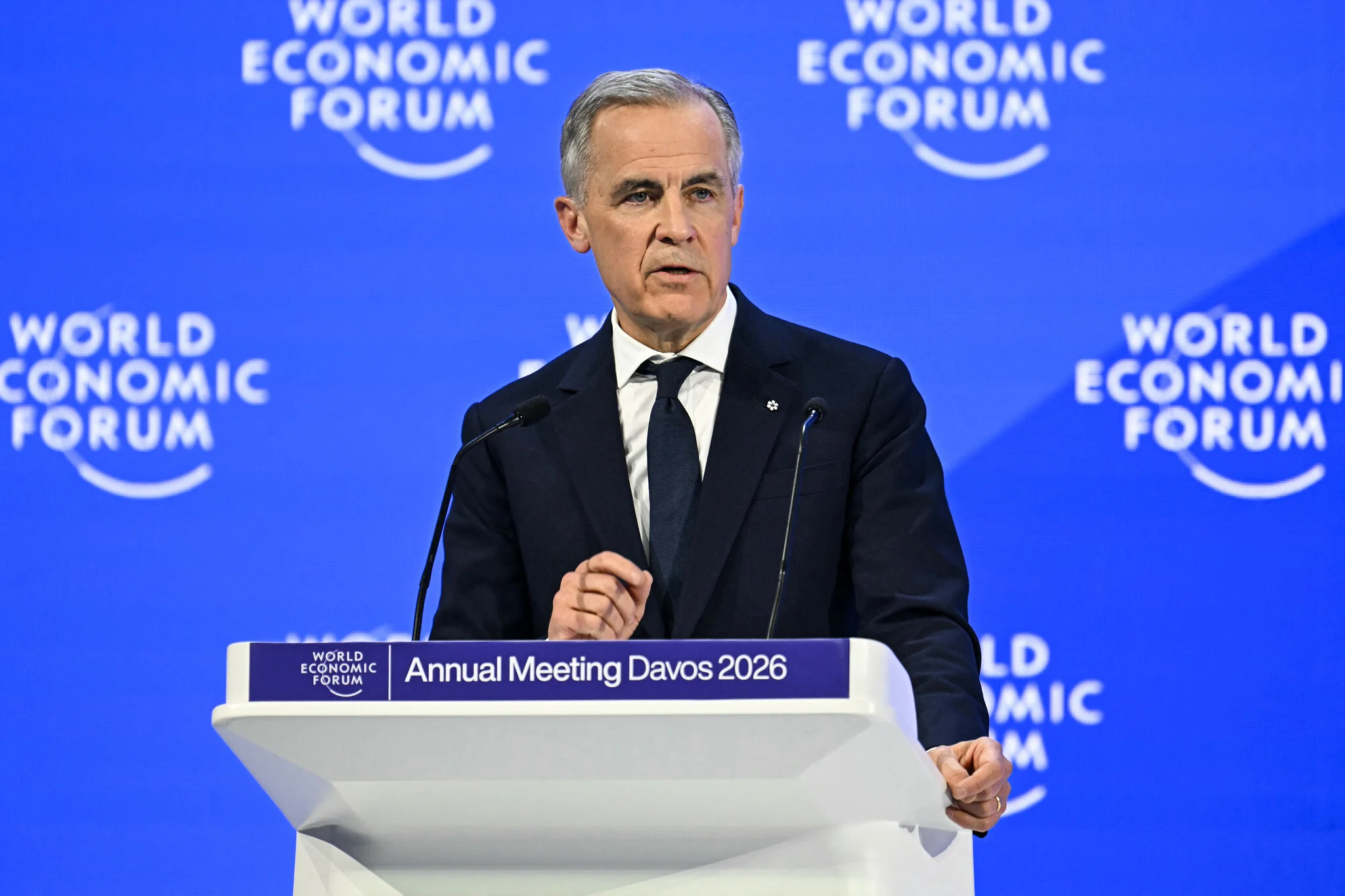
Earlier this week in Davos, Prime Minister Mark Carney delivered what many rightly described as a serious and bracing speech. He spoke of a world in rupture, of the end of comforting fictions, and of the need for middle powers like Canada to confront reality honestly. Drawing on Václav Havel’s famous essay The Power of the Powerless, he warned against “living within a lie” – the quiet accommodation and moral performance that allow dangerous systems to persist. “It is time,” he said, “for companies and countries to take their signs down.”
He was explicit about what this requires: honesty, the willingness to name reality, and consistency in the standards we apply. “The power of the less powerful begins with honesty,” he said. “Apply the same standards to allies and rivals.” And he cautioned against “going along to get along,” warning that this is not sovereignty but “the performance of sovereignty while accepting subordination.”
The question now is whether Canada is prepared to practice what the prime minister preached in how it governs itself at home and in the partners it chooses abroad.
Canada is now experiencing the most sustained wave of antisemitism in modern memory. Jewish schools require security. Synagogues are targeted. Jewish Canadians are routinely harassed and intimidated in public spaces. This is no longer episodic hatred, but a normalized climate.
Yet much of the national response has taken the very form the prime minister warned against: declaratory concern paired with institutional caution. Statements are issued. Parliamentary studies are announced. But enforcement remains inconsistent. Intimidation is tolerated when it is politically inconvenient to confront. The ideological drivers of this surge are softened, blurred, or deflected.
This is the deeper danger the prime minister himself identified. Systems endure not only through coercion, he said, but through participation – through the quiet agreement to perform as if what we see is not what we know. Canada’s antisemitism crisis is now sustained less by ignorance than by accommodation. By the fear of naming ideological realities. By the avoidance of confrontation. By the hope that restraint will buy calm.
It won’t.
If Canada is to “live in truth,” that truth must include this: antisemitism in Canada today is animated by organized ideological ecosystems – Islamist, far-left, and far-right – that increasingly overlap in narratives, tactics, and targets. It is being normalized through selective enforcement and moral evasion. And it is a forerunner of mass violence that, while motivated by hatred of Jews, ultimately endangers all Canadians.
If Canada is to “live in truth,” then it could also acknowledge that the prime minister’s unilateral recognition of a Palestinian state is a political fiction – because it was extended in the absence of defined borders, territorial control, or unified governing authority, and without the conditions of sovereignty that recognition is meant to reflect, including the renunciation of terrorism. Doing so even as Jewish communities face intimidation and violence in Canada only sharpens the contradiction between the prime minister’s rhetoric about “living in truth” and the responsibilities he is not yet meeting at home.
To live in truth would mean using the full weight of the state to protect equal citizenship: enforcing laws without political filtering, confronting the movements and networks that animate this hatred, and refusing to subordinate the safety of a minority to the comfort of the majority.
It would also mean rebuilding state capacity. Serious investment in CBSA, IRCC, and national-security screening systems to vet, investigate, and, where warranted, remove non-citizens who participate in extremist activity, intimidation campaigns, or terror support. A country that will not enforce the conditions of entry and stay is not practicing realism. It is preserving a dangerous fiction.
China and Qatar
The same test of honesty and consistency applies to Canada’s foreign relationships.
In Davos, the prime minister described Canada’s approach as “values-based realism” – principled in its commitments, pragmatic in its engagement. He warned that middle powers lose legitimacy when they apply different standards depending on the partner, and that criticizing coercion from one direction while staying silent about another is “keeping the sign in the window.”
Yet in the same speech, he announced new strategic partnerships with two states, China and Qatar, that fail both sides of that doctrine.
On values, neither qualifies. China is deeply implicated in foreign interference, diaspora intimidation, economic coercion, and transnational repression. Qatar has, for years, been a central financial and soft-power hub for Islamist movements and ideological influence networks operating across the West.
On realism, the problem is even clearer. These are not neutral commercial actors. They are regimes whose conduct – globally and within democratic societies – is best understood as predatory. Their activities are not trade disagreements; they are national security threats.
The prime minister warned against “the performance of sovereignty while accepting subordination.” Yet deeper integration with regimes that weaponize economic ties and export ideological infrastructure risks precisely that: building resilience on foundations that corrode it.
These relationships shape the ecosystems in which radicalization, intimidation, and foreign leverage take root – including here in Canada.
There is a certain irony in invoking Havel’s The Power of the Powerless while deepening strategic alignment with regimes whose influence is built precisely on coercion, ideological manufacturing, and the disciplined projection of power. Engagement with difficult states may at times be necessary. Strategic naivety is not an option. But applying consistent standards to allies and rivals does not mean emptying standards of content. It means making them operative.
If Canada truly wishes to take the sign out of the window, it must do more than describe rupture. It must apply the same standard it calls for internationally – honesty and consistency – to the extremism reshaping our society. And it must align its global partnerships with a strategy that genuinely advances Canada’s long-term security, stability, and democratic resilience.
Because the measure of a country’s seriousness is not found in the sophistication of its speeches, but in whether it is willing to live in truth – at home and abroad.
Related Topics
Related Posts