
Capital market solutions for Gaza’s recovery
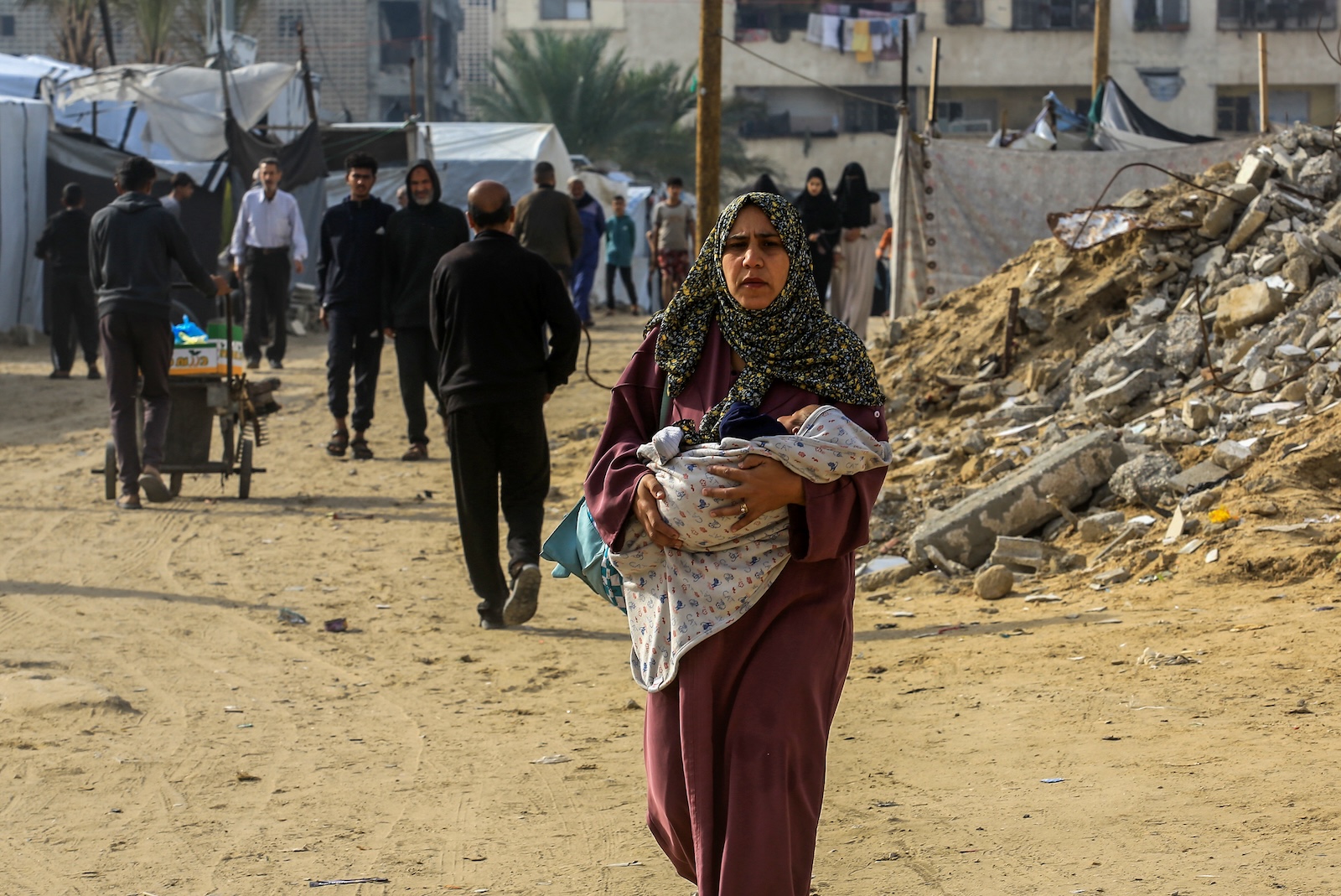
The economics of post-conflict recovery are unforgiving. A recent International Monetary Fund research reported that ten years after severe conflict, per capita income in the Middle East remains roughly ten percent lower than in conflict-affected states elsewhere in the world. The longer reconstruction is delayed, the deeper the scars become. For Gaza, where unemployment has reached 80 percent and GDP has contracted by more than 82 percent since October 2023, the window for meaningful intervention is closing rapidly.
Yet the conventional approach to Palestinian economic development—donor-driven aid followed by political negotiations—has failed for decades. Since 2005, real wages have declined, unemployment has remained structurally high, and per capita GDP growth has lagged behind population growth. Donor aid, which reached 27 percent of GDP in 2008, had fallen to just 2 percent by 2023. The Palestinian economy’s performance ranks at the bottom of the Arab world, below even the World Bank’s classification of heavily indebted poor countries.
The evidence is clear: aid without market discipline creates dependency, not development. A different approach is needed—one that leverages capital markets to mobilize private investment, creates regional economic connectivity, and builds the shared interests of consitutencies that make political solutions feasible.
From Aid to Investment
The fundamental challenge facing Palestinian economic development is structural, not cyclical. Consumption stands at over 90 percent of GDP, while gross capital formation remains dangerously low. Credit to the private sector represents only 24 percent of total lending, compared to 95 percent in Israel and 74 percent in Jordan. Only 24 percent of residents hold bank accounts. Without functioning capital markets, productive investment cannot take hold.
The answer isn’t more aid—it’s smarter risk management. Instead of budget support that undermines market discipline, donor funds should provide credit enhancement and insurance that unlocks private investment. Investment platforms, subordinated debt, limited liability vehicles, first-loss guarantees—these tools can shield projects from the political turbulence that defines fragile and failed states across the region. The result: private capital flowing into infrastructure that would otherwise never get built.
Consider the instrument we have proposed: Gaza Recovery and Resilience Bonds. These would be 15-20 year sustainability bonds with GDP-linked coupon adjustments, disaster clauses allowing payment suspension during severe conflict, and certification aligned with international sustainability bond principles. The structure acknowledges political risk while creating investible securities that can attract thematic investors focused on sustainable development.
Regional integration as economic strategy
The Abraham Accords opened possibilities that did not exist a decade ago. Where the Palestinian economy was once entirely dependent on Israel—which accounts for 85 percent of Palestinian exports and 60 percent of imports—normalization agreements create potential for economic diversification across the wider region. The question is how to capture this opportunity.
Cross-border infrastructure projects offer the most promising entry point. Transboundary sewage treatment addressing shared aquifers and shared watersheds. Solar energy fields in Sinai supplying electricity to Gaza. Dead Sea rehabilitation through regional cooperation between Israel, Egypt, Jordan, Palestine while building out connectivity to the larger regions stretching from the Mediterranean Sea to the Arabian Gulf. These projects create aligned interests—assets that no party can afford to destroy—while addressing urgent humanitarian needs.
The financing mechanisms already exist. The paradox is that Middle East-North Africa sovereign wealth funds across the MENA region control $4.1 trillion, yet most is deployed outside the region. A regional cooperation co-investment platform can pool climate and transition technology assets, lowering investment risk through diversification. The European Union’s green taxonomy provides standardized classification as does the International Capital Markets Mapping of Sustainability Bonds. What’s missing is the project development infrastructure to bring bankable deals to market.
Building the pipeline
Capital follows opportunity, but opportunity must be structured. The immediate priority is establishing Financial Innovation Labs that can take regional infrastructure concepts from proposal to shovel-ready projects. These would convene investors, technical experts, and government fellows to conduct feasibility studies, develop financial models, and design legal structures appropriate for the regional context. The Milken Innovation Center, partnering with the Arava Institute, is launching a Field Fellows Accelerator that would train professionals on preparing investible projects from these Labs between Jordan, a reformed Palestinian Authority, and other partners seeking normal economic relations throughout the Eastern Mediterranean, Arabian Gulf and North Africa.
The project pipeline should focus on sectors where revenue streams are predictable and regional cooperation creates clear mutual benefit: water infrastructure, renewable energy, waste management, transportation connectivity, agriculture, food and health security. Each project type has established financing models that can be adapted to local conditions. Natural gas production, electricity cogeneration, and renewable energy would decrease energy costs while generating stable revenues to service debt. Housing finance expansion would stimulate construction while addressing desperate residential demand.
The Palestinian Capital Market Authority provides the institutional foundation for deepening local equity and debt markets. Cross-listing with other regional stock exchanges would expand the investor base. Special purpose vehicles could raise funds through blended capital structures that lower the weighted average cost of capital for development projects.
The stakes
The empirical evidence linking economic conditions to conflict is unambiguous. Lower per capita GDP correlates with higher risk of armed conflict. Where youth unemployment exceeds 35 percent—as it does dramatically in Gaza and most of the West Bank—the risk of instability increases by 150 percent. Economic grievances make violence more attractive while lower recruitment costs make conflict resumption increasingly likely.
Job creation is therefore not merely an economic imperative but a security one. The tsunami of youth entering the labor market, coupled with structural unemployment of the adult population, has left Gaza with youth unemployment approaching 70 percent. Without rapid employment growth, no diplomatic initiative can succeed.
The alternative to market-based development is continued dependence on humanitarian assistance and the perpetuation of conditions that breed instability. Nearly the entire population of Gaza now lives in poverty. The aquifer is collapsing from salt water intrusion. Basic infrastructure has been destroyed. Recovery will require hundreds of billions of dollars over decades—resources that can only be mobilized through private capital markets.
A different path
When the history of this period is written, it could emphasize how economic strategy, financial leverage, and the creation of jobs overcame myopic political concerns as the path forward. Or it could record another generation lost to dependency and violence.
The tools exist. Blended finance structures that deploy catalytic capital to crowd in private investment have been proven in challenging environments worldwide. Regional integration frameworks are emerging through normalization agreements. Sovereign wealth funds are actively seeking opportunities in sustainable infrastructure. The question is whether the political will exists to move beyond the failed aid-first model.
Economic development through market building on the ground is central and causative for aspiring new states. It provides the foundation and incentives for negotiated solutions that diplomacy alone cannot achieve. The Palestinian economy has experienced two lost decades. It cannot afford a third.