
Ceasefire and the confetti victories of Iran
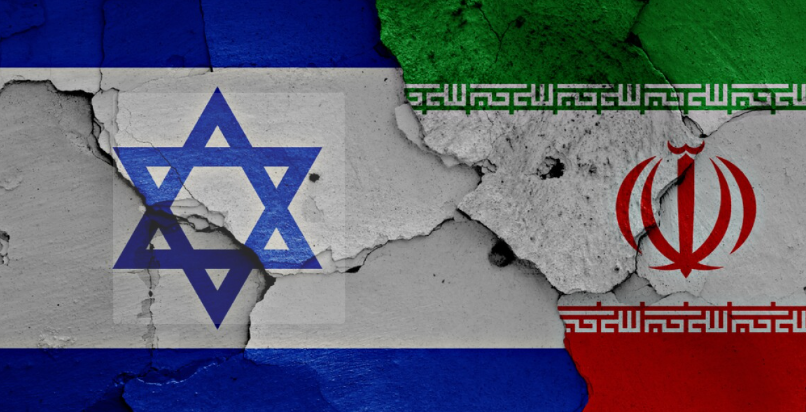
The recent ceasefire between Israel and Iran signaled a pause in hostilities, but the terms of the truce are unknown. Judging by the recent victory celebration in Iran, at least a public display of Iranian enthusiasm for future fighting remains. From the Iranian perspective, one cannot help but be impressed by the capacity to declare victory after Iran’s loss of air defense, the killing of many military leaders, the killing of many nuclear scientists, and the enormous damage to Iran’s nuclear bomb ambitions. Israel did not emerge unscathed. Israeli citizens faced many nights sheltering from the Iranian missile barrage, wondering if they would die. Many missiles were blocked, but some missiles penetrated Israeli defenses, causing fear, death, and destruction.
Surrender is the bright line separating war from peace. In International Humanitarian Law, surrender brings the fight to an end, and opposing sides are protected from further harm once the surrender is in place. When a surrender is offered, the opposing side is legally obligated to honor the surrender, and the surrendered person or force cannot be attacked. However, feigning surrender is forbidden; an attacking force can legally press that attack again if the perfidy is discovered.
Surrender can be indicated by raising a white flag, throwing away weapons, or raising one’s hands. On April 9, 1865, General Robert E. Lee surrendered to Lieutenant General Ulysses S. Grant at Appomattox Courthouse, ending the Civil War for Lee and his army. In what became known as World War I, the guns suddenly fell silent at the 11th hour of the 11th day of the 11th month of 1918. On that day, Germany surrendered to Allied forces in a railway carriage in Compiègne, France. Twenty-eight years later, during World War II, Adolph Hitler forced France to sign its own defeat against Germany in the same rail car, now known as the Compiègne Wagon.
Unlike a surrender, a ceasefire lacks a formal, agreed-upon legal definition but is generally understood as a temporary halt in hostilities and is distinct from a truce or armistice. A ceasefire is an opportunity to implement humanitarian relief and an invitation to a permanent, peaceful solution to a conflict. Strategic surrender has its advantages if one knows the character of the opposing force. In the satirical 1959 film, “The Mouse that Roared,” the imaginary European Duchy of Grand Fenwick declares war on the United States after an American company comes up with a cheaper version of Grand Fenwick’s only export, the fabled Pinot Grand Fenwick wine. The leadership of Grand Fenwick reasons that they will instantly lose to American military might and then become the beneficiary of American largesse towards its defeated enemies, allowing the conquered country to rebuild its economy in the style of the Marshall Plan.
For Iran, surrender is not so simple. Who would surrender to whom? Everything other than an unconditional surrender means you are in a negotiation. Iran can’t surrender unconditionally because that would mean a total collapse of the Iranian state apparatus. In an unconditional surrender, the victor can now claim the territory of the defeated. The US created and implemented the Marshal Plan because it was worried about Soviet communism and felt that leaving Germany destroyed would be worse than fixing it. Israel is in no position to rebuild a new and improved Iran, and the Iranians have not been beaten hard enough to accept such a deal. The current Iran is itself the result of a coup where hardliners replaced the previous oppressive government. A total collapse of Iran could be even worse now.
The timing and intent of the Israeli attack reflect Israel’s belief that, at that moment, an attack was the best move – every military thinks in this way. Intelligence gathering and reporting, along with an accompanying level of certainty, guides the political decision to press the offensive. No doubt, when Donald Trump approved the US B-2 bombing decision, it was subject to the same consideration. Israel controlled the skies, thereby significantly reducing the risk of Iranian countermeasures. In the aftermath of the US bombing, an alleged leaked intelligence document purported to claim that the damage to the Iranian nuclear missile program was inconsequential. Such reporting is not in the actual style of intelligence briefs and further fails to consider what the bombing achieved.
The US bombing of Iran meant the US, Israel, and anyone with access to the internet knew the location of these nuclear bomb production facilities. The Iranians had no defense, and in the age of sophisticated intelligence, the stealth rebuilding of Iranian air defense will be easily spotted and prevented. Even if only the tunnels to the underground facility were collapsed while sparing the production facility itself, the digging out of those tunnels could also not occur by stealth. Any such move at repair would likely result in immediate targeting and bombing by, at least Israel, and perhaps the US. As Iran has not surrendered, it is under no protection from further hostilities. To put it bluntly, the Israeli and US message to Iran’s nuclear bomb ambitions was, we found it, we struck it, you could not stop us.
The phrase “never interrupt your enemy when he is making a mistake” has been attributed to Napoleon, but it has likely been said and understood by many others. Future moves by Iran will continue to be scrutinized, and it would be wise for Iran to separate itself from bellicose social media postings that proclaim victory. Only spoiled ideology prevents the realization that prosperity is available to all parties in the conflict. The new Syrian leader is, extraordinarily, open to conversations about joining the Abraham Accords. Lebanon may follow.
Until Iran surrenders, it may truthfully claim it did not lose the war against Israel and the US. Not losing, however, is not the same as winning. In 280 and 279 BCE, King Pyrrhus of Epirus won battles against the Romans but lost so many men he was forced to retreat. This calamitous war calculation is now known as a Pyrrhic victory – a victory so costly it is essentially a defeat. In our modern era, it is time to replace this type of victory with a new term. In the future, it will be known as an “Iranian victory.” To declare victory from a secret bunker doesn’t suggest there’s much to celebrate.