Hadassah International Team, Hadassah Writers' Circle
Celebrating My Independence 60 Years Ago Was Lifechanging
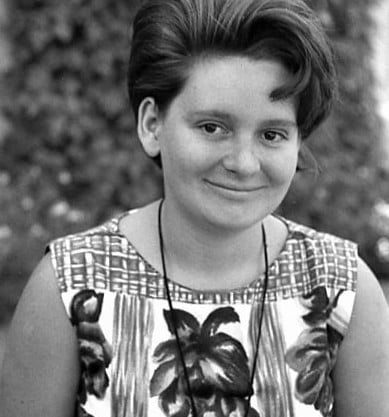
The author before leaving South Africa in 1966. Photo courtesy of the author.
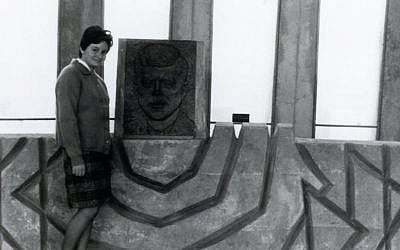
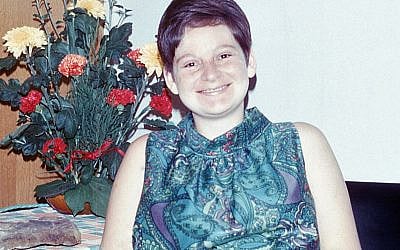
As I celebrated America’s 250th Independence Day in Florida, I could not help but think back to my own celebration of independence 60 years ago.
Escaping South Africa, a country then deeply embroiled in the cruelty of apartheid and seeking to live in a country where Jews could build a meaningful life, I arrived in Israel on July 4, 1966.
I craved a homeland where I would no longer be barred from interacting with anyone I might meet, regardless of ethnicity, skin color or religion. I wanted to live in a country where everyone enjoyed freedom of speech and freedom of religion, as well as the right to a decent education and the right to vote. I wanted to be free from oppression!
The purpose of the abhorrent racial segregation policies (Apartheid), embraced by the minority white South African government, was to keep all ethnic groups separated and carefully controlled, so that the “superior” white race could rule the country.
The concept of eugenics (that some races are superior to others) was a major part of the reasoning behind Apartheid and an intrinsic part of the country’s culture. Sympathy for the Nazis, who also practiced eugenics, had been fairly common in South Africa during WWII, and the discriminatory practices and antisemitism associated with it became commonplace.
Growing up under Apartheid laws, I was relatively privileged because my skin was white, defining me as a member of the “white race.”
In Apartheid South Africa, white people were referred to as “whites” and Black people were referred to as “Blacks.” White people were able to move freely in the city of Johannesburg, but we were not permitted to enter the “Townships” that surrounded Johannesburg. It was in these Townships that the city’s dark-skinned Black workers and their families were forced to live in deplorable conditions. The only Black workers permitted to live within the Johannesburg city limits were domestic servants.
Soweto, the largest of the “Townships,” had close to one million inhabitants. Black people were controlled by “pass laws” and required to have a valid “pass” document to work in Johannesburg. Once in the city, they could only travel on special buses or taxis designated for black people. On the sidewalks and in parks, benches were marked “For Whites Only.” Black people were not permitted to eat in restaurants or go to a movie theater in the city of Johannesburg.
White people had the right to vote. That right was not granted to the majority of the population whose skin was not white. That included the millions of Black, Indian, Chinese and Malay people, as well as people of mixed Black and white heritage who were labelled “Coloreds” who lived in the country.
Racial intermarriage was illegal.
Even the white race was deliberately segregated. Because my family spoke English at home, I had to attend white English-medium schools, where all academic subjects were taught in English and the dominant culture was oriented towards Britain. (At the time, South Africa was still a British colony.)
If my home language had been Afrikaans (the other official language of South Africa, derived from Dutch), I would have had to attend a white Afrikaans-medium school, where the culture was oriented to the Boers and the Voortrekkers, the descendants of Dutch colonizers. The result was that white English and Afrikaans-speaking residents tended to live in different areas of the city, in very different cultural environments.
Only English and Afrikaans were recognized as “official” languages at that time, even though the black majority spoke 29 different African languages.
Ultrastrict racial segregation laws and discrimination affected my life in many ways. During the 22 years I lived in South Africa, I never had the opportunity to meet a Black child in a country that was more than 75 percent Black. I studied Afrikaans for 12 years, but I never had a conversation in Afrikaans outside the classroom.
Even within the white English-speaking group, Jews tended to be discriminated against. This tended to be widely accepted antisemitism, rather than regulated apartheid. It was only in high school that I realized why I had never been invited to the home of one of my non-Jewish classmates. As a Jew, my golf-loving father could not join the local golf club and had to travel 25 miles out of town every Sunday to play at a Jewish country club.
I found my social home in the welcoming arms of a Jewish youth movement. It was there that I could learn about my heritage and feel safe and valued for who I was and what I could contribute to the world as a young Jewish girl.
When I was 15 years old, I learned that speaking up against injustice carries a heavy price. It was 1960 and I was at a weekend Zionist Youth Group Retreat, which featured two speakers who addressed the situation of South Africa’s black population. That same day, 69 black people protesting the country’s discriminatory pass laws were shot and killed by the South African police outside the Sharpeville police station. When I woke up the next morning, I was horrified to learn that our speakers from the day before had felt compelled to flee the country.
Sharpeville was a turning point. The images caused international outrage at the United Nations, spurred internal resistance and affected the economy through the resulting boycott of South Africa.
The South African government’s response was an iron-fisted crackdown on all protests and resistance to their rule.
At this stage, I knew that it was impossible to build a future in South Africa. I needed to leave the country as soon as possible. In the interim, I carefully put on blinkers and kept my mouth shut.
I needed an education that would enable me to earn a living elsewhere in the world. I studied biology, switching to biochemistry when it became clear that one of my professors was openly antisemitic.
I waited anxiously for the day I would graduate from university and be able to leave South Africa.
I finally arrived in Israel on July 4, 1966. As I witnessed the American flags flying over the highway to Tel Aviv, I began my personal journey to freedom. The date took on particular symbolic significance because, for the first time in my life, I got an inkling of what it could be like to live in a vigorous democracy.
Can you visualize my joy when I realized that, despite the fact that hostile countries surrounded Israel, I could travel and explore anywhere within Israel’s borders? I met people from every corner of the world: from Arab lands, Europe, the Americas, Asia, Africa and Australia. They spoke many languages, with Hebrew as the common one. Each had a very different background and story to tell. Most were Jewish, from secular to ultra-religious, but many were Arab, both Muslim and Christian of different denominations. There was even a flourishing Bahá’i Temple.
Conflicting political views across the spectrum were discussed openly and passionately. No one was afraid to express their views. They voted for many different parties in government (including three Arab parties), and the government had to form majority coalitions because so many small parties represented the people’s views.
Yes, unfortunately, Israel is still surrounded by neighbors and terrorist organizations determined to destroy it, both physically and in reputation. But I lived under Apartheid for 22 years, and I know what that looks like. I can reaffirm that Israel is definitely not an Apartheid state!
Israel remains one of the strongest democracies in the world. After everything I fled, I do not make that statement lightly.
On July 4, 2026, as America celebrated the 250th anniversary of its Declaration of Independence, I celebrated my own 60th anniversary of freedom from tyranny.
It was truly lifechanging.
The author does not speak on behalf of Hadassah and the views expressed herein are the author’s own and not necessarily those of Hadassah.
Patricia is a member of the Hadassah Writers’ Circle, a dynamic and diverse writing group for leaders and members to express their thoughts and feelings about all the things Hadassah does to make the world a better place. It’s where they celebrate their personal Hadassah journeys and share their Jewish values, family traditions and interpretations of Jewish texts. Hadassah members are proud of their Zionist mission and their role as keepers of the flame of Jewish values, traditions and beliefs as well as advocating for women’s empowerment and health equity for all. Since 2019, the Hadassah Writers’ Circle has published nearly 800 columns in The Times of Israel Blogs and other Jewish media outlets. Interested in writing? Please contact hwc@hadassah.org.
Related Topics