
Ceuta Crisis: Border Collapse & Geopolitics
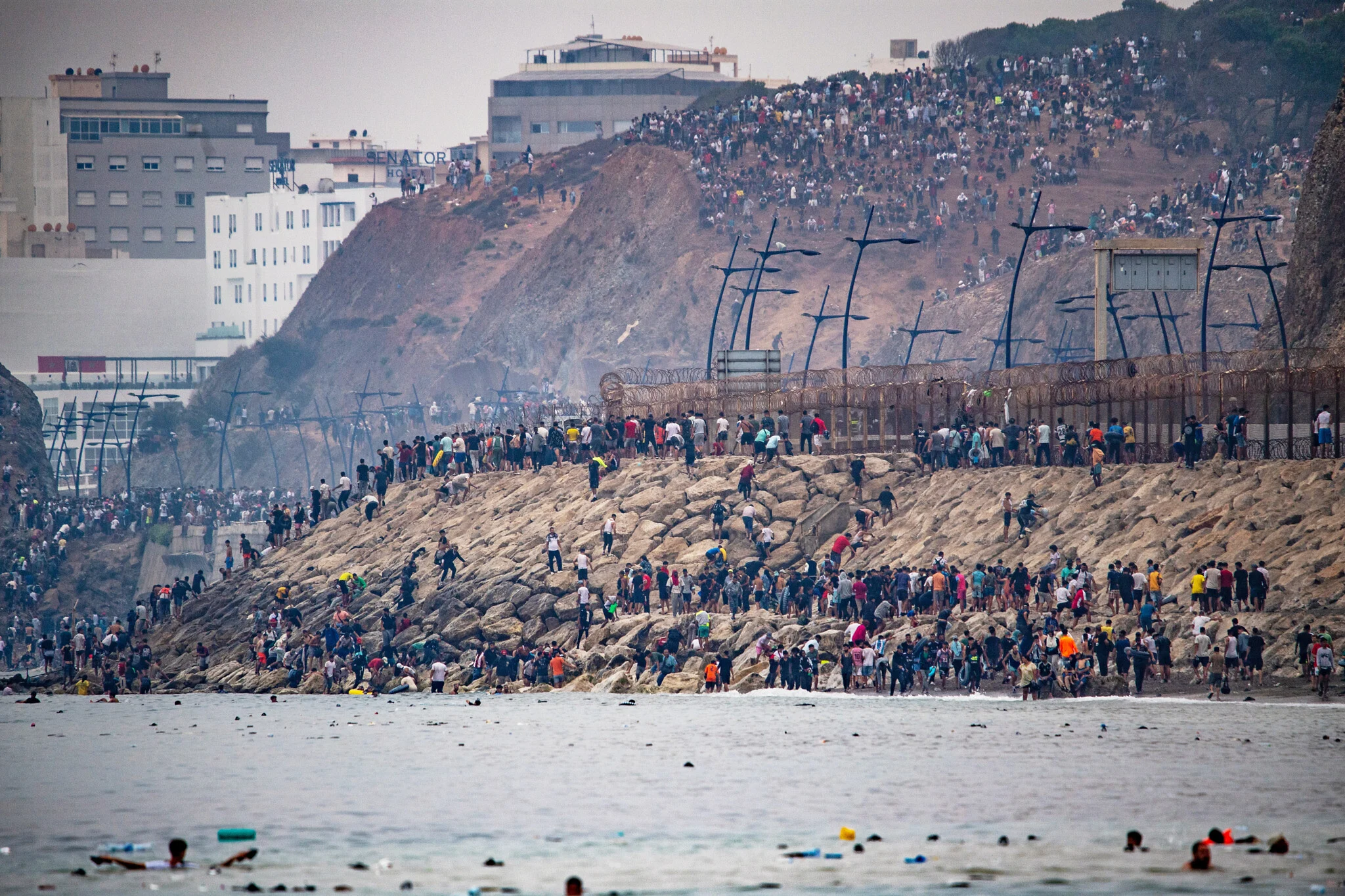
The current crisis on Spain’s southern border has once again put Europe’s deep migration policy cracks under the microscope. It exposes the continent’s broader geopolitical vulnerabilities. Between Thursday and Friday, an estimated 50,000 to 60,000 migrants crossed irregularly into Ceuta, the small Spanish territory bordering Morocco. Images of thousands of young people throwing themselves into the sea with floaties or desperately scaling the fences have gone global.
As I write this piece, anywhere from 37,500 to 48,000 people were quickly pushed back to Morocco. The human cost, however, was devastating. At least 57 people died trying to reach Spanish soil.
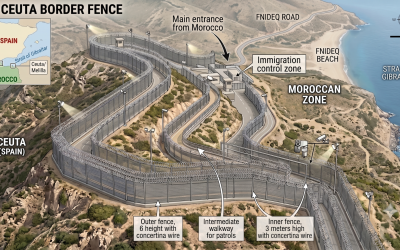
To grasp the sheer scale of this event, we have to understand why Ceuta is such a migration flashpoint. This autonomous city is barely eight kilometers long. Alongside Melilla, it represents the only official land border the European Union shares with Africa. Guarded by a double ten-meter-high fence, Ceuta acts as the final geographic funnel for thousands fleeing a lack of opportunity.
Ceuta, alongside Melilla, represents the only official land border the European Union shares with the African continent.
Historically, however, Morocco has used migration control at this border as heavy leverage. Rabat relaxes security to exert political pressure, looking to extract financial or diplomatic concessions from the government in Madrid.
Faced with this complexity, we need to call out the cheap rhetoric bubbling up in certain sectors. Far-right leaders, like Santiago Abascal, rushed to label the crisis an “invasion.” They baselessly implied that these migrants were criminals and rapists. This “invasion” talk doesn’t offer a single real solution to a complex geopolitical issue. It just fuels fear and dehumanizes vulnerable people, entirely distracting from the actual failures in border management.
In this regard, Spain’s display of weakness hasn’t gone unnoticed internationally. Israel’s UN Ambassador, Danny Danon, slammed the Spanish government for declaring a migration state of emergency while holding onto “colonial enclaves” in Africa. Given the current diplomatic climate, it makes total sense that here in Israel we’re inclined to take shots at Pedro Sánchez. He’s a leader who never misses a chance to criticize and attack Israel on the world stage. When a government makes a habit of lecturing the rest of the world, its own domestic crises quickly turn into diplomatic ammo.
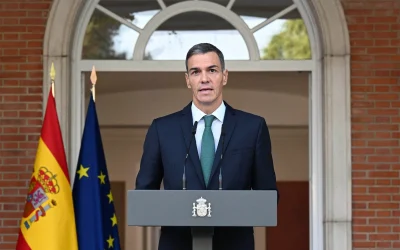
Pedro Sánchez’s migration policy demands serious scrutiny, too. By pushing to regularize half a million undocumented migrants already living in the country, his administration prioritized projecting a progressive, welcoming image. But that move comes with strategic risks. Domestically, it sets off alarm bells about a potential “pull effect.” Internationally, it directly clashes with the EU’s current restrictive shift and the new Migration and Asylum Pact. This sparks deep anxiety among other member states, who frown upon any unilateral move that might loosen up the Schengen area.
The continental backlash was harsh. Italian Prime Minister Giorgia Meloni suspended the Schengen free movement agreement with Spain. French President Emmanuel Macron immediately tightened border checks, and German Chancellor Friedrich Merz demanded Spain regain control right away.
That said, the stakes here are much higher. Russia wasted no time exploiting this situation amid its war with Ukraine. Russian Deputy Foreign Minister Alexander Grushko didn’t just call the crisis a total collapse of European migration policy. He cynically claimed Spain could have dodged this whole mess if they had spent the money they gave Ukraine for weapons on their own border security instead.
All this tension exposes a massive institutional hypocrisy. The same European Union that constantly brands itself as the vanguard of liberalism, a moral beacon ready to lecture the world on human rights, reacts with an iron fist the second migrants show up at its borders en masse.
Integration values crumble when crisis hits. Finland’s Interior Minister flat-out stated that countries failing to protect the external border shouldn’t be in Schengen. In France, Jordan Bardella directly accused Sánchez’s regularization policies of “opening Europe’s doors to every danger,” while Denmark floated the idea of completely suspending European free movement cooperation.
As Ceuta’s beaches quiet down, the fallout from this crisis forces us to look past the political maneuvering. We have to ask some core questions about our future.
What is happening in Ceuta that drives so many people to migrate to Europe? Is Europe actually as inclusive as it claims to be? And what happens when a country can no longer defend its borders?