
Writing on Jewish identity, Israel, and American politics
Champagne Socialist
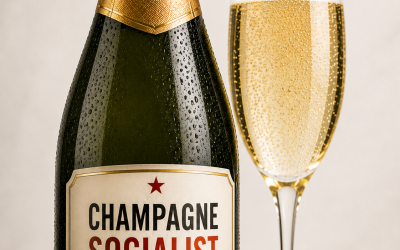
In 2018, I started a private Facebook group called Champagne Socialists.
The description was one sentence:
“We drink tonight. Revolution tomorrow.”
I thought it was satire.
Looking back, it was a confession.
Not because I was a socialist.
I wasn’t.
I was something more common.
I wanted to be on the right side of things.
And, if I’m honest, I wanted other people to know it.
Like a lot of people, I confused conviction with wisdom. Politics stopped being something I believed. It became part of who I was.
In 2016, during Bernie Sanders’ first presidential campaign, I started another Facebook group called Think Revolution. Thousands joined.
Revolution sounded exciting.
Compromise sounded weak.
The Bernie versus Hillary primary became intensely personal. I wanted Bernie to win. I believed he could win. And when he didn’t, accepting that was harder than it should have been.
The convention wasn’t going to overturn the result. Hillary Clinton was the Democratic nominee.
That was one reality I didn’t want to accept.
A few months later came another.
I spent Election Day working at a polling place in West Hollywood. Like almost everyone around me, I assumed Hillary would win.
She didn’t.
Donald Trump was going to be president.
If Bernie’s loss taught me that wanting something badly didn’t make it true, Trump’s victory made the lesson impossible to ignore.
Then politics collided with something much bigger.
Trump was inaugurated on January 20, 2017.
Eight days later, my mother died.
Politics had felt existential for months.
Then something actually existential happened.
Life kept moving.
I got married. I became a father. I built businesses.
Those things have a way of making ideology compete with reality.
Bills arrive. Payroll has to be made. A family depends on you.
Being right becomes considerably less interesting than getting things right.
I learned that real life cares less about slogans than outcomes.
Israel was part of this evolution too.
I was always a Zionist. I was also critical of Israel, sometimes very critical. There is nothing wrong with that.
But there were rooms where criticizing Israel bought you credibility, and I knew it.
Sometimes I leaned into it.
Sometimes I said things more sharply than I really believed because they played better with the people around me. It made me seem balanced. Sophisticated. One of the good ones.
These weren’t grand declarations. They were comments at dinners, parties, and conversations with friends. Small things I barely thought about at the time.
I think about them now.
Then came October 7.
It didn’t change all my opinions.
It changed my willingness to edit them for the room.
This year, I ran for Congress as a Democrat.
At a candidate forum at Pierce College, practically in my own backyard, we were asked whether the United States should continue funding Israel’s Iron Dome.
Every other candidate on stage said no.
I said yes.
There wasn’t much to think about.
Iron Dome protects civilians from rockets. I believed funding it was right, so I said so.
As we left the forum, my campaign manager got into a confrontation with people in the crowd. Security walked us to our cars.
For years, often without realizing it, I had worried about what the room thought.
Now I was standing in a room full of Democrats, running for Congress as one of them, and I was the only candidate on stage willing to give that answer.
Maybe the Democratic Party had changed.
I know I had.
Looking back, I don’t think my biggest mistake was believing the wrong things.
It was caring too much about approval.
About saying what the room wanted to hear.
About mistaking applause for truth.
That’s my champagne socialist confession.
Not that I wanted revolution.
That I wanted acceptance.
I wanted the politics, the people, and the approval that came with them.
Sometimes I edited myself accordingly.
I don’t anymore.
These days, I’d rather lose an election saying what I believe than win one by editing myself for the room.
Which has left me in an unexpected place.
Moderate.
A terrible word.
It sounds like mayonnaise.
That’s the next essay.
Related Topics
Related Posts