Exploring trauma, resilience, and Jewish identity through a therapist’s lens
Chanukah and Gevurah: Courage in This Moment
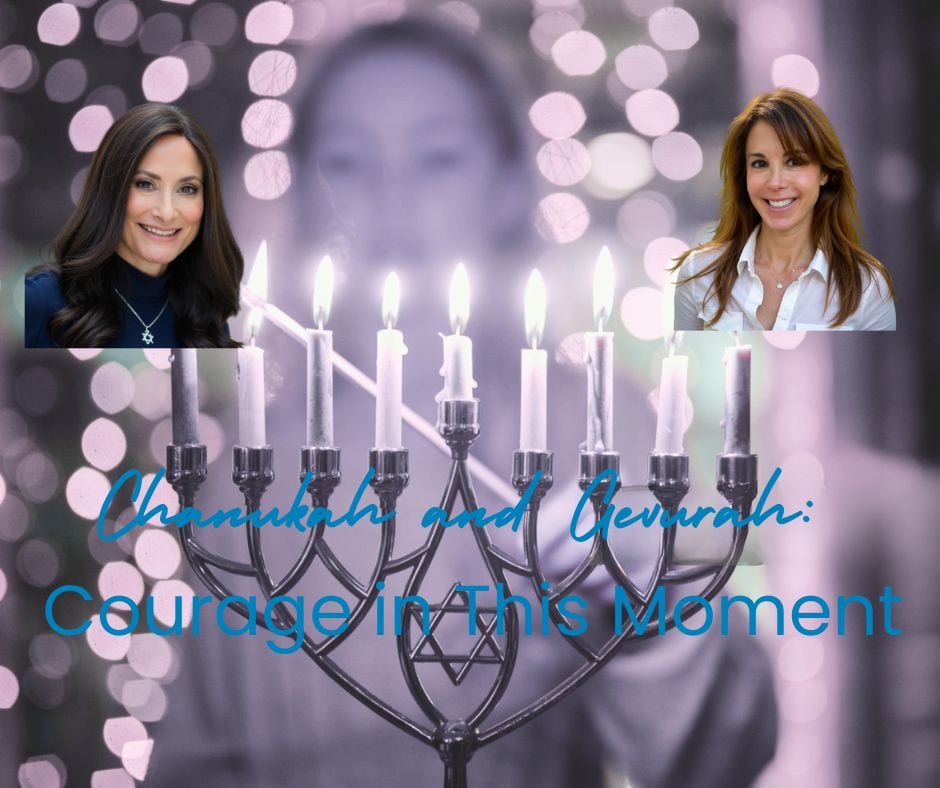
In the Chanukahs since October 7, a sentence keeps surfacing: “I’m supposed to be festive, but there is so much pain.” The holiday arrives, and so do grief, fear, anger, and emotional exhaustion that can be hard to articulate.
As we write, we are holding the aftermath of the antisemitic terror attack at a Hanukkah celebration on Sydney’s Bondi Beach on December 14, 2025. For many Jews, it lands with sickening déjà vu, as if an ancient story is showing up again in real time.
Chanukah has never been only a holiday of light. It is also a story about identity under pressure, and what it costs to remain recognizably Jewish in a world that often prefers assimilation. Perhaps because it falls near Christmas, we often sanitize the story and forget how contemporary it feels.
We usually tell the softened version, the few against the many, and the oil that lasted eight nights. Beautiful, yes, but not the whole picture. The deeper story is about choice, and the price of belonging.
The Greek decrees targeted Jewish distinctiveness: Shabbat, brit milah, and Torah learning. The message was simple: you can exist, but not fully as yourselves. And the pressure did not come only from outside. Some Jews embraced the surrounding Hellenistic culture; others stood firm and embraced Jewish identity. The argument over how much to assimilate and how much to carry forward is baked into the Chanukah story itself.
Today, the questions are dressed differently, but they have not disappeared. How openly Jewish do I want to be at work, on campus, or online? How much do I soften in order to belong? In some spaces, Jews feel a demand to be “the right kind of Jew,” acceptable as long as our peoplehood, values, and for many, connection to Israel are edited, denied, or treated as shameful. The war about being Jewish never ended, it morphs, and shape shifts. The pressure has shifted from “change who you are” to “surrender the parts of Jewish identity tied to homeland, history, and safety.”
As therapists, we watch what this does to the inner world. Wellness and prevention of trauma rely on safety, validation, and support. So what happens when a whole group is targeted for hate? Over time, people begin to edit their visibility, not because they lack pride, but because the nervous system is trying to keep them safe.
There is a second layer that intensifies the damage: macro gaslighting. When Jews describe harassment or exclusion and are told they are overreacting, misreading it, or imagining it, they begin to doubt their own perception. Ongoing invalidation destabilizes the self and erodes self-trust.
Macro gaslighting also protects the bystander. When a society reframes antisemitism as “not real,” “not serious,” or “too complicated to name,” it creates moral distance. That distance makes it easier to minimize, rationalize, and justify behavior that would otherwise feel unacceptable. Denial becomes a pathway to moral disengagement: if the harm is dismissed, responsibility dissolves.
So what might Chanukah offer us now, if we take it seriously as a story about identity and erasure, not only a story about oil and gifts?
Here are three Chanukah lessons for an age of erasure.
- Identity is not an accessory
Jewish identity is inner continuity, belonging, and values. When acceptance comes with conditions, “tone it down” or “edit yourself,” the cost is psychological. Notice the terms, and notice what it costs you to shrink. - Courage in the dark is usually small
Most courage is quiet. Correcting a joke. Naming an erasing comment. Refusing to self censor a simple truth. Safety matters and not everyone can take public risks, but small acts of integrity send a message inward: I am allowed to exist here as who I am. - Do not underestimate the oil inside you
The oil story captures a familiar feeling: “I only have enough for one more day.” The Hasmoneans used what they had and came back the next night. Resilience is rarely a surge. It is a sequence, one night at a time.
If you are entering Chanukah with a tired heart, you are allowed to arrive exactly as you are. You can simplify rituals so they fit what you and your family can carry. And you can increase joy on purpose: lean into Jewish pride, tradition, and community. Isolation amplifies fear. Connection steadies the nervous system.
For colleagues, workplaces, schools, and healthcare systems: support is not a slogan. Check in and listen. Believe lived experience. Do not turn care into a debate. Address antisemitic incidents clearly, and invest in Jewish cultural humility, including understanding how propaganda and indoctrination spread.
Chanukah is not about pretending the dark is not there. It is about what we do inside it. When we light the menorah, one candle ignites another, and nothing is taken from the original flame. Light multiplies.
That is our work in this moment: to remember where we come from, a people who have carried identity forward through centuries of pressure, and to refuse the slow erosion of self. Even when we are scared or grieving, we keep lighting and we keep connecting. In doing so, we remind ourselves and the world that darkness does not get the final word.
—
This piece was co-authored by Malka Shaw and Jodi Taub
Jodi Taub, LCSW, is a licensed clinical social worker and trauma-informed therapist who works with individuals and families navigating anxiety, grief, and chronic-illness stress. She is a co-presenter and educator with Kesher Shalom Projects, bringing a clinically grounded lens to Jewish mental health, resilience, and the impact of antisemitism on wellbeing.
Related Topics
Related Posts