Trying to change the world, one revolution at a time
Chashash Chayei Adam
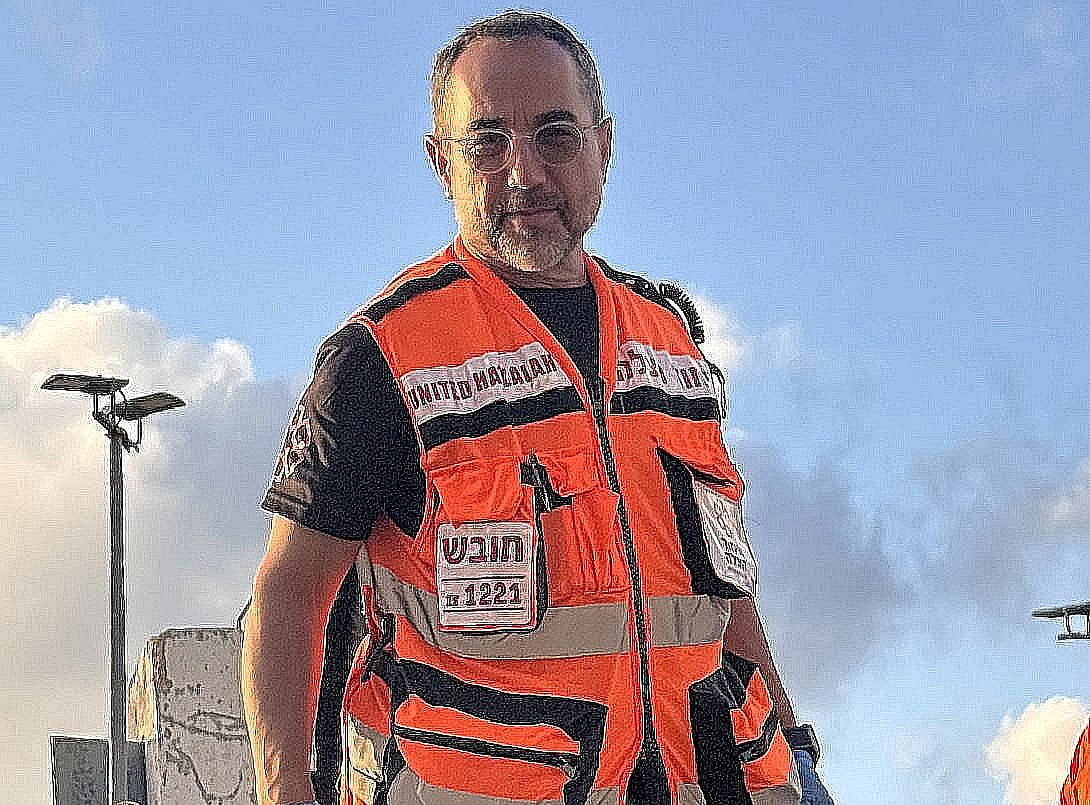
It started out like any other call.
“Chashash Chayei Adam.”
A suspected life-threatening emergency at the Central Bus Station in Ashkelon.
For those unfamiliar with the terminology, this is a standard dispatch code used by emergency services. It tells us very little about the patient’s condition. It simply means that someone’s life may be in danger. It is the responsibility of the responding medic to assess the situation, determine what is happening, and decide on the next course of action.
As we arrived, the team leader looked at me and said, “Ari, this is your call. You’re in charge.” Personally, I hate when that happens.
Even after all the training and hundreds of emergency calls, it still makes me anxious. But this is exactly what we train for.
We parked the Hatzalah vehicle, grabbed our medical bags, oxygen, and protective equipment, and headed toward a growing crowd gathered near one of the security booths.
Inside sat a young man, approximately twenty-five years old. The head security guard of the Central Bus Station explained that the young man had been working outside in the blazing Ashkelon sun when he suddenly collapsed.
These details immediately caught my attention.
Someone had placed an unopened bottle of water in his hand.
Someone else had given him an unopened sandwich.
A coworker had already helped him into the shade.
Long before we arrived with sirens and medical equipment, ordinary people had already begun taking care of him.
Almost automatically, muscle memory took over. I introduced myself and told him I was there to help.
“What is your name?”
“How old are you?”
“What happened?”
“Do you remember losing consciousness?”
“How long have you been feeling unwell?”
As I checked his pulse, assessed his airway and breathing, looked for visible signs of distress, attached the pulse oximeter, and prepared to check his blood pressure, blood sugar, oxygen saturation, and temperature, I realized there was one problem.
He didn’t understand a word I was saying.
That isn’t unusual in Ashkelon. Our city is home to immigrants from every corner of the world. Russian, Ethiopian, French, South American, Romanian, and many others. Every shift can become an exercise in multilingual medicine.
But this young man didn’t speak any of those languages.
He spoke only Arabic.
Fortunately, the head security guard spoke enough Arabic to translate my questions. Together we pieced together what had happened. He had spent hours working in the intense heat, had not been drinking enough water, and likely had not eaten either.
The diagnosis quickly became clear.
Dehydration and heat exhaustion.
Untreated, both can become life-threatening. Fortunately, both are also very treatable.
After stabilizing him, we transferred him to the waiting Magen David Adom ambulance, which transported him to Barzilai Medical Center for further evaluation.
Only after the ambulance drove away did the significance of what had just happened sink in.
And it wasn’t what you might think.
Not once, not for a single second, did it occur to me that I had just spent the last twenty minutes treating an Arab.
Not once.
The police didn’t care.
The security guards didn’t care.
My fellow medics didn’t care.
The bystanders didn’t care.
Dispatch never asked whether he was Jewish or Arab.
They asked only one question.
Who can get there first?
The call wasn’t for a Jew.
It wasn’t for an Arab.
It wasn’t for an Israeli.
It wasn’t for a Palestinian.
The call was for a Chashash Chayei Adam. A human life.
That was all that mattered.
I know some people will disagree with what I’m about to write.
They will point to the videos of young Jewish men who have taken the law into their own hands and committed acts of violence against Arabs. Those young men, by their actions, have caused irreparable harm to Israel’s image and shaped how many people around the world see our country. Their actions are real, and they deserve to be reported. But while they are a story, they are not the story. They do not represent the people I volunteer beside. They do not represent the people I stood beside that afternoon.
The story is the Israeli police officers, the security guards, the United Hatzalah volunteers, and the Magen David Adom crew who stood beside me that afternoon.
Every one of them saw exactly what I saw.
A human being who needed help.
Every day, volunteers from United Hatzalah, crews from Magen David Adom, hospital staff, police officers, firefighters, and security personnel respond to emergencies involving Jews, Muslims, Christians, Druze, tourists, foreign workers, and anyone else who needs help. This is the Israel I know.
Politics disappears.
Religion disappears.
Nationality disappears.
Standing before us is simply another Chashash Chayei Adam, another human life.
That is the Israel I have the privilege to serve every time I put on my United Hatzalah vest.
Before the ambulance doors closed, I asked the security guard how to say “feel better” in Arabic.
“Salamtak,” he replied.
It took me several tries before I finally pronounced it correctly. When I finally got it right, the young man smiled.
He placed one hand over his heart. Then he touched his lips. Then he extended his hand toward me.
No translation was necessary.
This is the Israel I know.
This is the Israel I have the privilege to serve.
This is the Israel where I choose to live. And that is the story!
Related Topics