Bridging Multilingualism and Jewish Education
Chayei Sarah: Continuing a Legacy and Finding Our Own Way
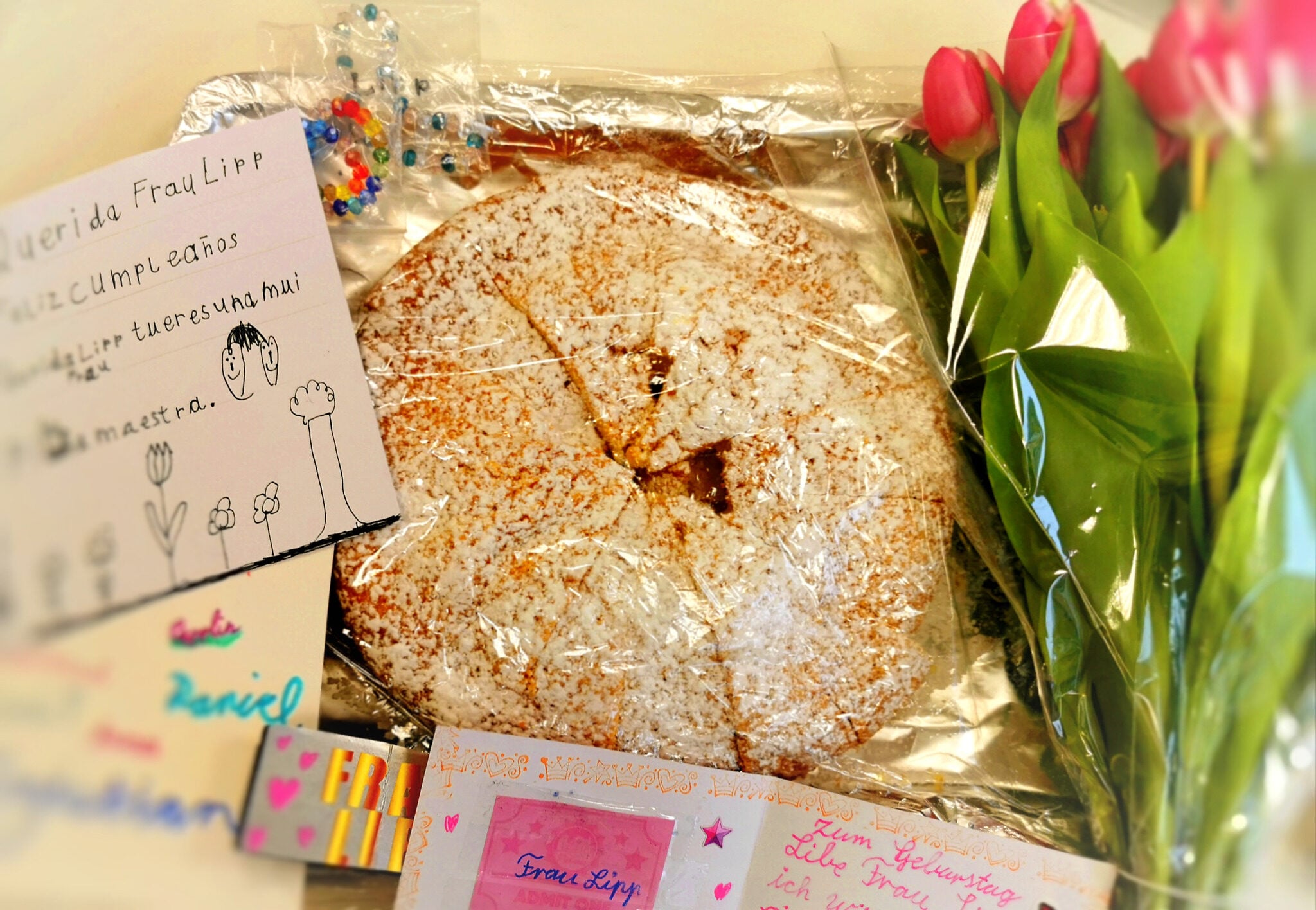
Special gifts from a wonderful class. (Chiara Lipp)
My thoughts on this week’s parasha are inspired by a question that was given to me by my teacher Michal Kohane. The question is whether Rebecca enters a place that already belonged to Sarah or whether she creates something new there. I deeply connected with this question because, many times in my life, I have found myself in a situation where I was stepping into a role and asking myself whether I could ever fill it. The pressure was on.
The parasha is called Chayei Sarah, the life of Sarah, yet it starts with her death. In my opinion, the Torah wants to teach us that a person’s life does not end with their physical passing. In Hasidic thought, there is a beautiful idea that a righteous person’s influence can become even stronger after their death. Their spiritual essence, teachings, and values continue to influence the world. We see this with Sarah. Although she is no longer physically present, her values and influence shape the future of Abraham, Isaac, and Rebecca, and ultimately, the Jewish people.
But coming back to Rebecca: How could she ever fill this space? Is she even expected to? In Genesis 24:67 we read that Isaac brought Rebecca into the tent of Sarah, his mother, and took her as his wife. This moment marks the beginning of her place in the family and the continuation of Sarah’s legacy, although the story had begun much earlier, with her kindness and selfless actions at the well. So I think the question is not whether to step into the place Sarah left behind or to create something new, but how both can happen at the same time. Rebecca continues Sarah’s role in the family and carries her legacy forward, but she can never replace Sarah as a person. And I don’t think she should try to. Sarah had her own personality, her own way of loving and caring, and Rebecca brings something different. She fills that space with her own character and creates her own relationship with Isaac. I think there is a big difference between continuing someone’s legacy and trying to become a copy of them.
This reminds me of my experience as a teacher, when I took over a class of second graders who had had a different teacher during their first year. I think many people agree that the very first primary school teacher often holds a very special place in our hearts. You can’t simply replace that person, and you shouldn’t try to.
After only one year of school, my students suddenly had to get used to a completely new person, a different teaching style, and a different approach to learning, before the regular two-year period that you would normally spend with one teacher had passed. I definitely had my own way of teaching, and while including personal ideas and methods in the classroom that resonated with me, I tried to keep the children’s beloved rituals that their previous teacher had established. And what can I say? We had an absolute blast together and grew into a strong little community. I didn’t try to become the previous teacher, and I didn’t need to. I gave the classroom my own touch, included ideas that I truly valued, and felt that the children sensed that.
I think this is exactly what Rebecca does. She doesn’t replace Sarah, but she continues what Sarah started in her very own way. And that’s what we can all do best: be ourselves and, by doing so, shine our own light into the world! We will probably never know how many people we help, influence, and guide along the way just by being ourselves.
Shabbat Shalom!
Related Topics
Related Posts