Historian, Librarian, Educator, and Artist
Chayei Sarah: Three Years Without My Mother
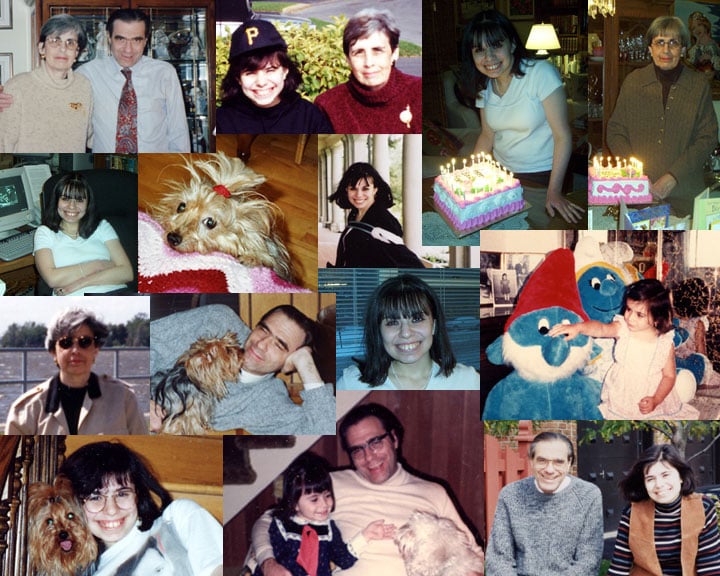
Our family story, captured in moments—my mother, my father, and the life we built together. (Source: Bonnie K. Goodman)
The Journey I Never Wanted, but the One I Walk With Her
By Bonnie K. Goodman, BA, MLIS
Three years ago, my world split in two. In one moment, I lost my mother — my best friend, my anchor, my confidante, the person who knew me better than anyone else ever will. I have lived every day since navigating the hollow spaces her absence left behind, trying to understand how to move through a world where her voice is no longer physically present yet still guides my every step with the inner strength she planted in me.
The day after she died, in the sharpest, rawest hours of grief, I wrote her eulogy:
“My mother was an amazing, talented, knowledgeable, and cultured person whose own ambitions were stunted by the times and circumstances. Instead, she put all her hopes, dreams, and ambitions into me. She was the strongest person I knew, and her life and ours were full of challenges, but when she said everything was going to be OK, I believed her.”
I believed her then, and I still believe her now.
“She told me in the last few days that I was her everything. My mother was my best friend, the person I trusted the most, and she knew me the best; I lost a parent and my best friend. She was the only person I could indeed be myself with; with everyone else, even now, I put on a mask, an act. I will never know such unconditional, non-judgemental love again. From the moment I could talk until the day she died, she was my beloved “Mommy.”
“First, it was my mother, father, and me against the world. Then after my father died, we had to stay strong together; we joked we were the Goodman Girls, our spin on our favorite show to watch together. Now, I am only one. Her passing is so much more difficult for me because that family unit I felt the safest in is all gone with her.”
In the terrible hours after my mother’s death, when the house felt unbearably silent without her, I reached out to a few people who had shaped my life. One of them was my former professor, someone whose opinion I had once valued deeply. Through tears, I asked if he might write something for her funeral because I didn’t believe I had the strength or clarity to do it myself. Instead, he told me that my words were strong enough—that the eulogy should come from me. After so many years without contact, hearing that affirmation in that moment gave me a courage I didn’t know I still had. His encouragement helped me write my mother’s eulogy and gave me the strength to stand at her funeral and speak—something I never believed I could do.
For months afterward, I moved through life in fragments — doing what had to be done, but always with the feeling that something essential had been torn away. Grief was not just sadness; it was disorientation. It was losing the person who was my compass.
The Journey These Three Years Have Taken Me
Now, three years later, I can finally trace the path I’ve been walking.
The first year after she died, I returned to McGill University to continue my graduate work. McGill is the place where my historical identity was shaped, where my intellectual voice was born — but it was also the place where I confronted something my mother always feared for me: the sharp rise of campus antisemitism and anti-Zionism.
I found myself fighting a battle I never wanted but couldn’t avoid. And yet, I was never truly alone. Her voice — her certainty, her pride as a Jewish woman — steadied me. I drew on her strength every time I spoke up, wrote, or stood firm.
That year reshaped my life completely. It pushed me toward a decision she and I had talked about for years: aliyah. For so long we imagined making that journey together. But toward the end of her life, she told me she had always known I would end up in Israel after she was gone. It was something she somehow understood before I did.
Carrying that truth — and her memory — I made aliyah alone, stepping into a life we had dreamed of, but which I had to begin without her physical presence.
Israel: Where Grief Meets Becoming
These three years have been some of the most difficult of my life, but they have also been filled with moments of unexpected beauty. Israel cracked me open and forced me to grow. It demanded strength I did not know I possessed.
And Israel gave me people — people who showed a level of kindness, loyalty, and care that I never expected, people whose presence helped me survive when everything felt impossible. My mother would have embraced each of them. She would have been grateful that they saw me and cared for me in ways she no longer could.
Through all of this, I hear her voice:
“Everything will be OK.”
These words have carried me through being an olah chadasha and the longing for the mother who would have held my hand through it all.
Like her, I now speak to Hashem constantly. And in Jerusalem, I do something she always longed to do: I pray at the Kotel. Sometimes standing there feels like meeting her halfway — her memory, my reality woven together in the space between the stones.
Chayei Sarah: My Mother as the Matriarch
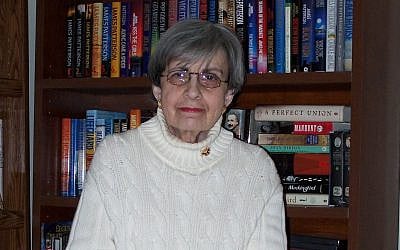
This week’s Torah portion, Chayei Sarah, begins with the death of Sarah but is truly about her legacy, the continuity of her strength, and the mark she leaves on her family’s destiny. Sarah herself no longer appears in the story, yet her presence saturates every decision, every movement toward the future.
My mother is my Sarah.
Her absence reshaped my life, but her influence guides every step of it. She gave me resilience, dignity, intellectual depth, Jewish pride, and a powerful belief in my abilities. She built the foundation on which my life now rests.
Three Years Later: What I Am Only Beginning to Understand
And now, three years later, I find myself returning to something I wrote in those first days after she died: Gone With the Wind, her favorite movie. In those early days, I felt like my entire life — our whole world — had blown away. Everything felt gone with the wind.
“It is a blessing and a curse to have a parent as a best friend, and no one will ever understand the loss I am experiencing with her passing. To use the phrase from her favorite movie that she taught me to love so well, and its heroine/anti-heroine, my life so tragically has come to mirror too much; it’s all gone with the wind. I truly hope tomorrow is another day, but one that will never be the same again for me without her in it.”
But now, I finally understand what she saw in that film — not the tragedy, but Scarlett O’Hara’s final words of fierce hope.
“Tomorrow is another day.”
This was my mother’s secret message to me long before I ever realized it. A reminder that despair is not destiny. A belief in renewal even when everything feels broken. It is still difficult, and the path is not easy — but I am beginning to hold onto that hope the way she did: that there is still promise ahead, and somehow, in ways I cannot yet see, everything will be OK.
Three years later, I am still her daughter.
I am still guided by her voice.
I am still shaped by her love.
And I am still walking the path she set in motion —
with strength, with faith, with the legacy of a woman who gave me everything,
and with the quiet certainty she left inside me
that tomorrow truly is another day.
Related Topics
Related Posts