
‘Chutzpah Girls’ Portraits to be Showcased in Art Exhibits Across the U.S.
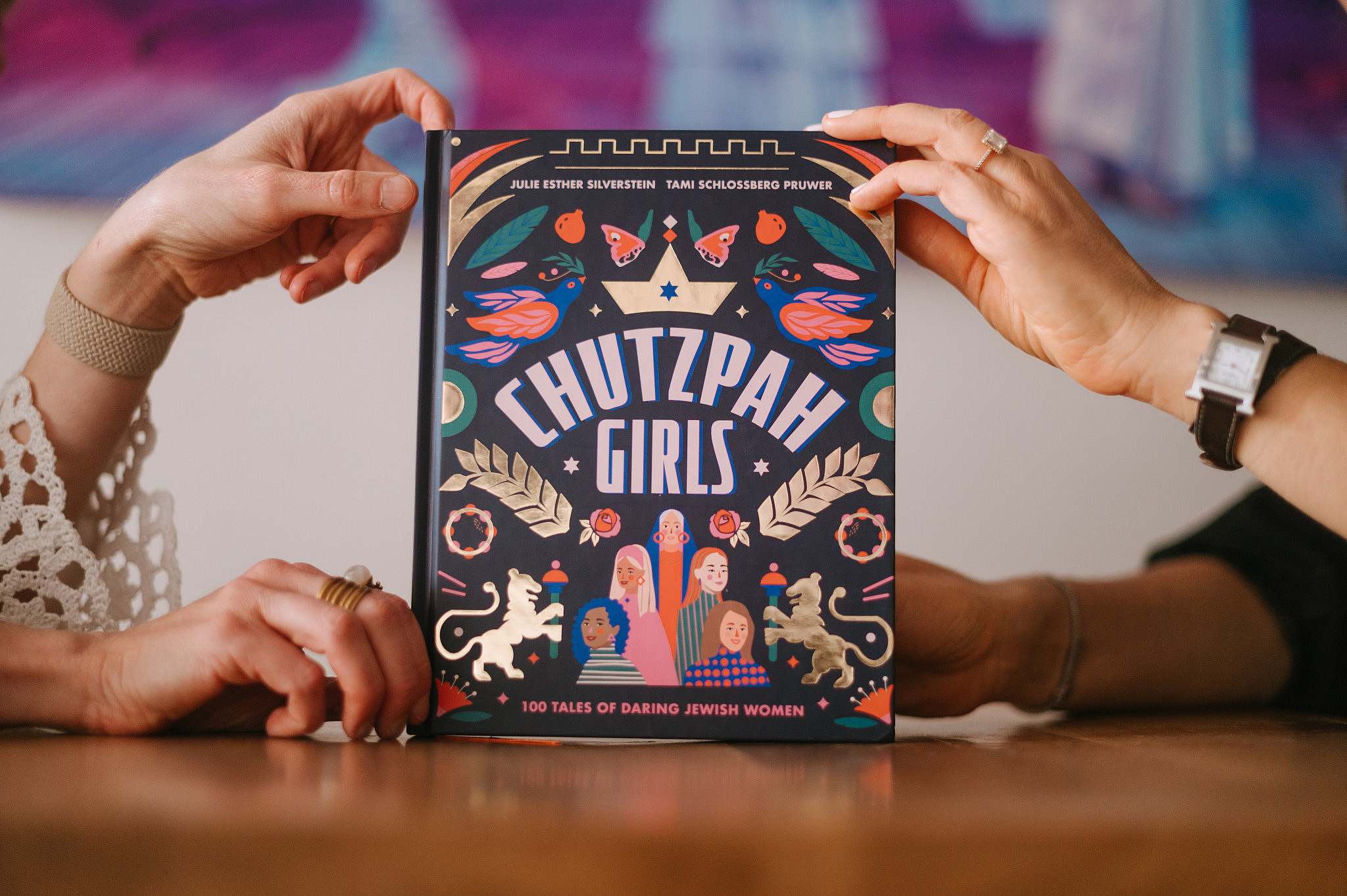
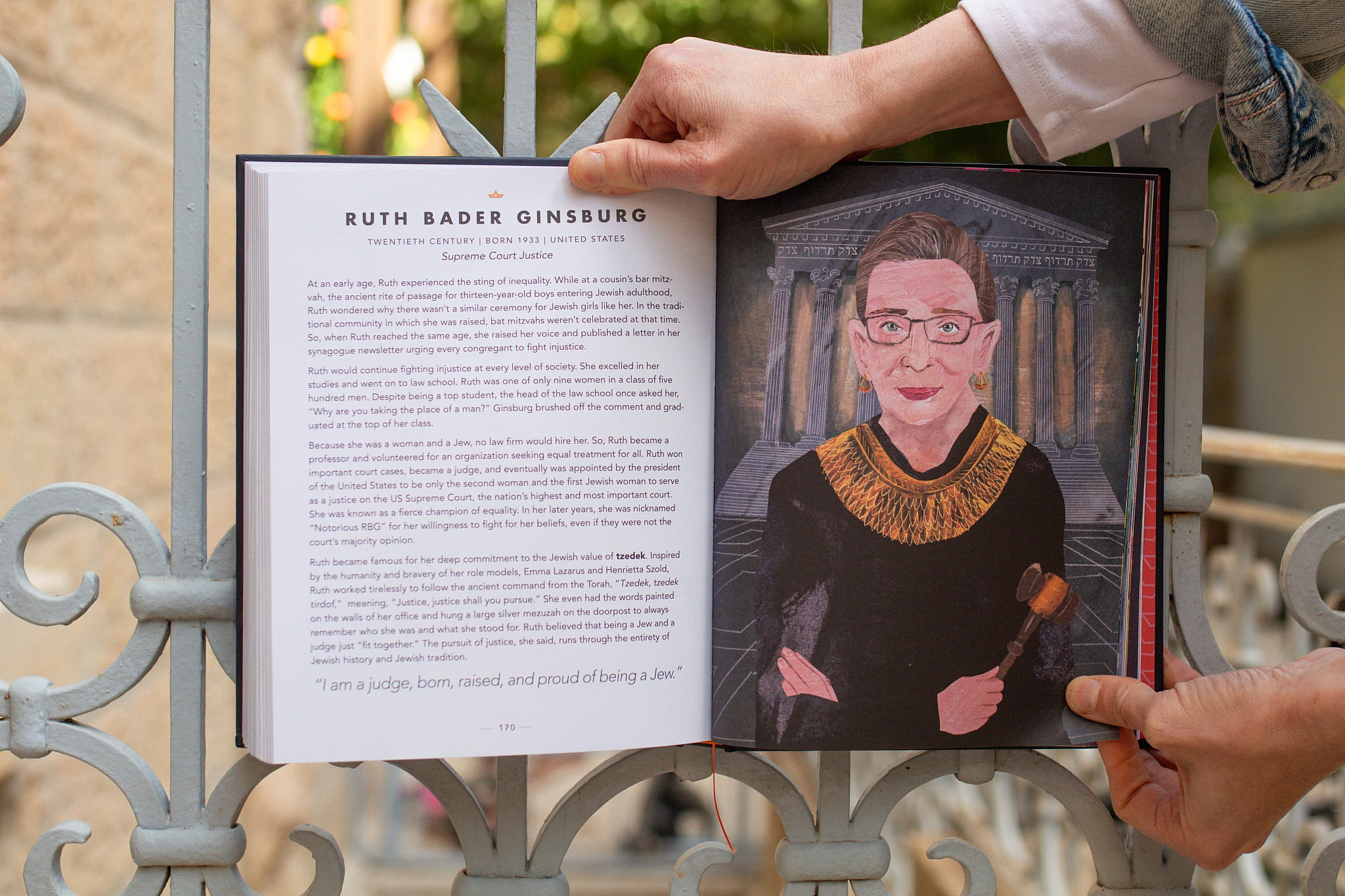
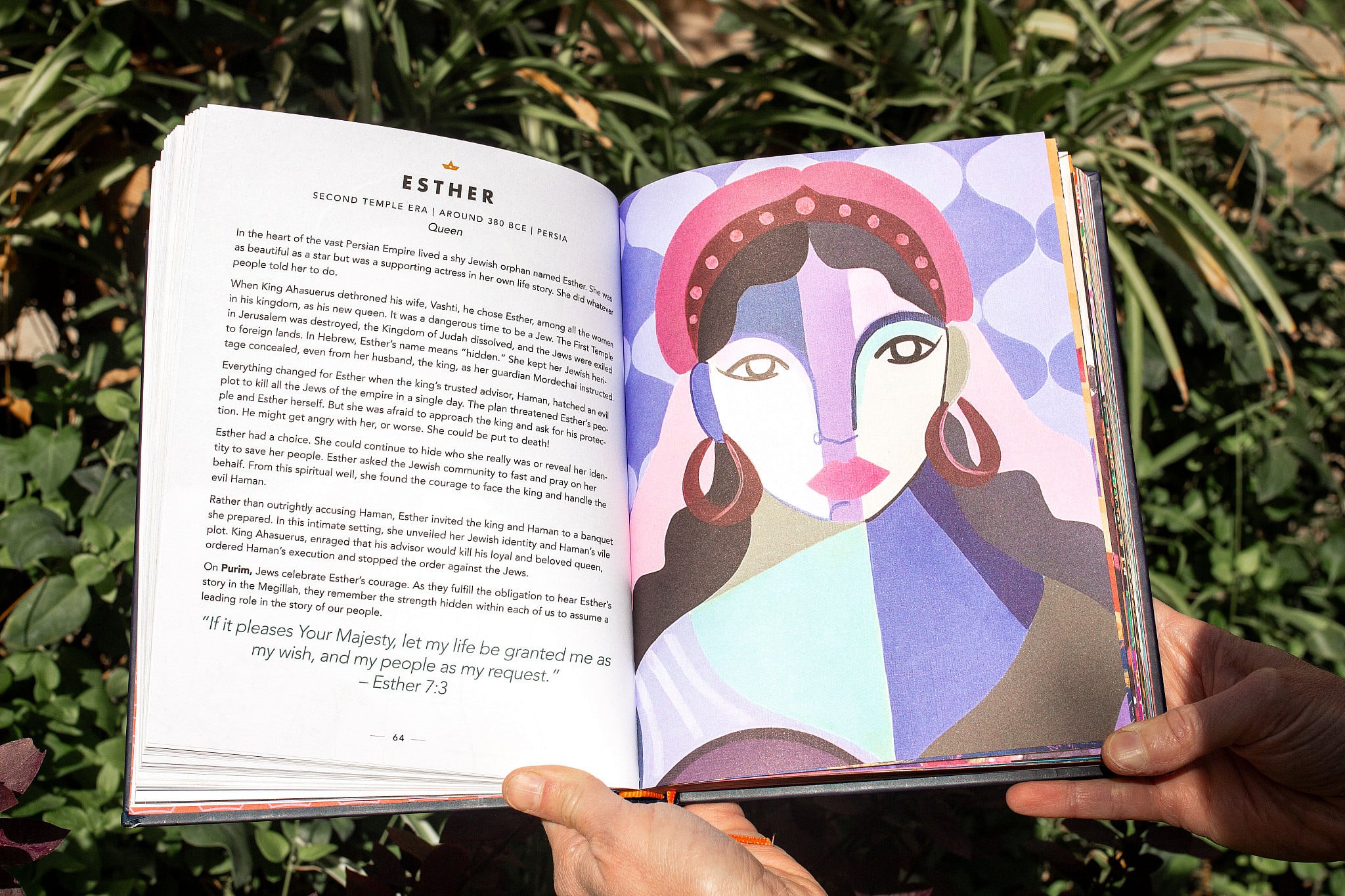
Published in 2024, Chutzpah Girls tells the stories of one hundred astonishing Jewish women spanning from ancient history to present day. Each awe-inspiring tale is accompanied by a vibrant original portrait—bold illustrations created by twelve female Jewish artists with diverse creative styles and backgrounds. In the coming months, these portraits are set to be featured in art exhibitions in major cities across the United States.
Co-authors Julie Esther Silverstein and Tami Schlossberg Pruwer define chutzpah as “a Jewish superpower” and highlight the daring stories of matriarchs, activists, scientists, writers, performers, athletes, warriors and more. They explain, “The women in this book show us that different moments demand distinct forms of chutzpah if we are to defeat darkness and spread our light.”
If the past two years have taught me anything, it’s that chutzpah never goes out of style. I loved learning more about this project from Julie and Tami.
Leah Grossman: Tell me about the process of writing this book—what sparked the idea? How did the events of the world (and your personal lives) influence the journey and final outcome?
Julie Esther Silverstein: Chutzpah Girls began as a conversation between two Jewish moms who wanted our daughters to grow up with powerful Jewish role models. We looked around and saw wonderful books about women in general, but very few that featured proud, unapologetically Jewish heroines from across our global and diverse tradition.
I was raised by strong Jewish women—my mother was a first-generation immigrant who became a doctor of pharmacy and later a rabbi and cantor. My grandmother, as a child in Nazi Germany, once stood up to the Gestapo to free her father from unjust imprisonment. These stories of courage shaped me—and yet I rarely saw women like them in the center of our Jewish storytelling.
The turning point came after my older kids celebrated their B’nai Mitzvah. My son and daughter prepared in exactly the same way, but the gifts they received told a different story—sacred texts for him, jewelry for her. That moment made me realize how deeply gendered our expectations still are, even in modern Jewish life.
Tami and I met during the pandemic and began collecting stories of Jewish women who changed history—from Tanach to today. We wanted to show that chutzpah comes in many forms: defiance, vision, leadership, compassion. The events of October 7th only underscored our mission: to celebrate the resilience, creativity, and strength of Jewish women across time and continents. This book is our gift to the next generation—to inspire them to live with pride, purpose, and chutzpah.
Tami Schlossberg Pruwer: Similarly to Julie, it was the dissonance that stirred something in me. The tension between the legacies of strong matriarchs in my own family and the absence of Jewish heroines in the stories we were taught in Jewish educational settings.
Both of my great-grandmothers lived through dark and difficult times, yet met every challenge with extraordinary resilience and chutzpah. One fled the Nazis with young children and defied all odds to reunite her family in Switzerland. The other shattered glass ceilings and social norms by becoming the first female Jewish entrepreneur in Seattle. A bold move to provide for her family and ensure her children’s education as a young single mother.
These women did the impossible. And their strength wasn’t random, it was inherited. A testament to the intergenerational grit, gifts, and faith that have allowed Jewish women for centuries to safeguard their families and preserve tradition.
So why weren’t their stories being told?
When my first daughter was born, named after both of these remarkable women, I knew our bedtime stories needed to include heroines from our heritage. And if those stories weren’t written down, we would have to tell them ourselves.
Leah: In the book, I love that you share which Chutzpah Girl is your favorite. Though I have an affinity for many (as I’m sure we all do), I carry a deep admiration for those who displayed extraordinary strength and intellect on October 7th. Among these heroes is Rachel Edri—referred to as the “Cookie Warrior” because of her remarkable story which you share in the book:
When five terrorists broke into her home, Rachel had the clarity of mind to diffuse their hostility with kindness. She fed them the cookies meant to be enjoyed for her husband’s birthday, treated their wounds, and kept them distracted for hours with her hospitality—all while covertly communicating with police outside her home. “Armed with nothing more than cookies, tea, and quick thinking,” Rachel’s survival instincts shielded herself and her husband from the tragic ending so many others fell victim to that day. Rachel cleverly notes, “Anyone who is hungry is not in a good mood.” She is now known throughout Israel by the nickname “Cookie Savta.”
As a former pastry chef (and a mom who understands the dangers of being hangry) I find Rachel’s impromptu ingenuity brilliant and incredibly impressive. Can you elaborate on your favorites and the reason their stories resonate with you?
Julie: It’s nearly impossible to choose favorites among the 100 extraordinary women in Chutzpah Girls, but two in particular continue to stay with me—each embodying a different, equally powerful form of courage.
Zivia Lubetkin was one of the only women on the high command of the Jewish Fighting Organization during the Warsaw Ghetto Uprising. Facing impossible odds, she helped lead young Jewish fighters armed with pistols and homemade grenades against Nazi tanks and flamethrowers. When the uprising was crushed, she led survivors through the sewers to safety. But Zivia’s chutzpah didn’t end there—after the war, she made aliyah, helped smuggle Holocaust survivors to Israel, and co-founded Kibbutz Lohamei HaGeta’ot, a community built by and for survivors. Her legacy lives on through her granddaughter, Roni Zuckerman, the first female jet pilot in the Israeli Air Force. One generation fought in the sewers; the next soared through the sky. That’s Jewish continuity through chutzpah.
Then there’s Glückel of Hameln, a 17th-century Jewish woman who became a successful businesswoman after her husband’s sudden death—all while raising her 14 children through times of financial and communal instability. What makes Glückel extraordinary is that she also wrote. Her handwritten memoirs in Yiddish—part diary, part ethical will, part historical record—were intended for her children, not public acclaim. But they’ve endured as one of the earliest firsthand accounts of Jewish women’s lives in early modern Europe. Glückel understood that preserving our stories is itself an act of defiance, a way to anchor identity across generations. And remarkably, her great-granddaughter went on to become Bertha Pappenheim, founder of the Jewish feminist movement in Germany.
Tami: It’s almost like asking us to choose a favorite child! Still, it’s only natural that some stories resonate more deeply than others. That’s exactly why diversity was so central to our vision when writing the book.
The women featured in Chutzpah Girls are Sephardi, Ashkenazi, Mizrahi, Bukharan, Persian, Indian, Yemeni, and Ethiopian. They come from over 33 countries, span diverse time periods and geographies, and represent a wide range of contributions and callings. We wanted every Jewish child to find a piece of themselves in these pages, to feel seen, inspired, and empowered by a story that reflects their own roots, hopes, or dreams.
One story that particularly moves me is that of Flora Sassoon, a 19th-century Jewish businesswoman of Baghdadi heritage, raised in India. She was the first woman in her family to run their global business empire, and she did so with remarkable skill and integrity. Despite the demands of business, she upheld a deeply committed Jewish life—hosting kosher banquets for world leaders, maintaining correspondence with prominent rabbis, and advocating fiercely for Jewish causes.
Flora was not only a philanthropist, she was also a social reformer, especially for women. In India, she pushed back against the restrictive Purdah laws, advocating for the dignity and freedom of women to be seen and heard. As modern Jewish women juggling countless responsibilities, it’s powerful to look back and draw strength from those who not only carried the weight of their own communities but also built bridges across cultures, faiths, and generations.
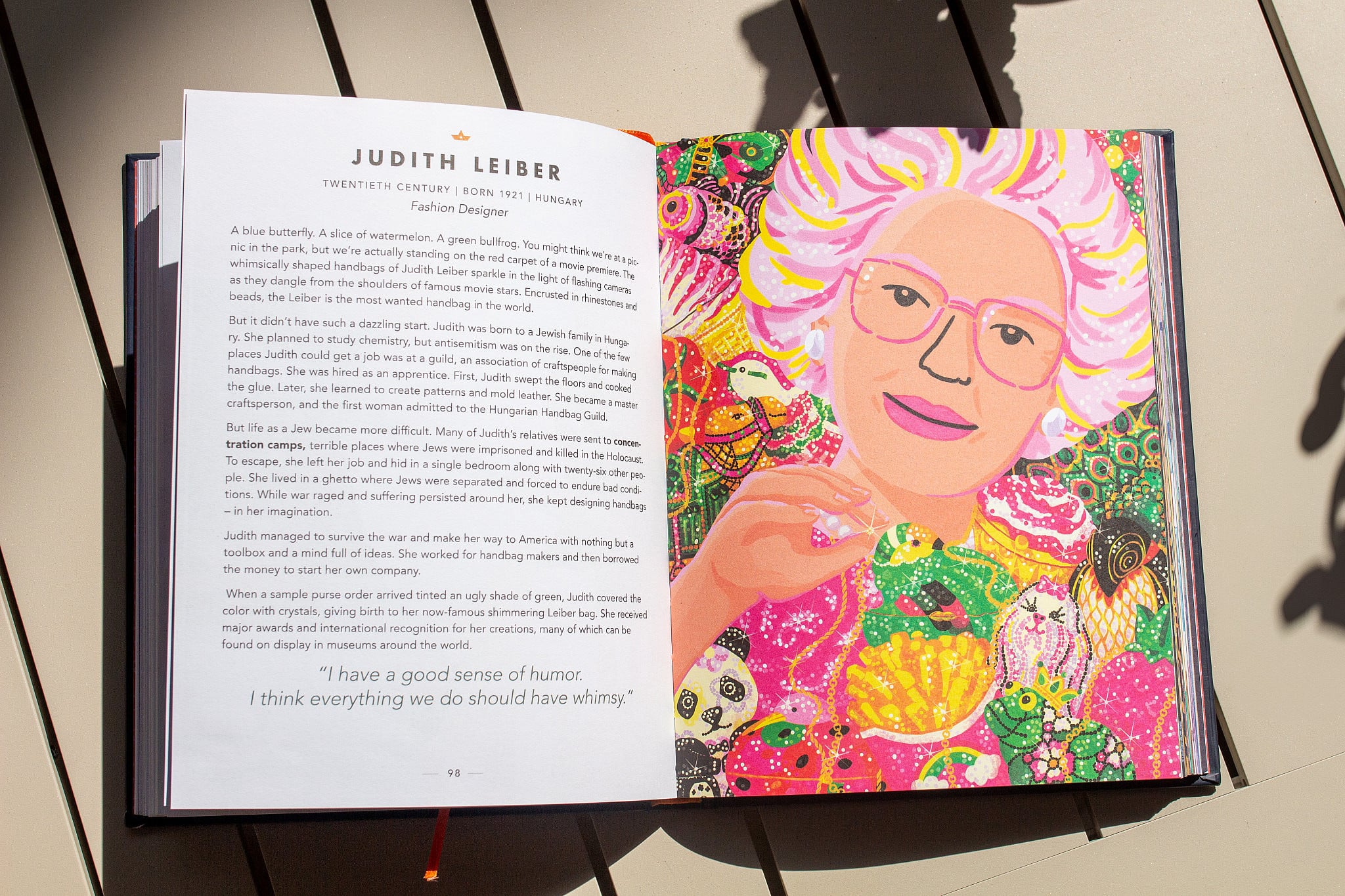
Leah: The vibrant portraits featured in Chutzpah Girls cover a diverse array of artistic styles. What was your process for finding the female Jewish artists who contributed their beautiful work to the book? How was it determined which artist would create which portraits?
Tami: The art is a central part of the reader’s experience. Our stories aren’t full biographies, instead, each one zooms in on a pivotal moment of challenge, when a woman’s chutzpah transforms adversity into legacy. It’s in those moments that she makes her mark and helps shape a better world.
The art allows us to transcend the limitations of the written word, helping the reader step fully into her world, bold, vibrant, and alive. As Picasso once said, “I don’t say everything, but I paint everything.” That quote captures the very essence of what we hoped the art would bring to this book.
That’s why it was so important for us to work with a wide range of artistic styles and mediums—from traditional painting to paper cutouts, hand-dyed papers, digital collage, and mixed media. We were privileged to collaborate with twelve extraordinarily talented Jewish female artists from around the world, each contributing their unique vision and creative voice. Portrait assignments were thoughtfully matched to each artist according to their artistic background and individual visual style.
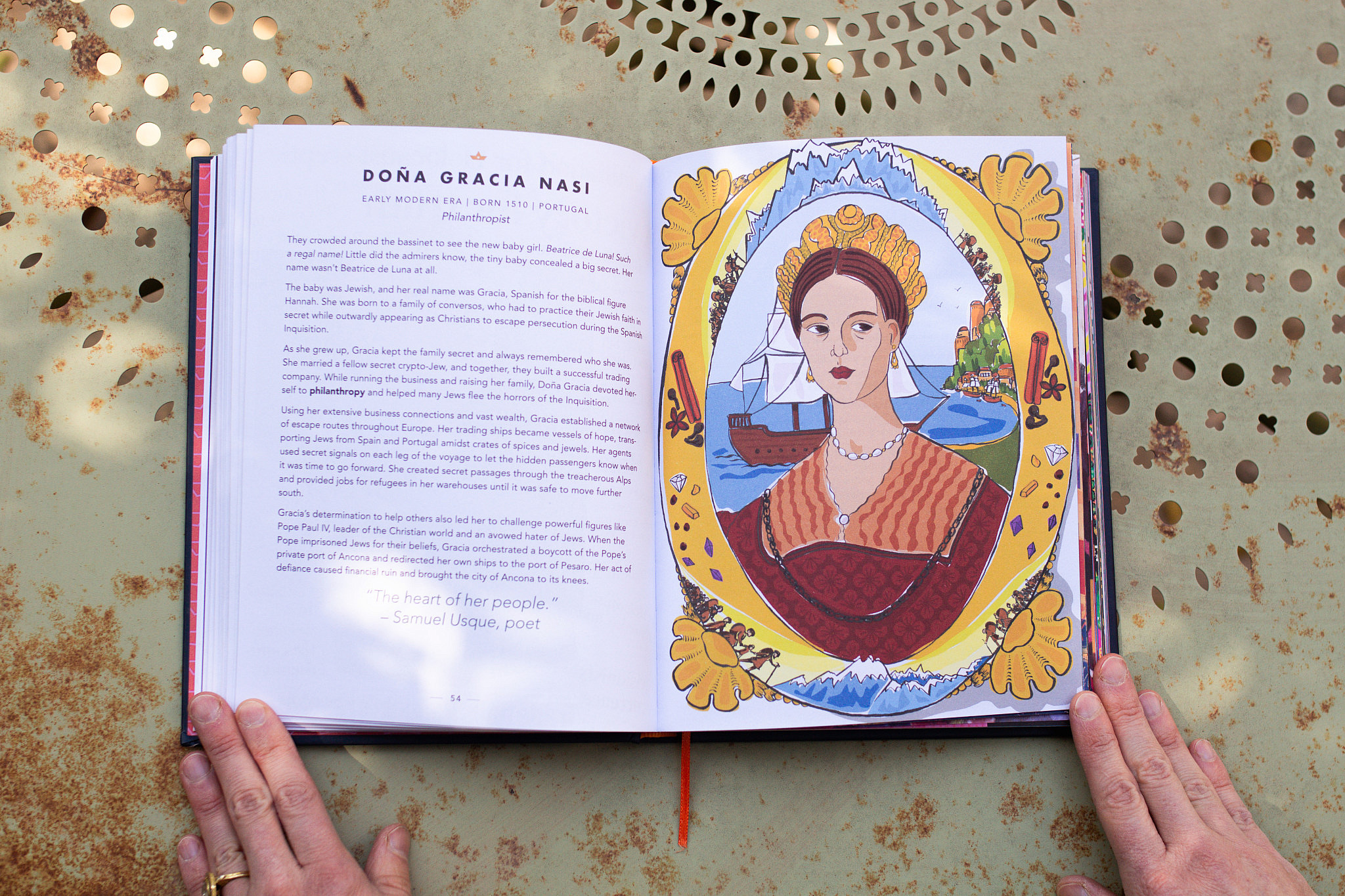
This is a book about Jewish women, by Jewish women, and those creative relationships were meaningful in themselves. One story that never fails to move me involves UK-based artist Tilla Crowne, who was assigned to illustrate Doña Gracia Nasi, the 16th-century businesswoman and philanthropist who saved thousands of Jews from the Inquisition.
As it turned out, Tilla belongs to a Sephardic community in the UK founded by descendants of the very Jews saved by Doña Gracia’s bravery. This profound connection, uncovered through the creative process, is a beautiful reminder of our shared history, and the invisible threads that bind Jewish women across generations, continents, and centuries.
Leah: It’s exciting that these portraits are being showcased in new arenas. Tell me about the pop-up exhibitions that will feature this artwork.
Julie: The Chutzpah Girls art exhibit brings the portraits of daring Jewish women off the page and into public space. We created a traveling digital exhibit of all 100 portraits from the book, which communities can print locally, which makes it both accessible and adaptable. The exhibit is ideal for display in JCCs, schools, synagogues, federations, libraries, or galleries and it’s especially powerful during Women’s History Month or anytime of year programming.
We’ve already exhibited or committed to exhibits in New York, Detroit, Atlanta, Chicago, and Florida, and we’re working with many more communities for 2026 and beyond. At each installation, the exhibit becomes a conversation starter—a place for people of all ages to explore Jewish pride, women’s leadership, and the range of Jewish diversity. We also offer keynote talks, teen and intergenerational programs, as well as hands-on workshops to deepen the experience.
JCC Chicago will be launching a year-long collaborative residency, beginning in January 2026, to bring the daring stories of the Chutzpah Girls to communities across the entire state of Illinois. Included as part of JCC Chicago’s Growing Hope programming, the Chutzpah Girls residency will feature an interactive art exhibit that will travel to libraries, universities, community centers, schools, churches and other community gathering spaces, teen programming, story-corps-style recording booths where members of the community can commemorate the stories of the Chutzpah Girls and Chutzpah Champs in their lives, and much, much more. In marking 2026 as JCC Chicago’s “Year of the Chutzpah Girl,” an anticipated 100,000 people will be touched by the beautiful and bold legacies of this remarkable sisterhood of Jewish women.
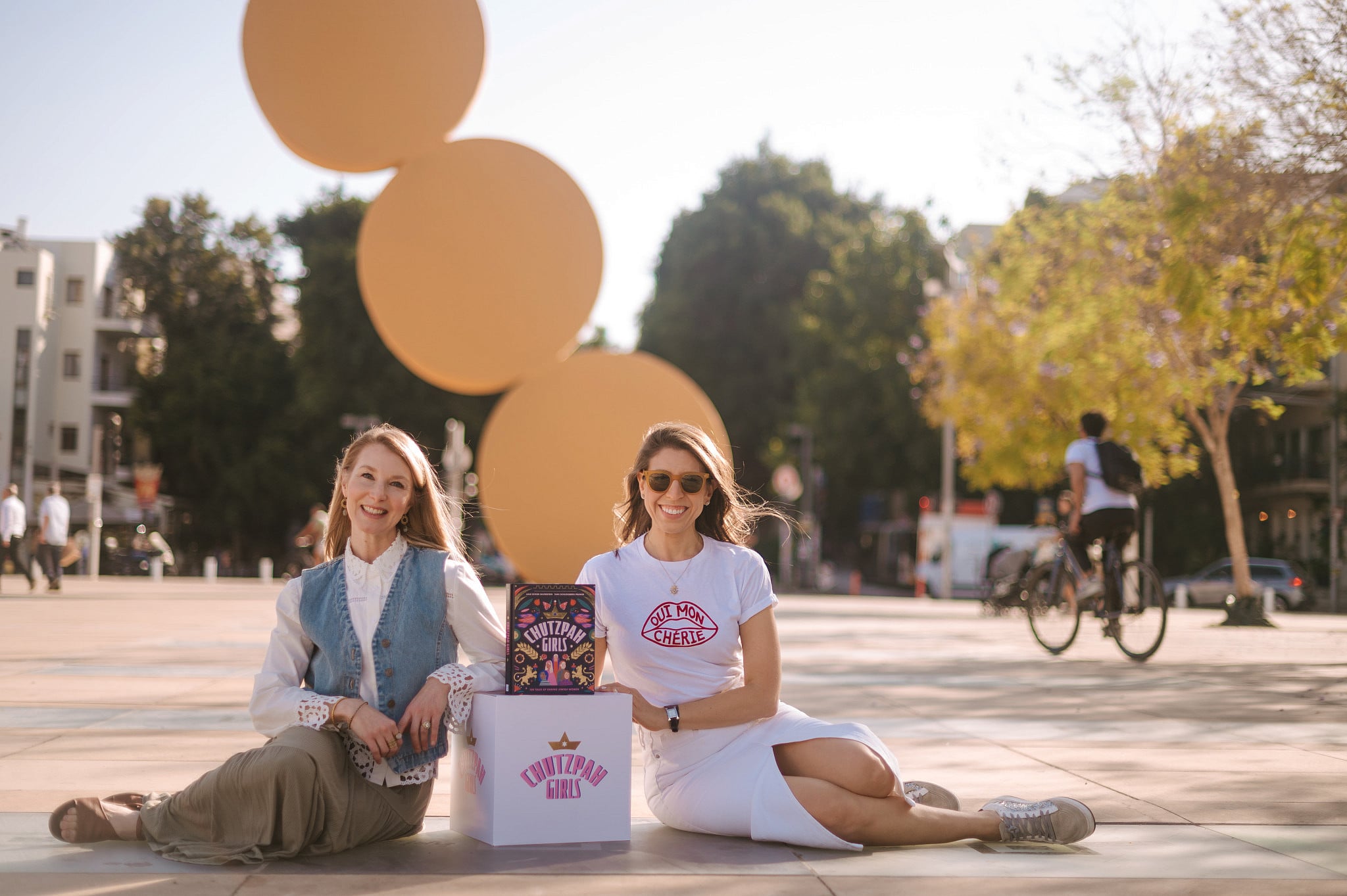
Featuring portraits as dynamic and bold as the women they portray, these exhibitions are sure to inspire chutzpah in every city they travel to.
Email info@chutzpahgirls.com to bring the exhibition to your community!
Chutzpah Girls is available online, and at select local bookstores with forthcoming translations in Hebrew, French and additional languages. Learn more at chutzpahgirls.com.