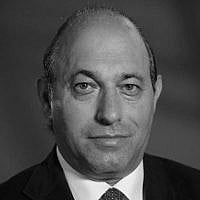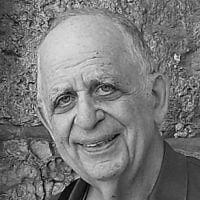
Claude Cohen-Tannoudji (1933-2026): A ‘Mensch’
I had the singular privilege of approaching Claude-Cohen Tannoudji over decades in a possibly lesser-known area of his activity and thought, nevertheless one of those where traits generally considered on the one hand specific and on the other an aspiration for the universal do come together in radiant unity. He was, and indeed remained throughout his life, an unwavering supporter of the young state of Israel, whose extraordinary scientific emergence he publicly and actively supported throughout his life in all disciplines, at the forefront of which stood his beloved physics. The man and the physicist revealed themselves here in perfect symbiosis and he literally radiated joy and a sort of juvenile. His example and his support will be lacking in the currently and probably lastingly adverse circumstances that we are going through in all areas, including a School and a University in crisis so dear to him and now exposed to the rising of all dangers. All manner of causes are in fact connected and at play here for better or worse and it is not showing any ethnocentrism to put at the ultimate and deepest one the fight against an anti-Semitism of shock or atmosphere which always found Claude Cohen-Tannoudji on its way as an ontological as well as an active fighter, very much in the best and somewhat forgotten by many tradition of his dear Ecole Normale Supérieure from the days of Lucien Herr[1] and of the Dreyfus Affair.
What better true to life laboratory could there be for the “spiral”[2] connecting fundamental and applied science, a concept he theorized and advocated effectively, than this young nation, where the most basic research is inextricably linked to the economic and societal challenges of the high-tech sector ?
Through his actions and his tireless personal commitment, he embodied a perfect synthesis: secularism[3], the republican spirit inherited from the Enlightenment, and a proudly affirmed Zionism. He was, indisputably, a standard-bearer, modest to the point of humility, yet radiant through his deeds rather than his words, for those “Jews of the Republic.” These individuals largely moved away from the gilded halls of the Republic where their predecessors once distinguished themselves[4], choosing instead the austerity of the laboratory, thus leaving a deeper and more enduring mark on our societies. This evolution, of which he was an exemplary participant and representative, reconciles at the highest level the tradition of study, with all its demanding and relentless rigor, and a commitment to the broader community, rooted in a universalist ideal where the Haskalah[5] and the Enlightenment meet at their very best. I was a direct witness to this, perhaps one of the people closest to him in a dimension that is by no means minor, and which profoundly unifies all aspects of a person, over a very long period, spanning from the late 1980s until the last few years, when his state of health unfortunately led him to withdraw from public life. I have remained deeply grateful to him for his illuminating example and drive out of the safe haven of a purely confined scientific life disconnected from larger issues.
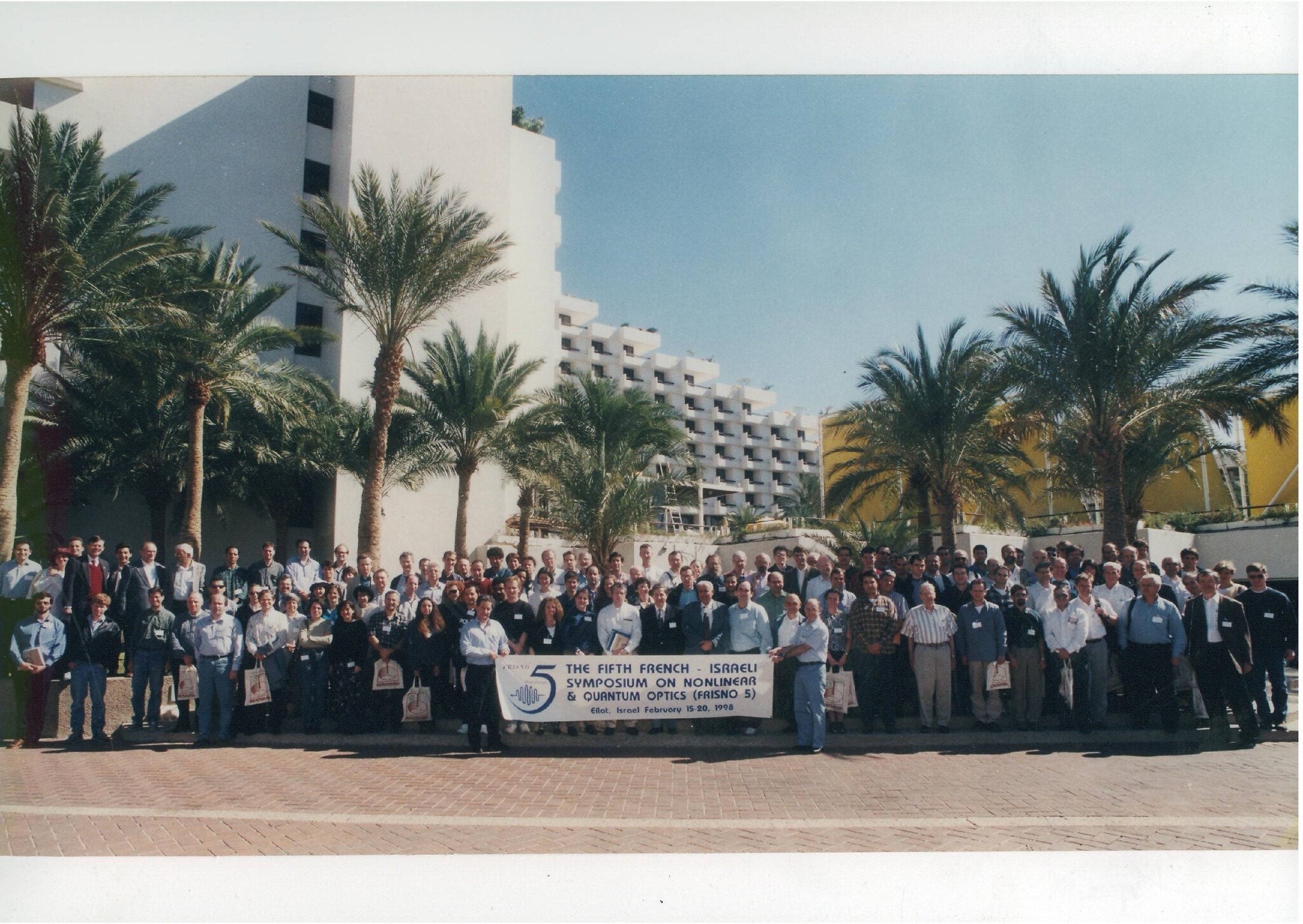
I had reached out to him some forty years ago at the very inception of that wonderful human and scientific endeavor to this day of the FRISNO (French-Israeli Nonlinear and Quantum Optics) binational conference series. He responded immediately with enthusiasm, placing his full trust in the project and lending it both the weight of his personal prestige and his own active participation, an undertaking whose significance he grasped instantly, even though its success was by no means guaranteed. The international reach of the conference quickly extended well beyond the founding nations; this was achieved almost from the start, thanks in large part to his ability to inspire others, as well as the radiance of his personality and his scientific body of work—efforts bolstered by other eminent colleagues, too numerous to list here. Over the course of some three decades until his health precluded it, he did not miss a single conference, becoming its primary rallying point, both human and scientific. We all remember his brilliant lectures; as an educator without peer, he had a gift for making complex topics engaging and accessible to the diverse audiences that attended FRISNO over those three decades. It has been our distinct privilege to hear, directly from him, the unfolding story of “dressed atoms,” the slowing of atoms, and Bose-Einstein condensation—a narrative he would revisit and refine for us every two years, updating the models, experiments, and applications. While he could have simply reviewed his foundational work, he made a point of refreshing his presentations, incorporating each time his latest breakthroughs and those of his team.
He held a special affection and interest for two jewels of Israel’s burgeoning scientific landscape: the Weizmann Institute and the Technion. Both institutions, in turn, honored him with their most prestigious awards. Whenever Israel faced surges of hostility or attempts at boycotts, all phenomena that have punctuated the history of the young nation, or when the atmosphere in certain official French circles turned particularly heavy toward Israel, he never hesitated to speak out firmly against such manifestations of insidious hostility. I recall that he was always ready to step up whenever I brought to his attention, all too frequently, alas, some hostile statement or action that required a swift and effective response. Rather than relying on grand speeches, he preferred to commit himself personally, making countless trips and extended visits to Israel, most notably during periods when the combination of physical danger and the threat of defamation served as powerful deterrents.
Allow me to recall an episode from his life that he would often recount, for this modest, warm-hearted man, who so perfectly embodied the finest aspects of French culture, would also, with a touch of understated humor, let slip a faint, distinctly southern flavor, perceptible to a discerning ear. He liked to share that he came from a traditionalist family in Constantine, which had prospered in the fabric trade until the horrendous pogrom of August 1934, an event marked by brutal murders and the destruction of Jewish-owned property, shops, and homes. The police, despite being well-informed in advance, failed to intervene in time to prevent the violence, and his non-Jewish neighbors who remained entirely unharmed, likewise did nothing to help. Overnight, these events plunged his family from a relatively privileged social standing into poverty, forcing it to move into an unsanitary cellar; there, one of his sister’s contracted tuberculosis, which led to her premature death. It was in this environment that Claude Cohen-Tannoudji spent his earliest childhood, before his family moved to Algiers a few years later, for his father to take a modest position as a civil service accountant of modest rank. This early experience, of which he spoke openly, never hiding nor repressing it, was undoubtedly a defining moment in his life. I can scarcely imagine his reaction or the suffering he must have felt upon learning of a much more recent pogrom, one that could only have served as an echo to that original, foundational family trauma. And this occurred within the very country he loved and supported, in the name of the sentiment “never again”—a principle that we all, he perhaps most of all, had the generous naivety to believe was widely shared. I fear that these events may have cast a shadow over the final years of a generous man—a man open to the beauties of life and ideally equipped to savor its fruits to the fullest.
Perhaps one of the last exemplars of those “Jews of the Republic”—steadfast in the republican values he embodied in the truest sense, and entirely opposed to any form of narrow, insular communalism—he was, in the fullest sense of the word, a Zionist through his actions rather than mere declarations of intent. He was remarkably tireless and active within his sphere of influence, proudly upholding—to the very end—a label that has, in many quarters, become a term of opprobrium, even within certain circles of his beloved alma mater. He never fell into the trap of conflating the missteps of any particular government or political party with the absolute, existential legitimacy of the State of Israel. I do not know whether this somewhat politically incorrect tribute will find its place alongside others—far more authoritative—that focus on the strictly scientific aspects of his work. Regardless, I am certain he would have appreciated a tribute to what was, perhaps, the cornerstone of his fine, deeply integrated character—a character unified around both science and universal Jewish values.
All of this existed without the slightest contradiction, in perfect harmony with his universalist humanism and his personal political stance as a man of the Left. I shall miss him as will we all, moreover so at a time when his advice and his example would have been more than ever needed. May his memory be a blessing.
Joseph ZYSS
Physicist and Professor Emeritus at the École Normale Supérieure Paris-Saclay
Founder of the FRISNO conferences and the CNRS-Weizmann binational laboratory, NaBi (NAnoBIophotonics)—now known as Imaginano.
–
[1] Historians will do a better job in recalling the role played over generations of students at ENS by its chief librarian Lucian Herr and such leading figures as Jean Jaures or Charles Péguy. No such massive commitment for this worthy cause can be identified in other sanctuaries of the French elite, and certainly not in the rival Ecole Polytechnique (to which Dreyfus, also the perfect republican, paradoxically graduated from). Claude Cohen-Tannoudji liked to tell that having been admitted at Ecole Polytechnique at his first attempt to enter one of the « Grandes Écoles », his father warned him against the looming atmosphere at the time at Ecole Polytechnique and advised him to spend another year to apply to Ecole Normale Supérieure where he would not have to face this kind of prejudice, not to mention its unambiguous focus on fundamental science in contrast with engineering and administration at Polytechnique. Laurent Schwartz was another major scientist and intellectual luminary of our times whom Claude Cohen-Tannoudji admired and to whom he related to devoted the second part of his career to bridge the gap between the two entities with moderate success. Here is not the place to develop the major influence that Schwartz had nevertheless on a minority of students of Ecole Polytechnique which were later driven to research, some of them to physics which unavoidably lead them in contact with Claude Cohen-Tannoudji as another major pole of reference, be it human, scientific or both.
[2] He advocated a flexible approach to governance for fundamental research, steering clear of any rigid programming—a field where outcomes are very likely, yet unpredictable. These principles were set out in an article in Le Monde in 2003, and subsequently included the following year in the proceedings of the Assises Nationales de la Recherche (National Research Conference).
[3] Better named in French, « laïcité », a concept and practice conceived and implemented in French society by an epoch making 1905 law that has no equivalent in the rest of the world and has so far withheld the trial of time. Claude Cohen-Tannoudji epitomized laïcité at its highest level and it may be considered to be at the deepest core of both the public and the private person in full accord. Claude Cohen-Tannoudji’s modesty would likely have prevented him from acknowledging that he belongs at this level.
[4] Suffice it to name Leon Blum and Pierre Mendes-France, George Mandel or René Cassin together with such tutelarian XIXth century figures as that of Crémieux and Dreyfus together with the constellation of Jews which fought alongside Dreyfus. Very much in the wake of Durkheim in sociology, Raymond Aron in Political Science, Henri Bergson in Philosophy or Marc Bloch in History, Claude Cohen-Tannoudji in Physics epitomized the outstanding contribution of « Republican Jews » in public and intellectual life, all of them somehow undeniably linked to their origin, each in his own way neither in a posture nor in denial, endorsing no concession to any form of communautarism. The humility that was one of Claude Cohen-Tannoudji’s most striking character traits would surely have prevented him from seeing himself as belonging in this gallery but here, as elsewhere, no one is a good judge of one’self.
[5] A neo-Spinozist movement that helped introduce critical scientific study and a spirit of modernity into traditional Judaism—a movement that played a major role in the emancipation of Jews and their rapid integration into modernity, all while maintaining a connection to their traditional roots. Within his own sphere of activity—and extending well beyond it, thanks to his broad influence and openness—Cohen-Tannoudji can be seen as a shining example of this movement, which remains more vibrant than ever.