
A Door Is Not a Red Carpet. At the Met, It Isn’t Even a Metaphor.
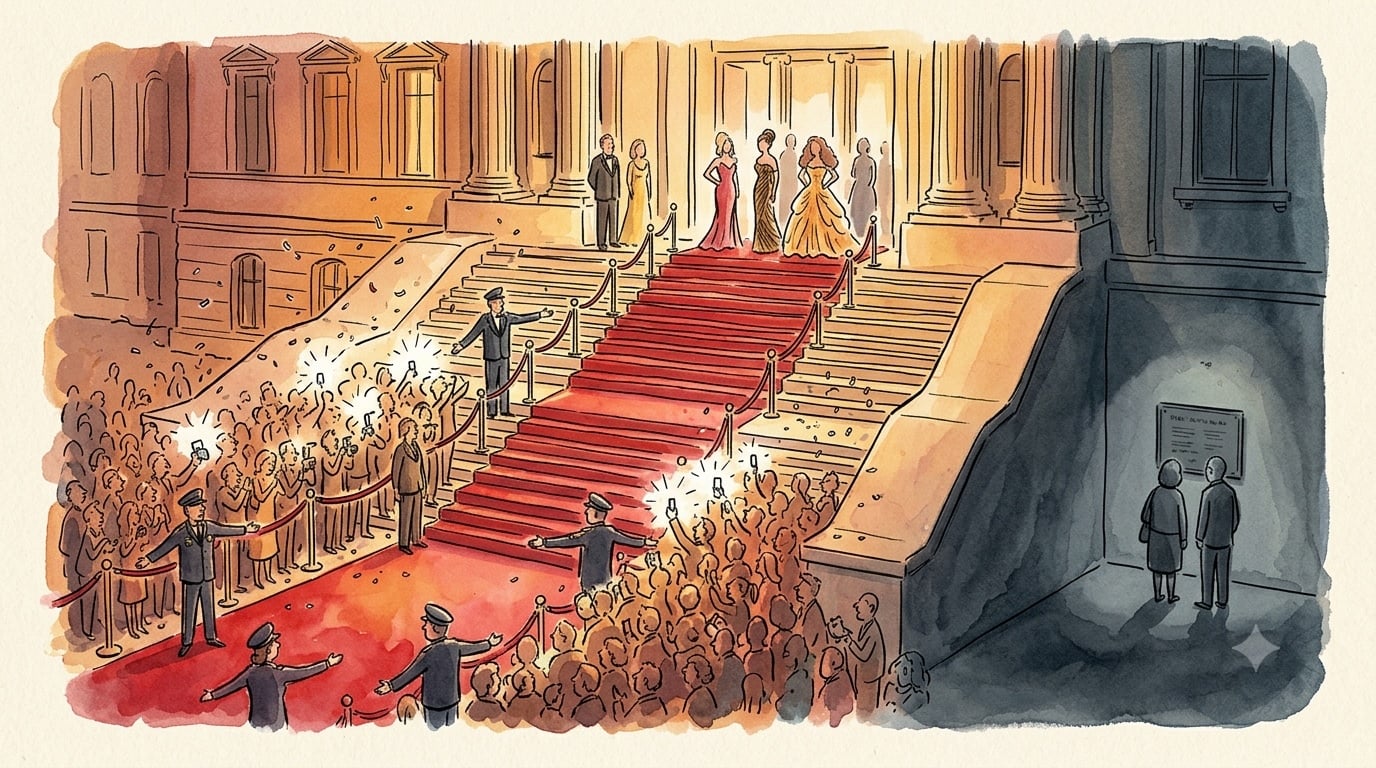
Judaism says he can come back. It never said we have to throw him a party.
Every first Monday in May, my group chat becomes a panel of unpaid fashion critics. We rank the dresses. We screenshot the disasters. We argue about whether the theme was even a theme. It is a deeply stupid tradition, and I have never missed it.
Next spring we’ll be watching the same carpet, rolled out for a man a French court once convicted for telling a woman at a bar that she had a “dirty Jewish face.”
The Met recently announced that its 2027 Costume Institute show is a John Galliano retrospective, opening with the Gala. The conviction came in Paris in 2011, for public insults based on origin, religion, race or ethnicity. He told the man beside her he was a “f***ing Asian bastard” and asked whether he had his papers. On video, to a table of strangers, he said he loved Hitler and that their mothers and forefathers would be gassed.
We’ve now spent a week and a half arguing about whether he’s forgiven. The ADL says yes. A repentance scholar says not so fast. Rabbis on both sides, all serious.
And he already did the apology tour. Dior fired him in 2011. Then treatment, meetings with the ADL, study with a rabbi, Auschwitz. By 2013 Abe Foxman was asking retailers to stock him again. This spring, a deal with Zara. Next spring, the Met.
It’s a real argument. It isn’t the one keeping me up, because we’ve lost track of the difference between opening a door and rolling out a carpet.
At the Met, that isn’t even a metaphor.
What I Said in June, and Still Mean
In June, after a post of mine reached him, Dave Matthews read a statement about antisemitism from a stage in Raleigh to twenty thousand people. It was half right and half dodge, and I said so.
I also said something I still believe: nobody ever changes unless the people demanding the change leave a door open wide enough to walk through. Demand change and then sneer at the first imperfect attempt at it, and you were never asking for change. You were asking for a villain you get to keep.
I’d write it again today.
A door is not a carpet. One lets a person come back. The other puts his name on the invitation.
Teshuvah Is Not a Punch Card
We’ve started treating return like probation—do the hours, get the paper signed, and the community owes you a warm welcome back and maybe a keynote. That isn’t what the word means. And you don’t have to be religious to use this one—Rambam, the medieval rabbi whose name floated past most of us in Hebrew school and never got explained, set the test a lot higher than a checklist. You’ve done teshuvah when you’re standing in the same room, with the same chance to do the same thing, and you don’t. Same bar. Same night. Same opening. Different call.
It’s a state, not a schedule. If you’re doing it because it gets you something back—a job, a booking, a room that stops being angry at you—it was never teshuvah. It’s a rebrand with a rabbi in the photo.
A redemption arc, meanwhile, is a screenwriting device. Professor Snape gets seven books, an unbreakable vow, a vial of memories, and a lifetime of loving Lily Potter to explain the whole thing. Darth Vader gets six movies and a dying breath. Somebody wrote those turns to land in the last act, where you could watch. Real life has no writers. Real life has a notes app, a publicist, and a booking calendar—and we keep accepting all three as evidence.
The Bar, and Where We Set It
Elon Musk. In November 2023 he replied “You have said the actual truth” to a post claiming Jewish communities push hatred against white people. Advertisers ran. Twelve days later he was at Kfar Aza in a flak jacket with Netanyahu, watching the forty-three-minute reel cut from the terrorists’ own body cameras. Then he flew home and told Andrew Ross Sorkin, unprompted, “It wasn’t some apology tour. I want to be clear.”
He was right. Auschwitz with Ben Shapiro came next, then his own chatbot naming itself MechaHitler. I’m not defending him. Israel made him look at something real, and it still didn’t take.
So much for the site visit as proof.
Mo Khan. May 2025, a group at Dave Portnoy’s Philadelphia bar got the bottle-service sign lit up to read “F*** the Jews.” Portnoy offered the kids a paid trip to Poland instead of ending their lives online. Khan said yes on the phone Sunday. By Monday he was a “citizen journalist” who had only filmed it, and the offer was pulled. Then came the Holocaust denier’s podcast, the agreement that his ordeal proved “Jewish supremacy,” and a million tokens of a meme coin called $JPROOF. Jew Proof.
Portnoy left the door open. Khan walked the other way. And that got to be the end of it—no trip, no photo op, no ceremony. Which is how this is supposed to work and almost never does.
And then there’s Clavicular. I put him in a footnote in April, back when he was one of the boys in the Miami club singing along to “Heil Hitler” next to Nick Fuentes. Months later, in his own words: “I am not sorry. I don’t apologize for what I did. I would do it again today.”
In July we gave him Israel.
Not the ruins. Not Kfar Aza, not a survivor, not one uncomfortable hour. A twenty-two-year-old Chabad influencer put a Star of David around his neck at a beach hotel. A Netanyahu adviser turned up at his table in a Tel Aviv club and said the kid had apologized—privately, to him. The itinerary was nightlife.
He spent the stream making moves to kiss a soldier from the IDF Spokesperson’s Unit and talking about taking her to a hotel room, then walked off Israeli television demanding that they apologize to him. The survivor meeting never happened. Neither did the apology. He’s since announced a thirty-campus college tour for the fall.
Jewlicious called it: “This was never teshuva. It was a business decision with a Kotel shaped thumbnail.” And the only person punished in the whole story was the girl. She lost her post and got a suspended sentence. He got the necklace.
What We’re Actually Telling Them
Set Musk next to Clavicular. One was walked through a massacre site and shown the footage. It didn’t hold. The other got beach clubs and jewelry, and we called it a homecoming.
The bar didn’t just drop. It fell off the building.
The relief is the problem. Someone stops hating us out loud and we hand him a photo op before he’s said one true sentence. We keep hearing “he showed up” and writing down “he changed.” And every kid watching learns exactly what forgiveness costs with us: a flight, a necklace, a thumbnail.
How are the people who hate us supposed to learn to respect us if we won’t respect ourselves?
Galliano Is Not Clavicular
None of this closes the door. Judaism forbids cruelty toward someone who has genuinely done the work—refuse a real penitent and you become the one sinning. That applies to every name here, including the ones who’ve earned nothing yet.
After fifteen years, the people who walked Galliano through his apology tour are satisfied. Foxman came away saying he had “worked arduously in changing his worldview.” Rabbis who sat across from him this spring believed him. None of that is mine to overrule. Rambam says the standing belongs to whoever actually got hurt. In that bar it was three people. An art curator at the Arab World Institute, thirty-five at the time, told she had a dirty Jewish face and that she should die. A forty-one-year-old receptionist, the man who was asked for his papers. And a third woman, from an earlier evening at the same bar, who said he called her a “f***ing dirty Jew bitch.” The court gave each of them one symbolic euro. No one has asked them anything since.
Leave the Door. Lose the Carpet.
To its credit, the Met says the show won’t skip this. The curator has promised it will “directly address the rupture caused by his antisemitic, racist, and anti-Asian conduct,” conviction included. Somewhere in that building there will be a display about what he did.
Rambam also wants a wrong against another person said out loud; hiding it out of pride leaves the return unfinished. A wall that names the conduct, names the conviction, and plays the tape is more Jewish than a tasteful silence. So I’m not asking anyone to cancel anything. I’m asking whether that display will be prominently featured in the first room you walk into or hidden on a plaque by the gift shop in forty words of gray type.
I’ll keep the door open. For the designer, the rock star, the streamer, the kid with the sign—because people do change, and I refuse to be part of a movement that bets against it.
Just stop confusing the door with the carpet. A door costs us nothing. A carpet costs a ticket, a necklace, a gallery, a guest list, and it gets rolled out before anyone has proven a thing.
We can forgive a man without making him the theme of the party.
Next spring they’ll roll out the red carpet on the steps of the Met, and my group chat will be watching like always. We’re not boycotting—we’re not giving up the first Monday in May on his account, and we’ll be ranking the dresses same as every year. We’ve given up plenty this decade. Just don’t call it forgiveness. That was never ours to give.