
I worked at Britain’s embassy in Israel. The East Jerusalem consulate had to go
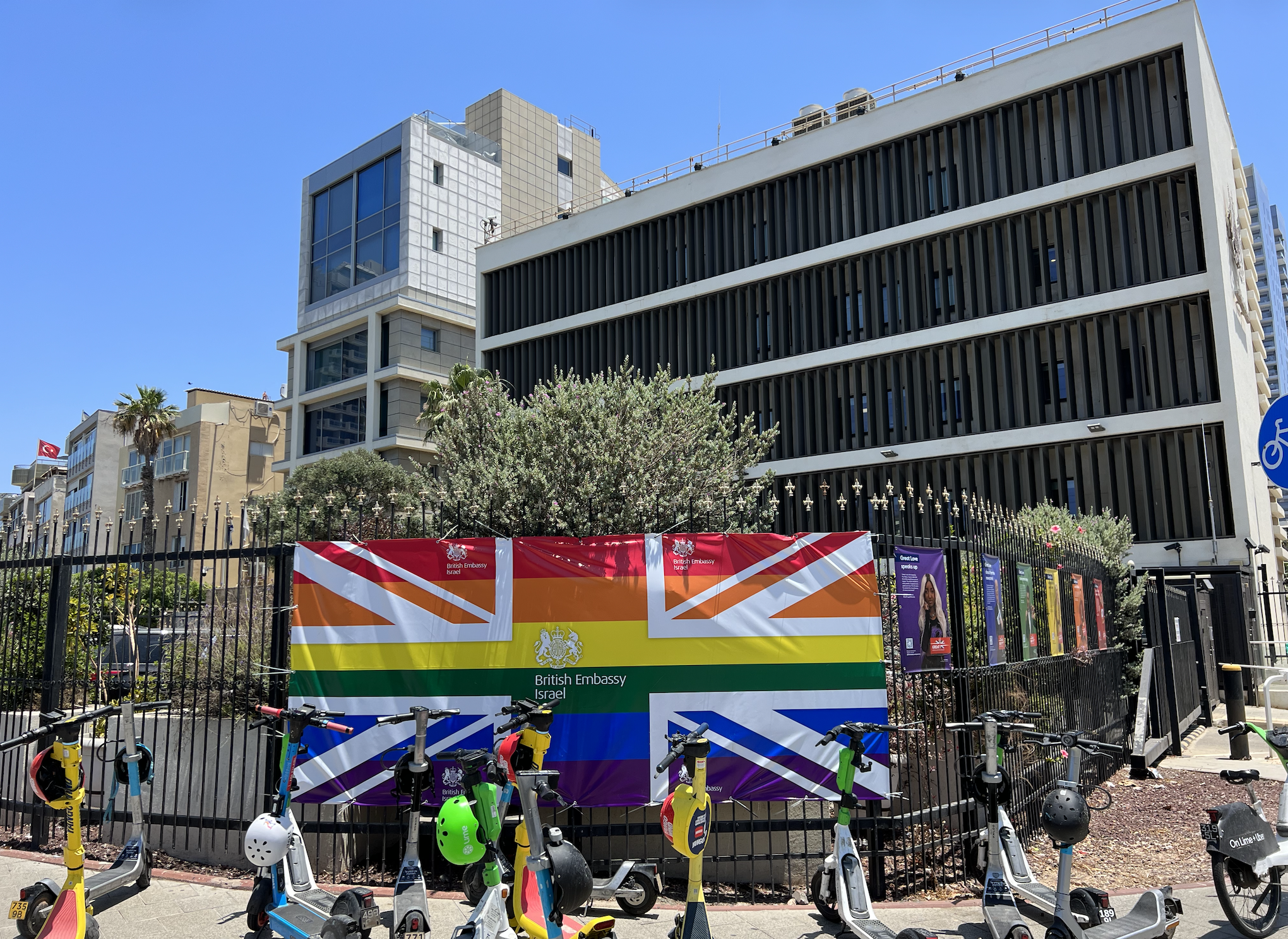
When news broke that Israel would be closing the British Consulate in East Jerusalem in response to the UK’s recent sanctions, many observers framed the move as diplomatic retaliation. Having served as head of communications at the British embassy in Tel Aviv in 2023, I see it differently. To me, this decision was not only predictable – it was long overdue. The consulate’s very existence was built on a diplomatic fiction that never reflected the reality on the ground, and Israel has finally chosen to stop indulging it.
During my time at the embassy, I was responsible for communicating the UK’s official policy on the Israeli-Palestinian conflict. The core message was always the same: peace can only be achieved when Israel retreats to the pre-1967 borders, with Jerusalem as a shared capital. I repeated that line countless times, but I never believed it. It was a mantra from another era, disconnected from the lived reality of Jerusalem and the political landscape that has evolved over decades. Inside the embassy, many of us understood this. But policy is policy, and communications staff don’t get to rewrite it.
The tension this created was palpable, especially between diplomats and Israeli locally engaged staff. Many of the Israeli staff wanted nothing to do with the East Jerusalem consulate. The only ones who felt comfortable working with it were Arab Israeli colleagues – not because of ideology, but because the consulate’s mandate made it awkward for everyone else. The consulate existed to serve Palestinians exclusively, even though it sat squarely inside the Jerusalem municipality under full Israeli control. That alone created a strange dynamic, but the contradictions ran much deeper.
The atmosphere surrounding Jerusalem-related work was always cautious, almost theatrical. Every UK official visit required us to ensure “balanced time” between Israel and the Palestinian territories – a political requirement that had nothing to do with security, practicality, or the actual purpose of the visit. Yet UK officials would never stay in East Jerusalem or the PA. Security protocols required them to stay in Israel proper. As a result, we spent hours each day shuttling them back and forth, counting travel time as “time spent in the Israeli side,” even though they were doing nothing but sitting in a car. It was a box-ticking exercise designed to satisfy a policy that everyone knew was detached from reality.
The East Jerusalem consulate itself embodied this contradiction more than anything else. It was never a normal consulate. It wasn’t designed to serve everyone in its geographic area. It wasn’t even located in a place that made practical sense. The UK placed it in Sheikh Jarrah – a neighborhood inside the Jerusalem municipality but politically framed as “East Jerusalem.” Palestinians were expected to use it for consular services, yet many needed permits to enter Israel just to reach it. Meanwhile, Jews living in East Jerusalem – full residents of the city – were told to go to Tel Aviv for consular services. The consulate’s mandate was explicitly limited to Palestinians.
This was not a functional consular office. It was a political symbol, a relic of the UK’s insistence on treating Jerusalem as a divided city even though it hasn’t functioned that way since 1967. If the UK wanted a real consulate, it should have merged it with the Tel Aviv embassy and offered equal services to all. Or closed it and saved taxpayer money. Instead, it kept the fiction alive.
Israel’s decision to close the consulate is being described as punitive, but I see it as a correction. A sovereign state has every right to decide which foreign missions operate within its capital. Israel also has every right to reject the idea that foreign governments can maintain political outposts in Jerusalem that treat the city as divided when it is not. Closing the consulate doesn’t undermine peace; it undermines a fantasy.
I genuinely feel for my former colleagues who will be sent home. Diplomatic staff often become collateral damage in political disputes they didn’t create. They work hard, they serve loyally, and they deserve respect. But their departure doesn’t change the underlying truth: the consulate’s existence was based on a policy that no longer reflects the reality of Jerusalem, and hasn’t for decades. Israel was right to close it.
When I worked at the embassy, I often felt the gap between the UK’s diplomatic narrative and the reality outside the building’s walls. The East Jerusalem consulate embodied that gap more than anything else. It was a symbol of a policy Britain clung to out of habit, not logic – a policy that forced diplomats into logistical contortions and created artificial divisions in a city that functions as one unit. Israel’s decision didn’t create a crisis; it exposed one. And perhaps, finally, it will force the UK to rethink a Jerusalem policy that has been frozen in time for far too long.